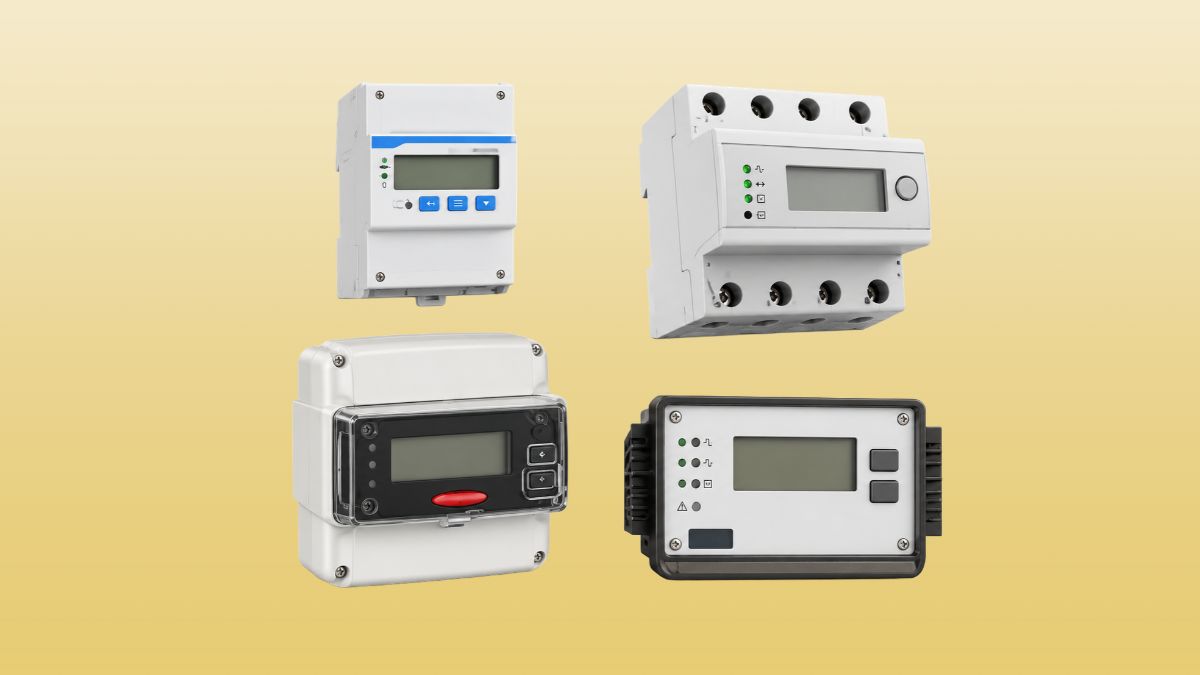




surge protection device (SPD)
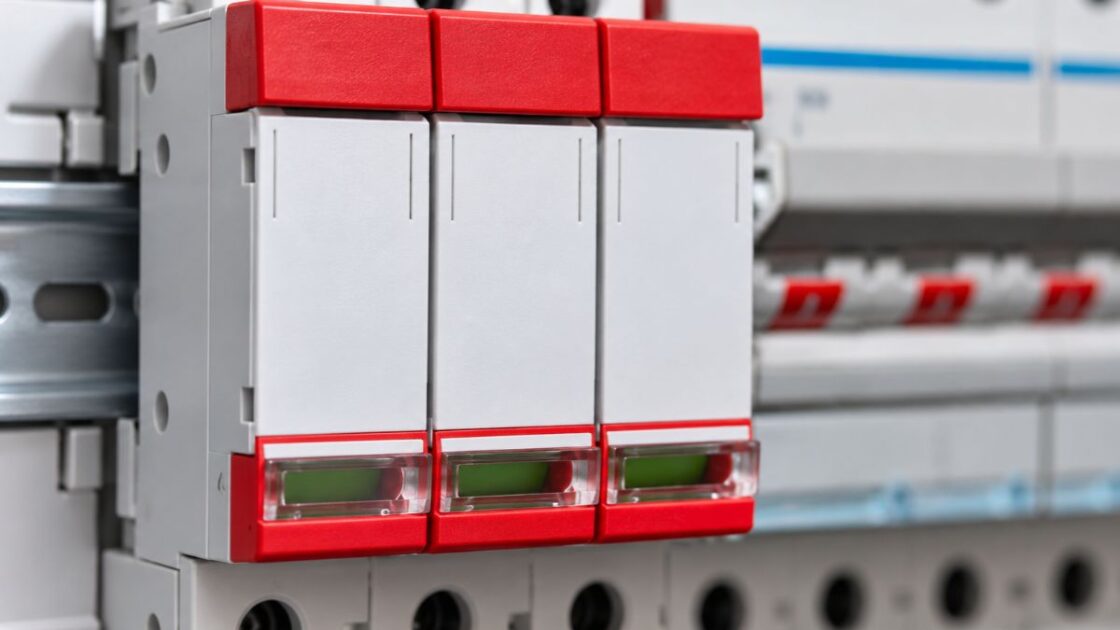
Introduction
This blog post will cover surge protection devices (SPDs), explain how they work and how they are installed. An SPD is a product that improves the safety of a solar PV installation and, as the name suggests, protects against transient overvoltages. A transient overvoltage is an unwanted voltage impulse directed at the inverter that can damage its electronics. This should not be confused with a direct lightning strike, which virtually no electronic equipment can withstand. A tip for installers carrying out solar PV installations where existing lightning protection systems are in place: get professional help to ensure that the existing systems are not rendered ineffective.
What do the installation regulations say (about DC protection)?
- 443.101 Protection against transient overvoltages
Where protection against transient overvoltages is required under Section 443, the protection shall also cover the DC side of the solar PV installation. Depending on the distance between the inverter and the connection point of the electrical installation, additional protection against transient overvoltages may be required on the AC side. - 534.102 Selection and installation of surge protection devices on the DC side
Surge protection devices installed on the DC side of the solar PV installation shall comply with the requirements of SS-EN 50539-11. - 534.102.1 Selection of the surge protection device test class
In general, surge protection devices shall be tested to Class II. If protection against direct lightning strikes is required and the separation distance S in accordance with SS-EN 62305-3 is not met, surge protection devices tested to Class I shall be used (generally in combination with surge protection devices tested to Class II).
Risk analysis
Section 712.443.101 of the Electrical Installation Regulations sets out how a risk analysis should be carried out to assess whether a surge protection device must be used. This blog post does not cover the risk assessment, but leaves this to the reader.
What does Länsförsäkringars Fact Sheet 27 say?
“Lightning protection must be installed in accordance with the electrical installation regulations. Where protection against transient overvoltages is required, it must also cover the DC side of the solar PV installation and be coordinated with the other surge protection devices. Lightning protection must always be installed at businesses and farms.”
Basic Facts
There are two types of transient overvoltage that a solar PV system may be exposed to: overvoltage on the DC side and on the AC side. AC-side overvoltage can enter via the AC grid, most commonly as a result of lightning strikes on overhead lines or other electrical equipment, and then propagate through the grid to the inverter. If you live in the countryside or have an overhead line supplying your property, the risk of AC-side overvoltage is higher. Faults in the grid can also cause excessive voltage. It is important to protect your appliances, especially if they cost tens of thousands of pounds, and this applies not only to the inverter for your solar PV system!
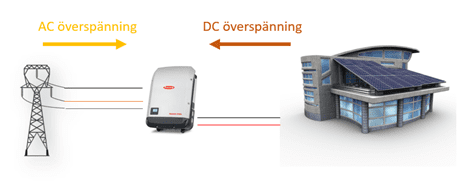
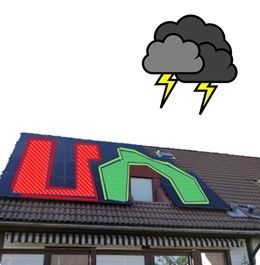
A transient overvoltage can also be induced in the inverter via the DC side. This happens when the positive and negative cables are routed too far apart, inducing a magnetic field in the string cables when there is a thunderstorm near the solar PV installation. This is known as an EMC issue. To address this, the string cables should be routed close together on the roof. In practice, the cable from the last solar panel is run back along the string. This minimises the area (see the green and red areas in the image below), thereby reducing the likelihood of the solar PV installation picking up a transient overvoltage.
Residual voltage
If a transient overvoltage occurs, for example due to a lightning strike on a nearby overhead line, the voltage can become very high and damage electrical equipment. If an SPD is installed, it reduces the voltage surge, but depending on the strength of the lightning strike, the voltage downstream of the SPD may still be high enough to damage the electrical equipment. This voltage surge is called residual voltage. To provide even better protection, several SPDs are often installed to protect, for example, an inverter. The protection system is then designed so that the outermost protective device is the most robust (protecting against the strongest impulse), with more sensitive SPDs installed closer to the equipment.
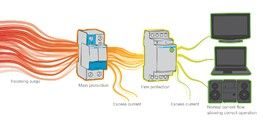
To achieve complete protection on the AC side, at least two separate protection devices must be used. No protection device limits the residual voltage to a level low enough to be considered completely safe. One question the client should ask themselves is: “Do I want to be safe on paper or in reality?” This is especially important in installations such as agricultural properties, where surge protection devices on both the DC and AC sides are mandatory. A single protection device on the AC side may satisfy the insurance assessor, but perhaps not the electrical engineer who designed the solar PV installation!
| Installation location | Class | Name |
|---|---|---|
| At the main distribution board (incoming three phases) | Class 1 (Type 1) | Primary protection |
| At the sub-distribution board | Class 2 (Type 2) | Secondary protection |
| At the equipment | Class 3 (Type 3) | Fine protection |
A brief note on test classes
Please note that some SPDs meet the test requirements for several classes. This does not mean that they provide double protection, but rather that they are flexible in their applications. A Class II/III SPD can never replace a Class II SPD and a Class III SPD!
A medieval analogy
You could think of designing your surge protection devices in the same way as castles were designed in medieval times. They had an outer wall (and a moat) for protection. Then there was an inner wall, so that even if the enemy got through the first wall, there was still shelter to hide behind and defend themselves.
- The moat and outer wall – Coarse protection, Class 1
- The inner wall – Intermediate protection, Class 2
- The castle – Fine protection class

Manufacturer-specific information: Fronius
Fronius inverters have no built-in surge protection device (SPD), on either the DC side or the AC side. However, the inverters can easily be fitted with protection for the solar panel strings.
Symo up to 8.2 kW
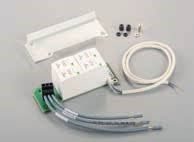
An upgrade kit can be used with all Fronius inverters up to 8.2 kW. It is screwed inside the inverter like a circuit board, using just three screws. The kit has a signal contact from the surge protection device (SPD), which means the user receives an alert via Solar Web if the SPD trips. Video: Link
Fronius 10-20kW
For Fronius inverters between 10-20kW (and the ECO version), surge protection devices can be installed on the external DIN rail located beneath the inverter cover. There is space for dual protection to protect each MPPT. Please also note that surge protection devices with a signal contact are recommended for connecting the surge protection devices to an inverter input so that the user receives an alarm via Solar Web. Video: Link
SMA
Tripower 3-10kW
For SMA's Tripower series from 3-10kW, no surge protection device is installed. An external one must therefore be installed in a separate enclosure.
Tripower 15-25kW
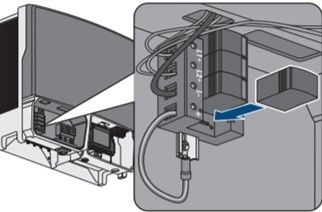
For SMA Tripower 15000-25000, cartridges can be purchased separately; these have the article number: DC_SPD_KIT3-10
Core 1
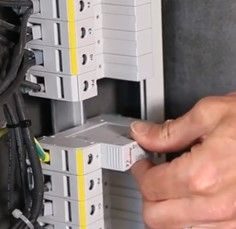
SMA's Core One has optional kits for both AC and DC protection. These are cartridges that slide into holders.
| part number | description | Class/type |
|---|---|---|
| AC_SPD_KIT1-10 | AC Surge Protection Module Kit | II |
| AC_SPD_KIT2_T1T2 | AC Surge Protection Module Kit Type 1/2 | I/II |
| DC_SPD_KIT4-10 | DC Surge Protection Module Kit | II |
| DC_SPD_KIT5_T1T2 | DC Surge Protection Module Kit Type 1/2 | I/II |
Ferroamp
Ferroamp themselves state in their white paper that EnergyHub is designed and tested in accordance with IEC 62109-1 and IEC 62109-2, and therefore meets overvoltage category III for the grid connection and overvoltage category II for the DC connection. This corresponds to an impulse test voltage of 4 kV, making it most comparable to a Class III surge protection device (SPD). However, the internal protection in EnergyHub cannot withstand the same currents and pulse energies, so the system can be supplemented with both Class II DC and AC protection.
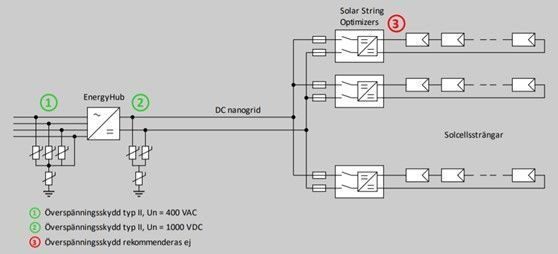
Should surge protection devices be used with SSO units?
Installing DC surge protection devices for Ferroamp’s SSO units is not recommended, as they add cost and are a potential source of faults in installations. Given the number of SSO units used in installations, their location and their relatively low cost, the disadvantages of surge protection devices outweigh the benefits. The SSO unit has a double-insulated design and can withstand a 4 kV impulse relative to earth, which reduces the need for external surge protection devices.
Huawei
All Huawei models have built-in surge protection devices on the DC and AC sides. No external protection is needed. However, the disadvantage is that if a protection device trips, the inverter must be repaired at an authorised service centre. It is therefore not uncommon for external surge protection devices to be installed in smaller installations, as these are easier to replace. However, there is no guarantee that the inverter will survive a possible flashover.
Senergia’s DC protection offering
Senergia offers the full Mersen range and can order in all products on request. Contact your local sales representative if you have specific requirements.
DC protection
| Item no. | Description | with monitoring? | Ucpv | Class/Type |
|---|---|---|---|---|
| 83020140 | Mersen STPT2-40K1000V-YPV (SPD VDC1000V) | No | 1060VDC | 2 |
| 83120168 | Mersen STP12-5K1000V-YPVM (SPD VDC 1000V Class 1+2) | Yes | 1060VDC | 1+2 |
AC protection
At the Main Distribution Board
| Part no. | Description | With monitoring? | Number of poles | Class/type | Mains configuration |
|---|---|---|---|---|---|
| 83120149 | Mersen STPT12-12K440V-4PM (Class I/II) | Yes | 4 | 1+2 | IT (3Ph+N); TNS (3Ph+N) |
At the Sub-distribution Board
| Part no. | Description | With monitoring? | Number of poles | Class/type | Mains configuration |
|---|---|---|---|---|---|
| 83020153 | Mersen STPT2-40K275V-4PM (SPD 400VAC Class II) | Yes | 4 | 2 | 3+0; 3Ph (TN+TT) |
At the Sub-distribution Board
| Part no. | Description | With monitoring? | Number of poles | Class/type | Mains configuration |
|---|---|---|---|---|---|
| 83230137 | Mersen STPT23-20K275V-4P-LFM (SPD 400VAC Class II/III) | Yes | 4 | 2/3 | TNS (3Ph+N) |
In practice
If the inverter has built-in Class III or Class II/III protection, install a Class I/II SPD at the incoming service cable.
If the inverter does not have built-in AC surge protection, use a Class I/II or a Class II SPD only at the incoming service cable, and a Class II/III SPD at the inverter.
If the installation is at a farm or a property connected by an overhead line, a Class I SPD (83010100) is recommended at the incoming service cable, a Class II SPD in the sub-distribution board, and a Class II/III SPD before the inverter.
| Item no. | Description | With monitoring? | Number of poles | Class/type | Mains configuration |
|---|---|---|---|---|---|
| 83010100 | Mersen STMT1-50K275V-1P | No | 1 | 1 | L-N 1Ph |
Summary
Surge protection devices (SPDs) are a simple way to sleep better at night and increase the safety of your solar PV installation. SPDs can be seen as a form of partial insurance, as they are used up when they trip. In other words, you pay your insurance premium up front. Always make sure your installation is protected; just one voltage surge is enough for the investment in SPDs to pay for itself tenfold!
It is important to protect your installation on both the DC and AC sides, and to make sure you have the right number of SPDs and the correct class to ensure they function properly.
Also take a close look at what inverter manufacturers offer; there are smart solutions that make life easier for installation owners!
Need help finding the right one?
We know it’s not always easy to know which product or solution is best suited to you. Whether you have questions about our range, need guidance or would like help finding a solution tailored to your needs, we’re here for you. With our knowledge and experience, we’ll help you make the right choice.
Related posts

Island mode in practice
How do you install an earth electrode and set up off-grid operation – with Richard Nyberg