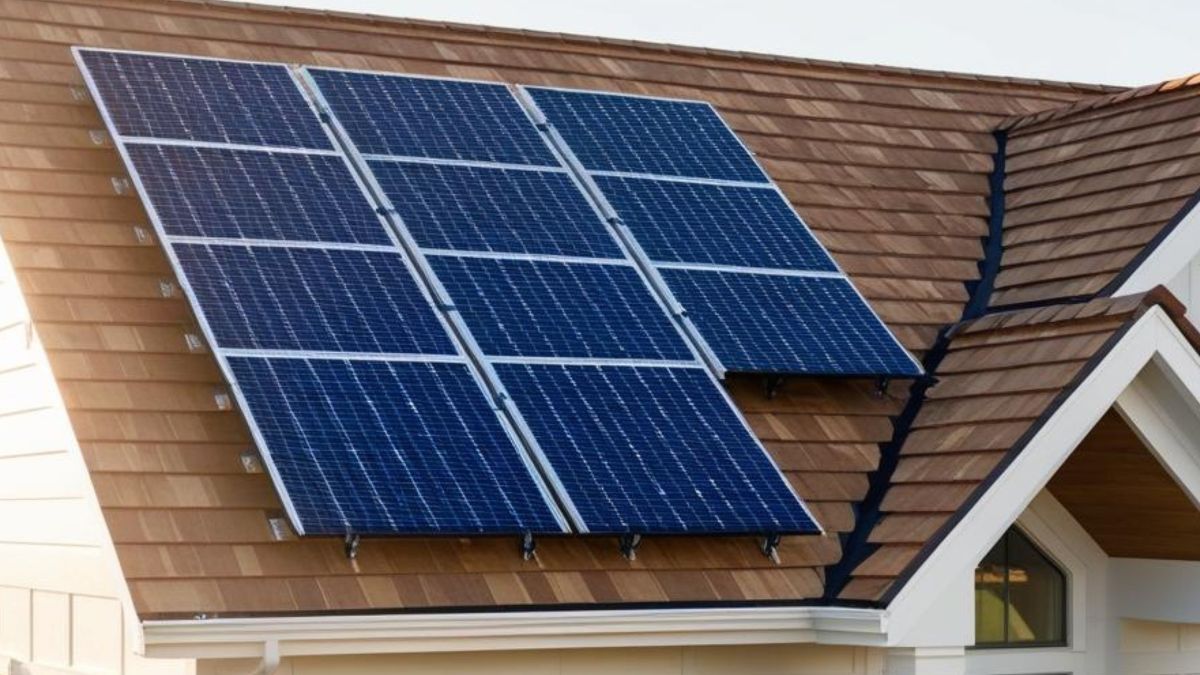




Solar panels 1/2
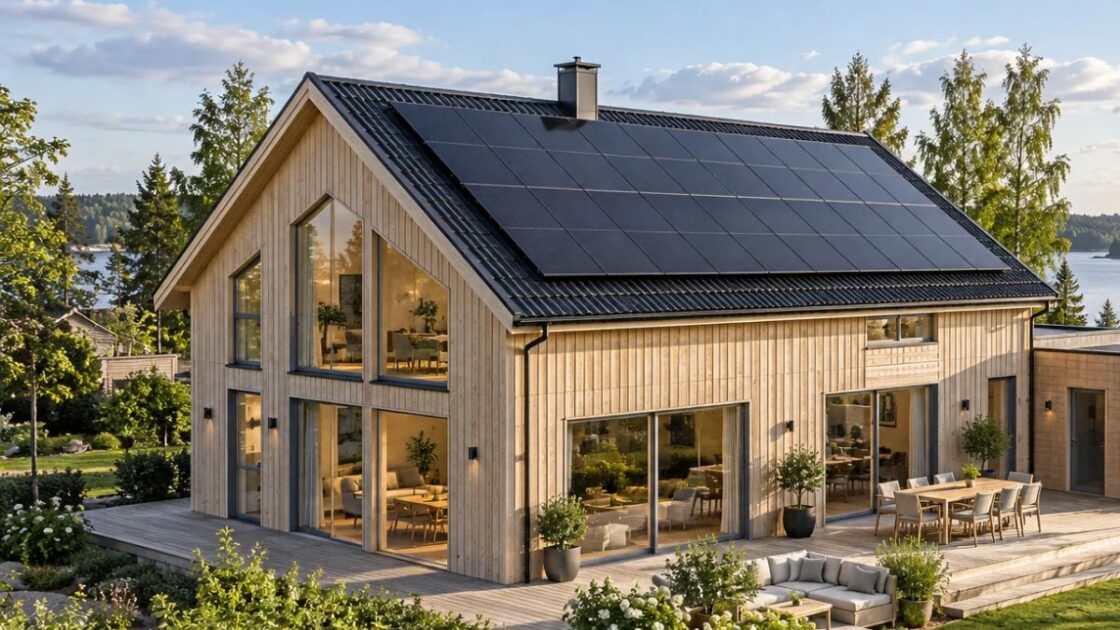
Introduction and background
Solar panels have become an obvious part of the modern energy solution, for both households and businesses. With a rapidly growing market and technological advances, it is easy to feel overwhelmed by all the options. But how does a solar panel actually work, and what technical factors are important to understand in order to make the right decision? In this blog post, we take a look at how solar panels are constructed, the different technologies and their pros and cons – all to help you navigate the world of solar cells with greater confidence.
How a solar panel is constructed
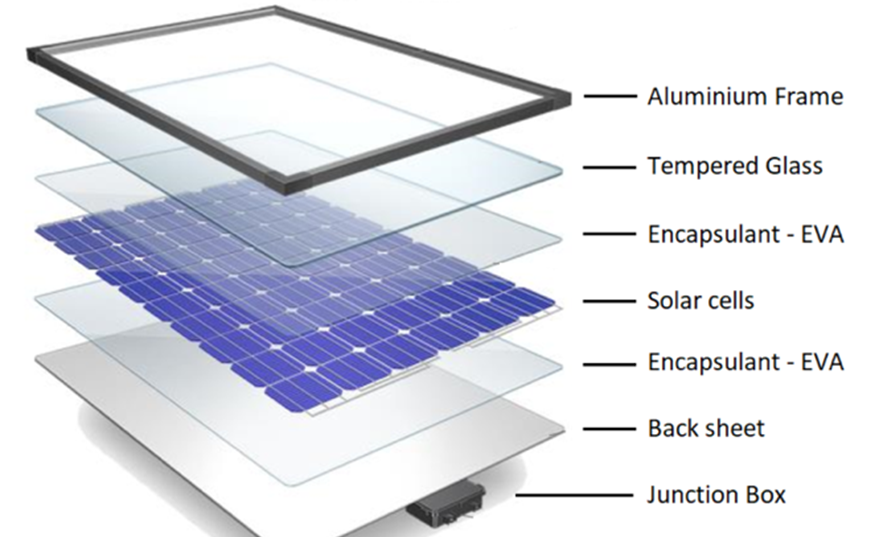
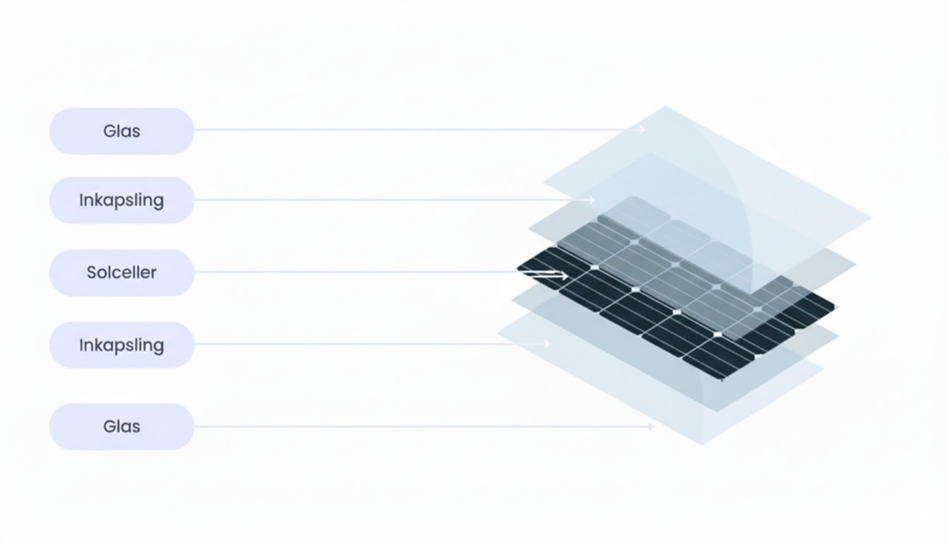
A solar panel consists of several photovoltaic cells, usually made of silicon. The cells are interconnected and embedded between protective layers of glass and plastic. The back often has a protective film or another layer of glass. The photovoltaic cells convert sunlight into electricity through the so-called photovoltaic effect. Electrons are released when light hits the cells, creating an electric current. The panel’s frame, often made of aluminium, provides stability and protection from external influences.
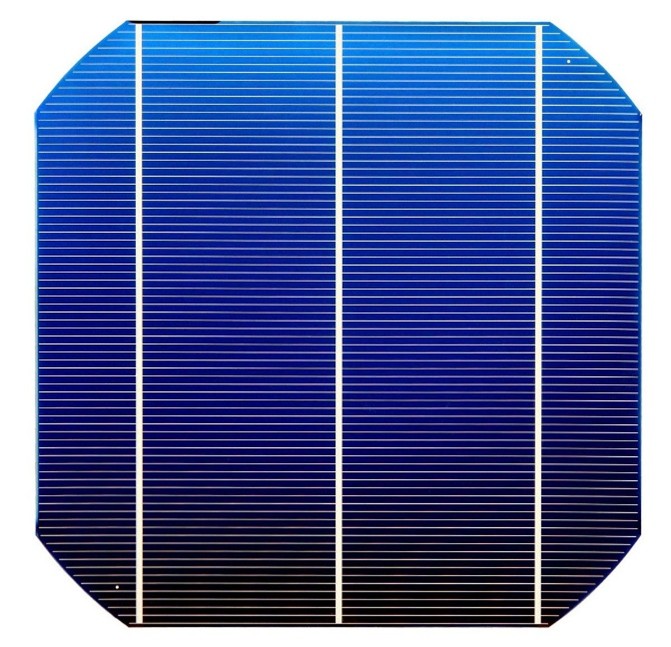
Solar cell
A solar cell converts sunlight into electricity through the so-called photovoltaic effect. The solar cell consists of thin layers of semiconductor material, usually silicon. On the surface are thin metal wires, known as fingers, which collect the generated current and conduct it to thicker busbars. The busbars then carry the current away from the solar cell to the rest of the solar panel and on to the electrical system.
Bypass diodes
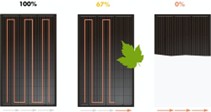
Bypass diodes in solar panels provide protection and reduce power losses under partial shading. A panel typically has at least three bypass diodes (six in half-cell modules), which automatically bypass one third of the panel if that section is shaded. The current is then routed around the shaded section, so only that part stops generating electricity, without affecting the rest of the panel. Without bypass diodes, the output of the entire panel would decrease under partial shading, much like when the flow of water through a garden hose is restricted. Bypass diodes are activated when shading occurs along the long side, and can bypass the entire panel if all sections are shaded. For example, if half the panel is covered in snow and all the diodes are activated, the panel generates no electricity at all.
How different cell sizes affect solar panel size
The size and number of photovoltaic cells are crucial factors in determining a solar panel’s overall dimensions, output and applications. Traditionally, panels have been built with square cells, often measuring 156 x 156 mm, but developments have led to larger and more varied cell formats. Today, cells 182 mm and 210 mm wide are common, and rectangular cells are no longer unusual, with the width remaining the same while the height varies between 182 and 210 mm. This has made the market somewhat confusing, as there is not yet a uniform standard for these new formats.
The number of cells in a panel is often stated in the product name, for example, 54-cell or 72-cell panels. A 54-cell panel is usually smaller and well suited to residential rooftops or installations where space is limited. These panels often have a lower output (e.g. 400–430 W), but are easier to handle and install. 72-cell panels are larger, usually intended for commercial installations or ground-mounted solar farms, and can reach outputs of 550 W or more. The larger panels are heavier and require more space, but deliver higher output per panel and can be more cost-effective for large-scale installations.
With the introduction of rectangular cells, manufacturers have been able to optimise panel sizes further. By keeping the width at 182 mm but varying the height between 182 and 210 mm, they can create panels that are narrower or longer to suit different installation environments. This offers flexibility but has also led to some confusion in the market, as there is no clear standard for these new formats. Until a new industry standard is established, it may be wise to compare panel dimensions carefully and ensure they fit the intended installation space.
In summary, both cell size and the number of cells affect a panel’s dimensions, weight, output and ease of handling. Choosing the right combination is important to optimise both installation and energy production.
Single-glass vs double-glass panels
Single-glass panels have a layer of glass on the front and a protective plastic film on the back. They are lightweight and often cheaper, but can be more susceptible to moisture and mechanical damage over time. Double-glass panels have glass on both the front and back, providing greater durability, better fire safety and a longer lifespan.
Double-glass panels offer particular advantages in demanding environments. In saline environments, such as coastal areas, the double glass layers provide much better protection against corrosion and degradation than single glass. They also have greater resistance to ammonia, which is important for installations near farms or industries where ammonia may be present. In addition, double-glass panels often have a higher fire rating because both sides are protected by glass, reducing the risk of fire spreading and improving installation safety. The downside is that they are often heavier and slightly more expensive. For installations in harsh environments, or where a long lifespan and safety are priorities, double glass can be a wise choice.
Benefits of glass/glass panels
- More durable construction: Glass/glass panels are significantly more robust than traditional glass/foil panels. The double layers of glass provide excellent sealing and protection against snow, wind, salt, dust, moisture, sand and ammonia. Glass is also resistant to chemical reactions and has a low coefficient of expansion, meaning the panel is less affected by temperature fluctuations. The double layers of glass also protect against microcracks during transport and installation.
- Long product warranty: Glass/glass panels often come with a 25–30-year product warranty, compared with 12–25 years for glass/foil panels. Their high durability gives manufacturers the confidence to offer longer warranties.
- Lower power degradation: Glass/glass panels retain their output better over time.
- Higher fire rating: Glass/glass panels have a fire rating of A (the highest rating), whereas glass/foil panels are usually rated C.
- Aesthetic options: Also available without an aluminium frame, which can give the roof a more modern and discreet appearance (although these models are harder to find).
Disadvantages of glass/glass panels
- Higher price: Glass/glass panels are approximately 10–20% more expensive than traditional panels with similar performance.
- Heavier: The panels generally weigh 5–20% more than traditional panels, which can make installation more demanding and sometimes require additional materials, which in turn can increase installation costs.
Bifacial (double-sided solar panels)
Bifacial panels can generate electricity from both sides – from direct sunlight on the front and reflected light on the back. This can increase energy yield by up to 30%, particularly on light-coloured surfaces or in ground-mounted installations where reflectivity is high. However, bifacial panels require the right installation environment and optimised positioning to deliver maximum benefits. They are often slightly more expensive than traditional panels, but can provide significantly higher returns in the right applications.
Half-cut
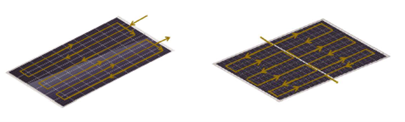
Half-cut technology means that each photovoltaic cell is split into two halves, reducing the current in each cell and therefore reducing resistive losses. This results in higher efficiency and better performance, particularly in shaded conditions or at high temperatures. Half-cut panels are now standard on many modern solar panels and offer a clear technical advantage without significantly affecting the installation process.
Bear in mind that half-cut panels still (usually) have 3 bypass diodes, but since the current is divided, with half flowing through one half of the panel and the other half flowing through the other, partial shading becomes more complex. This video illustrates shading on half-cut panels in a very clear and educational way:
Shading Half-cut cells: https://youtu.be/AZ8VQ_zmf1M
The technology battle between BackContact and Topcon
In our next blog post, we’ll take a closer look at the two leading solar cell technologies: Back contact and TopCON. We’ll compare their technical characteristics, advantages and disadvantages, and discuss why they are often described as rivals in the industry. Don’t miss our overview of the ongoing “technology battle” shaping the solar panels of the future!
Summary and conclusion
Solar panels are a fascinating combination of advanced technology and practical sustainability. By understanding how panels are constructed and what technological choices are available, you can make more informed decisions – whether you are an installer, property owner or simply interested in technology. Developments are moving quickly, and with new innovations such as bifacial and half-cut, the possibilities are greater than ever. Look out for our next post, where we take an in-depth look at Back Contact and TOPCon – two technologies that could revolutionise your solar installation!
Tips if you want to dive even deeper:
How do Solar cells work? https://www.youtube.com/watch?v=L_q6LRgKpTw
The Mystery Flaw of Solar Panels: https://www.youtube.com/watch?v=yVOnHWnLSeU
Need help finding the right option?
We know it isn’t always easy to know which product or solution is best for you. Whether you have questions about our range, need guidance or would like help finding a solution that suits your specific needs, we’re here for you. With our knowledge and experience, we’ll help you make the right choice.
Related posts
New rules for functional earthing
Solar energy systems with open architecture – the flexible energy solution of the future