



Hybrid panels
Introduction
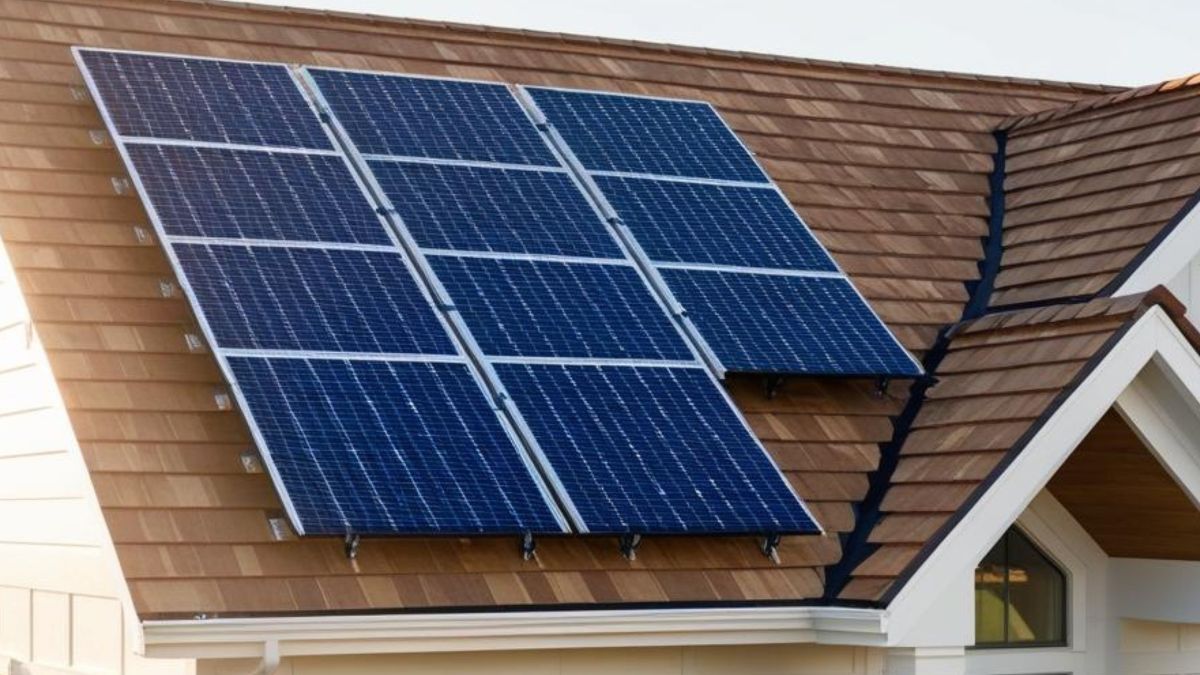
In this blog post, we will take a closer look at so-called hybrid panels, i.e. solar panels that produce both heat and electricity! They are not yet a huge market, but because they allow you to get double use out of your panels on a limited roof area, hybrid panels can be a good idea. This post will cover the benefits of hybrid panels, how to design the systems and what to bear in mind.
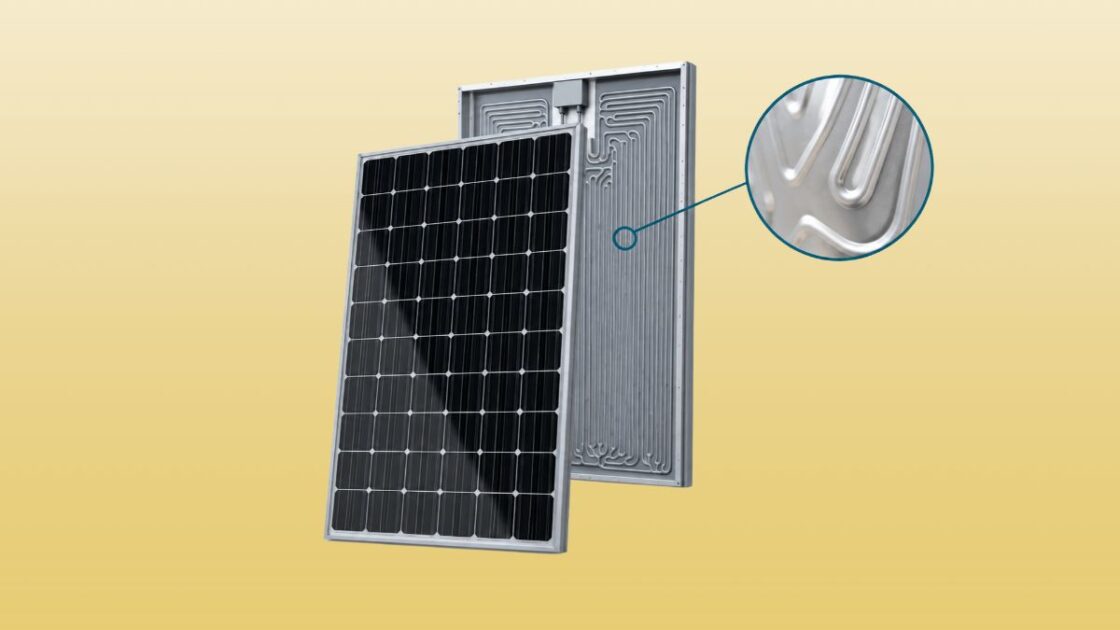
PVT (solar photovoltaic-thermal) or hybrid panels are solar panels with an electricity-generating layer on the front, usually crystalline silicon, and a solar thermal collector on the back. In short, you can think of these as water-cooled solar photovoltaic panels. Traditional solar thermal collectors are around 3–4 times as efficient in terms of area, meaning that the energy yield per unit area is approximately 3–4 times as high. Since a property needs both heat and electricity, PVT is a very interesting product to take a closer look at—not least because the same panel and installation provide two separate systems in one, which also look very aesthetically pleasing!
The advantage of combining solar thermal energy with solar photovoltaic panels is that more of the sunlight is utilised. A typical solar panel today has an efficiency of around 20%, i.e. 80% of the sun’s rays do not help produce any electricity. What is not converted into solar electricity becomes heat, and because the solar panel has a negative temperature coefficient, its power output decreases as the temperature rises. The extent of this is specified in the solar panel’s data sheet. The reduction is usually around -0.35%/°C.
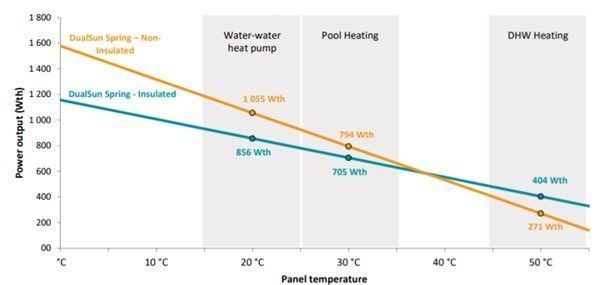
Since the solar panel’s efficiency improves when its operating temperature is kept low, the aim of a PVT system is not to have the highest possible temperature in the heat-transfer fluid, as this reduces electricity production. Instead, a temperature of around 20–25°C is sought. The system’s limitations are therefore that the operating temperature in the solar thermal circuit cannot be high (nor can the flow rate), which means that almost only heat pumps are suitable for making use of the heat. When sizing the system, the designer must decide which of the two systems is the sizing factor, as it may be easier to build separate systems and size each of them optimally.
PVT panels not only allow you to make the best use of your roof area, but can also provide energy to drive your heat pump and the possibility of recharging a borehole, if applicable. This is also a very interesting technology for properties aiming to achieve zero-energy or plus-energy status, especially in combination with thermal storage such as seasonal storage.
There are many applications for PVT systems, as hot water is needed both in winter and during the summer half of the year.
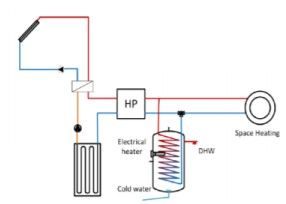
Examples of various beneficial applications for PVT systems include:
- Residential systems for domestic hot water and heating
- Commercial systems (housing associations)
- Bathhouses, sports facilities,
- Swimming pool heating
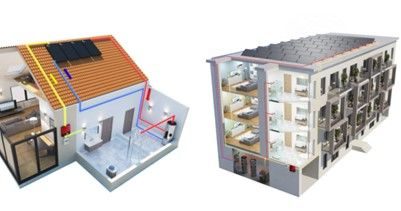
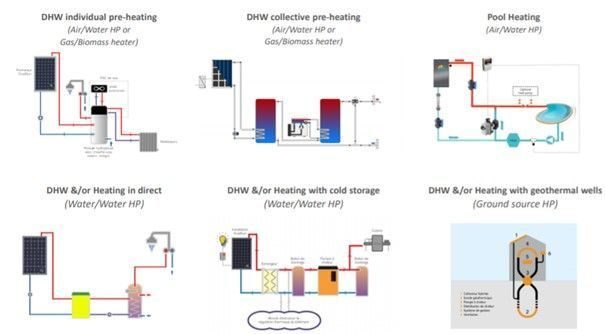
A PVT system is advantageous because the water temperature does not need to be particularly high. For example, the system can be combined with an external heat pump or pellet burner. It can also be combined with ground-source heating, as the heat from the PVT system helps to keep the borehole warm. The PVT system is always used in combination with a heat pump and/or thermal storage. Examples of combinations are shown below:
Energy yield
Under normal operating conditions, a hybrid panel generates 186 kWh of electricity and 800 kWh of heat/m² per year, at an operating temperature of 10 degrees
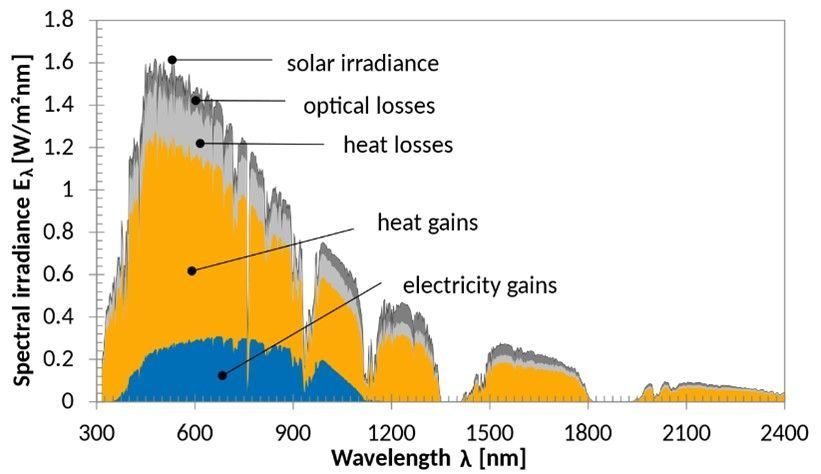
Depending on the temperature of the panels, you get different amounts of heat or electricity; see the graph below.
Conclusion
Unfortunately, hybrid panels are still not very common, and many people are unaware of the possibilities and technologies available. For properties with limited roof area or a need for both electricity and heat, PVT systems are definitely worth considering for property owners! Please feel free to contact Senergia; we have partners who specialise in PVT.
Further reading:
Solar thermal technology: a handbook, Gunnar Lennermo (Link)
DualSun (Link)
Need help finding the right one?
We know it isn’t always easy to know which product or solution is best suited to you. Whether you have questions about our range, need guidance or want help finding a solution that meets your specific needs, we’re here for you. With our knowledge and experience, we’ll help you make the right choice.
Related posts

New rules for functional earthing
Solar energy systems with open architecture – the flexible energy solution of the future