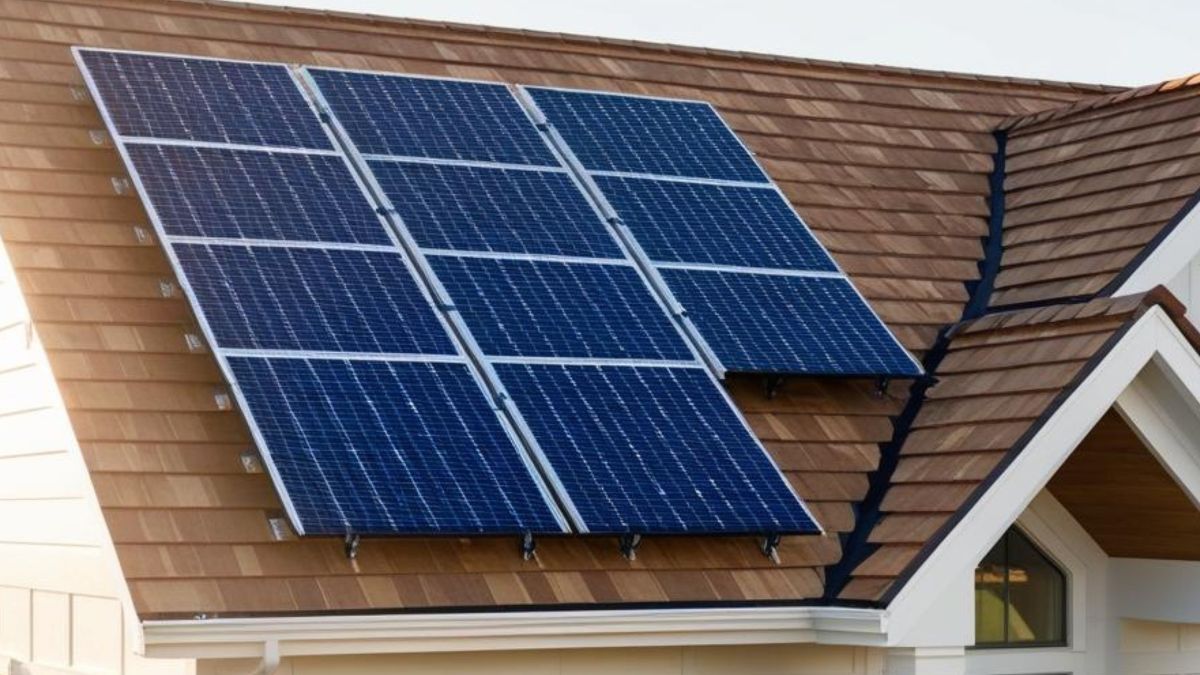




Five mistakes (fatal mistakes) when installing solar panels
Introduction
There is an ongoing debate in Sweden’s solar industry, where organisations such as RISE, the Swedish Electrical Safety Authority, Länsförsäkringar and even SVT have published articles about incorrect and downright dangerous solar installations. Senergia has therefore put together a list of five common mistakes in solar installations, and how to avoid them!
Mistake 1 – Cable routing
The subject of cable routing was covered in an earlier post here on the blog, but it is worth repeating.
Dangling cables on the roof beneath the panels, and installations where the installer seems to be allergic to clips and cable ties, are unfortunately all too common. The electrical installation regulations are crystal clear: no cables may be laid against the roof underlay.
Tips for installers:
Checklist:
- No cable is in contact with the outer roof
- Bare cable is secured with cable ties at least every 30 centimetres. Cable in flexible conduit at least every 70 centimetres.
- Exposed parts with sharp edges or at penetrations are insulated from one another
- Cables are strain-relieved
- Bending radii for solar panel cabling and any optimisers comply with the manufacturer's instructions
- Flexible conduit, cable ties, cables and other materials are UV-resistant.
- Cable routing is designed to minimise EMC
Mistake 2 – Incorrect Connectors
This topic has also come up on the blog before (if you missed it, here’s another chance: HERE)! The principle for connectors is simple: the same type of connector from the same manufacturer must be used at each end. This applies to inverters, optimisers and solar panels!
For example, if there is one type of connector on the panels and another on the inverter, the extension cable between them must have two different connectors!
Tips for installers:
- Always check what applies to your specific brands of panels, inverters and optimisers.
- Use the right tools
- Don’t compromise!
Mistake 3 – Incorrect snow and wind load calculations
The snow and wind load calculation is the document generated by the person who designed the solar installation. It ensures that, given your roof’s pitch and type, the manufacturer of the mounting materials will guarantee that the solar panels stay in place in the rather challenging Nordic conditions we face, with strong winds and high snow loads.
The snow and wind load calculation provides a mounting plan and a complete materials list for the installer to follow for the specified panel layout. It also takes into account the perimeter and edge zones on the roof, where wind loads are particularly high. As the customer ordering a solar power system, you should not only request that the snow and wind load calculation be carried out, but also insist that it is followed!
Tips for installers:
- Get trained. Senergia provides several training courses each year, many of them remotely!
- Make sure the customer always receives a copy of the snow and wind load calculation. That way, it will always be completed.
Mistake 4 – Incorrect use of mounting materials
A major problem is that much of the mounting material used in Swedish installations is not suitable for the Nordic climate. Mechanically, the material is too flimsy. Other issues, such as watertightness, have also caused leaks in systems that are barely a year old. There are several reasons for this, but some of the most common are:
Insufficient knowledge of the fixing method. The installer has not followed the manufacturer's instructions (installation instructions).
The fixing method does not provide a watertight seal.
The fixings do not follow the installation plan generated by the snow and wind load calculations. That is, the maximum distance between fixings. The overhang from the last fixing point to the outermost panel is also not respected.
The roof is not suitable for the fixing method. For example, fixings are installed in battens that are too flimsy (and are not structurally rated) or in roof boarding that is too thin. Or the metal sheeting is barely secured to the roof, yet solar panels are installed on it.
Tips for installers:
- Senergia's installation handbook: Free download
- Read the manufacturer's instructions. Senergia provides documentation for:Van der
- Valk Solar Systems
- Weland Stål
Mistake 5 – Incorrect panel mounting
Solar panels are a critical part of the installation and can be likened to its heart. The panels are designed to operate for many years, but unfortunately, many mistakes are made that both shorten their service life and risk causing serious faults.
Some examples of mistakes include:
- The mounting clamps are tightened to the wrong torque
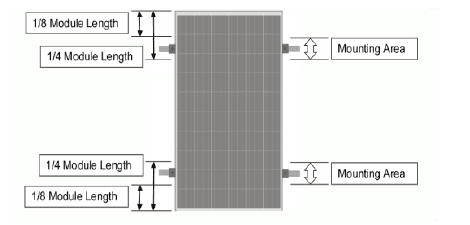
The laminated glass in solar panels is very strong, but using the wrong tightening torque risks cracking the glass. - The solar panel’s mounting zones are not respected
The solar panel is designed to withstand a snow load of 540 kg/m² if it is mounted in the correct zone. Outside the mounting zone, the panel’s strength is significantly reduced, and some modules may also lose their warranty. The issues relating to mounting zones can be summarised as follows:- Incorrect distance from the edge. Applies to both landscape and portrait mounting.
- It is not approved to mount a landscape-oriented panel with a horizontal rail. Applies only to landscape-mounted panels.
- Mounting landscape-oriented panels with landscape-oriented rails in snow zones 2.5 or above.
The last point is particularly interesting when using a ballast system. The ballast system can certainly withstand snow zone 2.5 (and above), but in this case the panel becomes the limiting factor (when mounted in landscape orientation).
Tips for installers:
- Always check the requirements for the specific panel being installed, both regarding the mounting zone and the tightening torque.
- Pay attention to your local area and consult the snow-zone map on the Swedish National Board of Housing, Building and Planning’s website. Snow zones can vary quite significantly even over short distances!
Need help finding the right solution?
We know it is not always easy to know which product or solution is best for you. Whether you have questions about our range, need guidance or would like help finding a solution that suits your specific needs, we are here for you. With our knowledge and experience, we can help you make the right choice.
Related posts
New rules for functional earthing
Solar energy systems with open architecture – the flexible energy solution of the future