



Cable accessories that last 25+ years
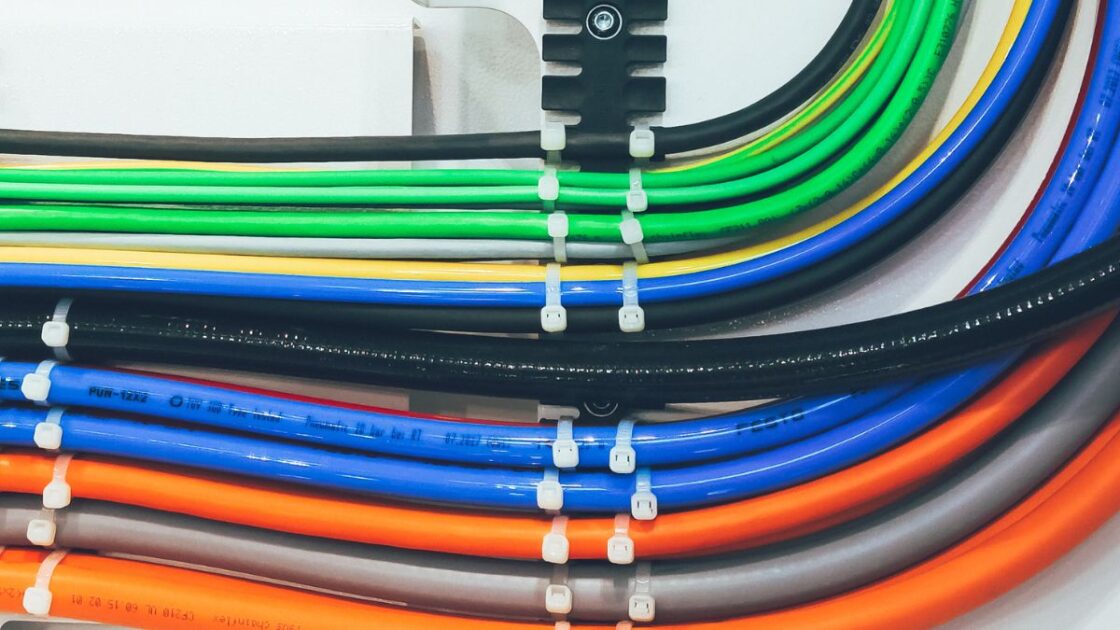
There is an ongoing debate about how a solar PV system should be installed correctly.
Together with WSP, Senergia has delivered the Regelrätt Montage course, which attracted enormous interest from the industry, and we met installers from Sundsvall in the north to Lund in the south! SIS is also now working on a new handbook for mounting solar panels (Link), while Svensk Solenergi, the industry association, is working on a certification scheme for solar PV installers. Senergia is participating in both these initiatives.
A major debate is taking place on social media, for example in Sweden’s largest solar PV group (Link), where there is daily discussion about how cables should be correctly routed and which methods are best. To help installers across the country, this blog post will look at cable accessories that help ensure a solar PV system lasts for 25+ years.
On pitched roofs
Depending on the type of roof the solar panels are to be installed on and the fixing method used, there are different options available to you as the installer. Feel free to take a look at post 4 on Senergia’s Technical Blog, where cable routing was covered.
Perforated metal strip
A common way to secure the cable between two rows of rails is to use perforated metal strip. The strip is screwed to the rail at each end. This makes it easy to strap the cable along the strip. This means that the cable does not need to be pulled unnecessarily taut during installation, while also providing strain relief for the solar cable. Make sure the strip is stainless steel so that it does not rust if fitted against an aluminium rail. Plastic-laminated perforated strips are also available, but the blog has not had the opportunity to assess whether these are suitable.
Cable ties/Stripes
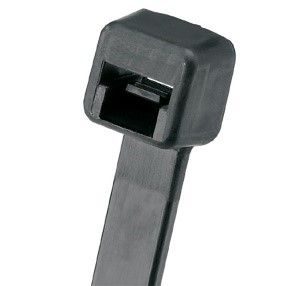
There is a huge difference between cable ties. High-quality manufacturers make ties that can last for many years before showing signs of wear and tear. UV resistance is the biggest difference between a cheap cable tie and a more expensive one. Genuine UV resistance is achieved by adding carbon to the nylon blend, increasing its resistance to UV radiation.
If you use cable ties, you could consider using a tool to ensure they are tightened to the correct tension; the tool also cuts off the excess in the same motion. Using a tool helps make installation both better and quicker.
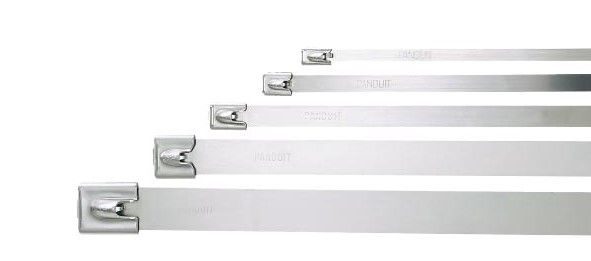
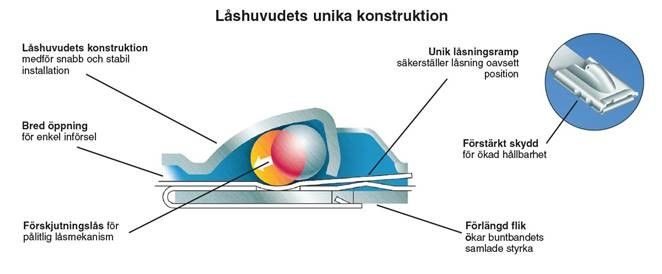
For more demanding installations, metal cable ties can be used. These offer unrivalled UV resistance and strength. The tool used to tighten and cut the cable tie is specially designed to feed the sharp end back under the locking head. This is safer for both the cable and the installer.
Cable clips
Van der Valk has developed aluminium cable clips in two different sizes. The smaller one can be used to secure a cable to mounting rails or panel frames. The larger cable clip fits Van der Valk’s Side mounting rail and is installed underneath the rail. This allows several cables to be secured with the same cable clip.
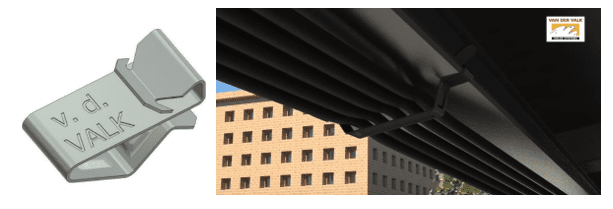
The smaller clips are particularly useful when fitted along the panel frame to prevent cables from hanging down. This can otherwise be very challenging for the installer, as there are few suitable places on the panel frame to attach cable ties.
Flexible conduit
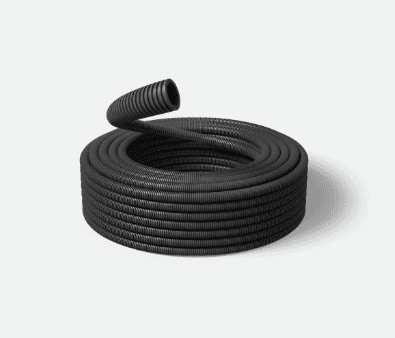
Flexible conduit is the solar installer’s best friend! It is used in all sorts of places on the roof, down façades and, generally, to protect cables. There is a big difference between the various types of flexible conduit available. The most important properties are UV resistance and ease of use, both in terms of stiffness and how easily the cable can be threaded through it.
On flat roofs
For flat roofs, it is important that your mounting system supplier has a well-thought-out plan for how the cables should be routed. Cable routing is an essential part of the installation and will largely determine the system’s future performance, as well as how long and reliably the solar PV installation will operate.
Cable fastening
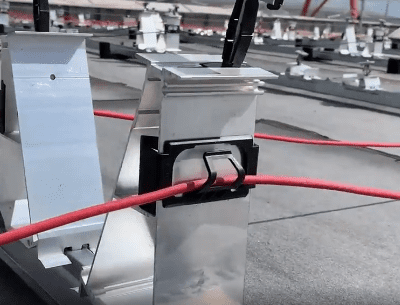
At the rear foot of the mounting system, Van der Valk’s flat-roof system has a simple cable holder that clips into place quickly and easily, helping to make installation on the roof straightforward.
Cable trays
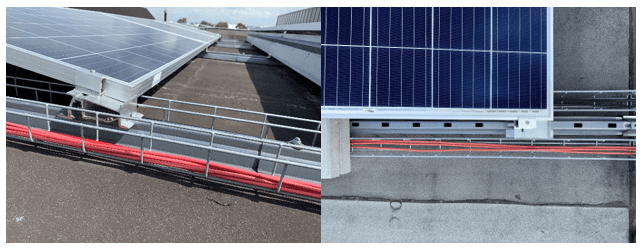
Van der Valk’s ballast system is recognised in the industry as one of the systems requiring the least ballast, being the quickest to install and offering a highly reliable design. The same applies to the system’s well-designed foot, which has been specially developed to fit the cable trays used with the system. This eliminates the need for extra components and makes quick and easy installation straightforward. As the system can accommodate two cable trays, one on each side, pole separation is a pleasure for the installer.
Down from the roof
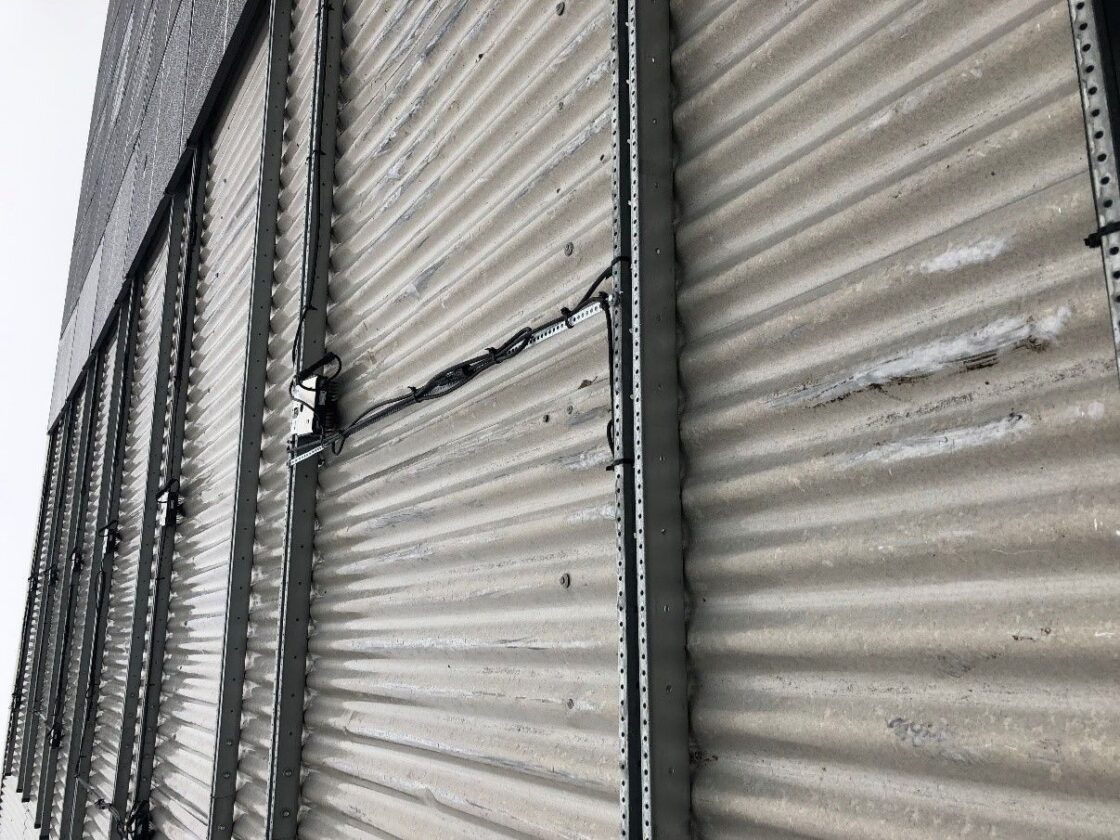
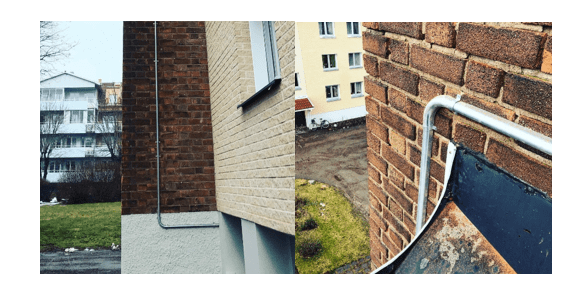
For the run down from the roof, the installer is advised to use cable protection to protect the solar panel cables. These cable protectors are secured along the façade, and ready-made bends, end caps, etc. are available. The cable protectors are corrosion-resistant and can withstand our Nordic climate.
Need help finding the right option?
We know it isn’t always easy to know which product or solution is best for you. Whether you have questions about our range, need guidance or would like help finding a solution that suits your specific needs, we’re here for you. With our knowledge and experience, we’ll help you make the right choice.
Related posts
Island mode in practice
How do you install an earth electrode and set up off-grid operation – with Richard Nyberg