

How can a battery be used?
Introduction
For obvious reasons, a solar power system can only generate electricity when the sun is shining. This means that, almost regardless of the application or use of solar power, generation will not match consumption, as they occur at different times. Energy storage in general, and batteries in particular, have been described as the energy system’s holy grail and can be seen as a Swiss Army knife.

There are many applications for batteries, and there are also many different battery types and chemistries that are advantageous in different applications and use cases. However, the picture of energy storage is often one-sided in general, and it is often generalised too much to draw specific conclusions about the various advantages and disadvantages of battery systems and their different applications. For end users of an energy storage system, it is important to understand that although a battery can be used for many different things, not all batteries can do everything. Careful planning and system design are needed for the battery system to meet expectations. It is also important to understand that battery control methods are mutually exclusive. This means that you cannot control the battery in two ways at the same time. You have to choose. This also means that the application and use case are strongly affected by how the battery can be controlled.
How can a battery be used?
A battery can be used in many different ways and controlled according to different parameters. The settings are made in the battery’s control system (usually the inverter), but external control systems known as EMS (energy management systems) are also used. Several inverter manufacturers also offer control via their own code, either through an API or open protocols. This enables future applications and software controls, for example Google Home Assistant.
Self-consumption of solar electricity
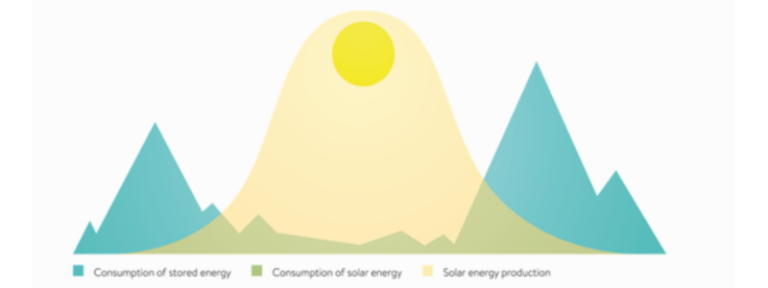
One of the most common applications, particularly in countries with high energy costs (i.e. a high price per kWh), is to charge the battery with cheap, self-produced kilowatt-hours and then discharge it once the sun has gone down. Depending on the time of year and energy needs, the battery can cover anything from an hour or so to the following day. In this case, the control strategy is based on recorded exports triggering the battery to start charging. Once the battery is full, electricity is exported and sold to the grid.
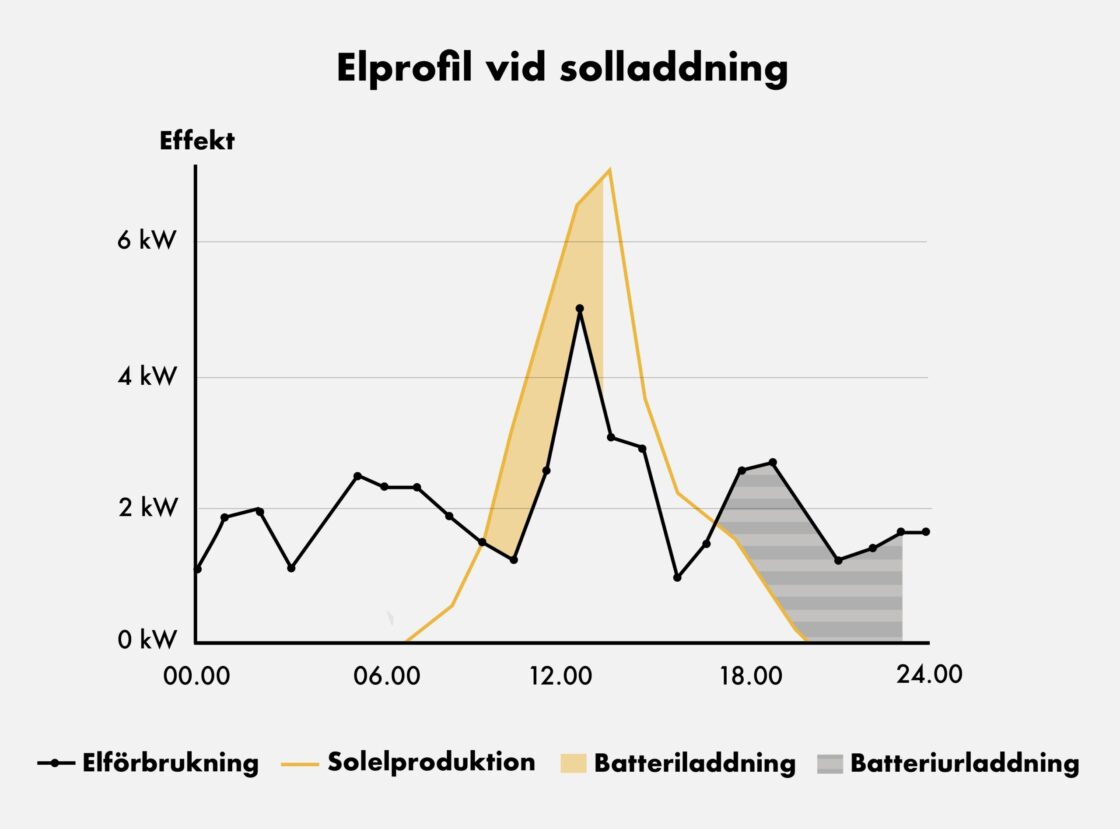
Example 1: Profitability of solar charging
Depending on the year assumed, the profitability calculation will differ somewhat, but for a 10 kWh battery, the annual benefit can range from saving a few hundred kronor to losing a few hundred kronor. Profitability can be negative because prices are higher in the middle of the day, when the battery is being charged. You can therefore end up with a negative return if the price is lower in the evening when you sell the electricity.
Spot price arbitrage
The price on the Nordic electricity exchange Nordpool is set at 14:00 for trading the following day. In other words, the electricity price is known several hours in advance. This can be used to charge a battery when the price is low (usually overnight) and then discharge it during the high-price hours. This control strategy is called spot price optimisation or spot price arbitrage.
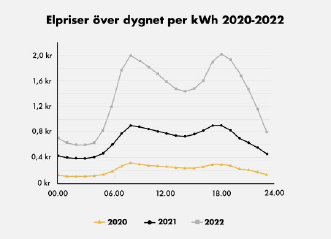
Example 2 Profitability of spot price optimisation
When optimising an energy storage system for spot prices (for example, a 10 kWh system), profitability depends heavily on the difference in electricity prices between night and day. Comparing recent years, for instance the low-price year of 2021, when profitability was SEK 500/year, with 2023, when energy prices were sky-high and profitability was SEK 3,700/year, shows that this is a very volatile market and that battery profitability depends entirely on the energy market.
| Year | Profitability |
|---|---|
| 2021 | 500 kr/year |
| 2022 | 1,400 kr/year |
| 2023 | 3,700 kr/year |
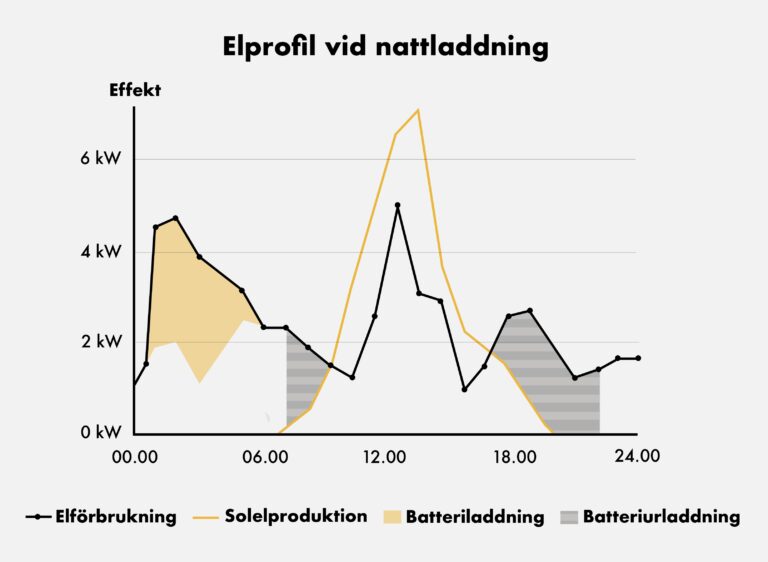
When overnight charging is used, the battery is charged for a number of hours after midnight so that it is fully charged by breakfast, when it then discharges. During the day, the solar panels supply any loads and charge the battery. In the evening, the battery can discharge to avoid the hours with the highest prices.
Time control
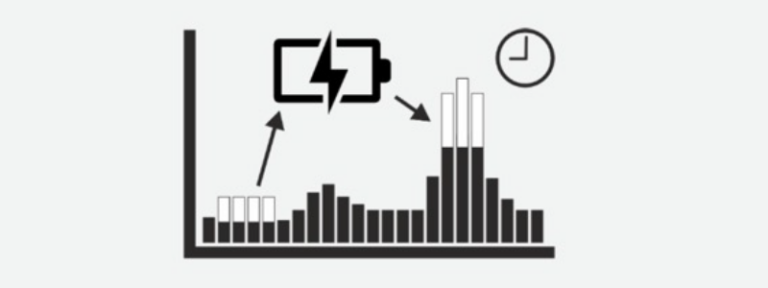
Time control means that the battery’s charging and discharging are controlled according to a schedule. This is a more static way to control an energy storage system, but it is often the method built into the software at the factory. This is simply because there are many energy markets to integrate with if you are a manufacturer of battery inverters. It should therefore not be confused with spot price optimisation, which is based on the electricity price, whereas time control depends only on the time. Of course, you can draw conclusions about when prices tend to be high or low, but there is no guarantee of success.
Reduce peak demand
By 2027, demand-based tariffs are to be implemented by Swedish electricity network operators, according to the Swedish Energy Agency. Exactly how the tariff will be designed will vary between network operators, but in general, high average power demand will be penalised. The purpose of the demand-based tariff is to reduce high power consumption and even out the load on the electricity grid. From a socio-economic perspective, it is significantly more cost-effective to design an electricity system that can accommodate a lower peak demand. It is important to emphasise that you pay for both power and energy. Demand-based tariffs already exist today, particularly for those with higher main fuses. Usually 63–125 A. The demand-based tariff therefore means that households able to reduce their peak demand are not penalised with high power costs. For example, Gothenburg has already introduced demand-based tariffs for all its subscriptions, from small houses to large industrial facilities.
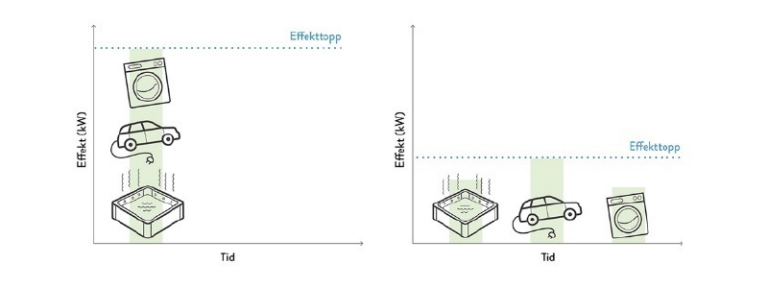
For a homeowner, this means there are both incentives and money to be saved by spreading out their loads. If, for example, a hot tub uses 3 kW, an electric car 5 kW and a washing machine 1 kW, running them at the same time creates a peak demand of 9 kW. If the loads are spread out instead, the highest hourly demand will only consist of charging the electric car (which has the highest power consumption), and the peak will therefore be 5 kW. The difference between these two peaks is 4 kW, which would save you SEK 145 that month in the Göteborg Energi network, for example (where the price is SEK 36.25/kW).
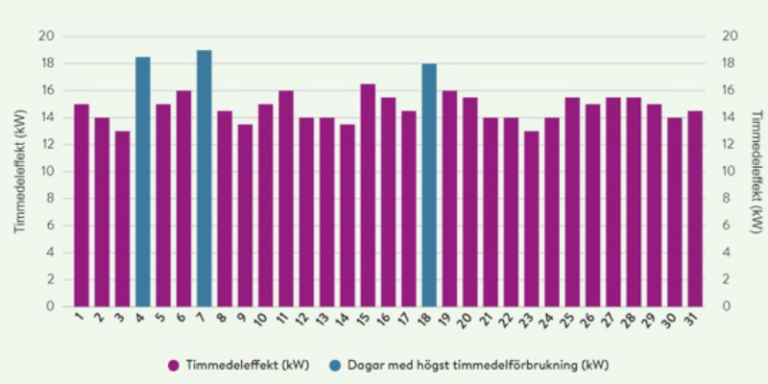
How the peak demand is calculated will vary from one network operator to another. In Gothenburg, it is calculated as the average of the three highest hours each month, spread across three different days. What is clear is that property owners who can adapt and use their electricity more intelligently will be the winners!
Capacity tariffs are linked to energy storage and peak shaving, as the battery can be configured to handle electricity consumption when it rises above a set level. This means the battery handles the peak demand, while the grid is only used up to a set level. The battery therefore delivers a direct benefit by avoiding peak demand charges from the grid operator.
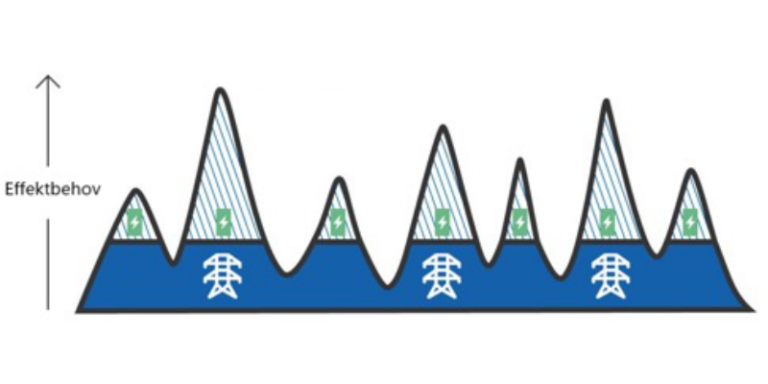
A battery intended for peak shaving must be sized precisely. If it is not sized correctly, the costs will not be avoided, even though you have invested in a battery. A battery used to reduce power costs prioritises charging from the grid so that it is always full if a peak occurs. In other words, as soon as the property’s power demand falls below the battery’s discharge threshold, it starts charging from the grid (or using solar power) instead.
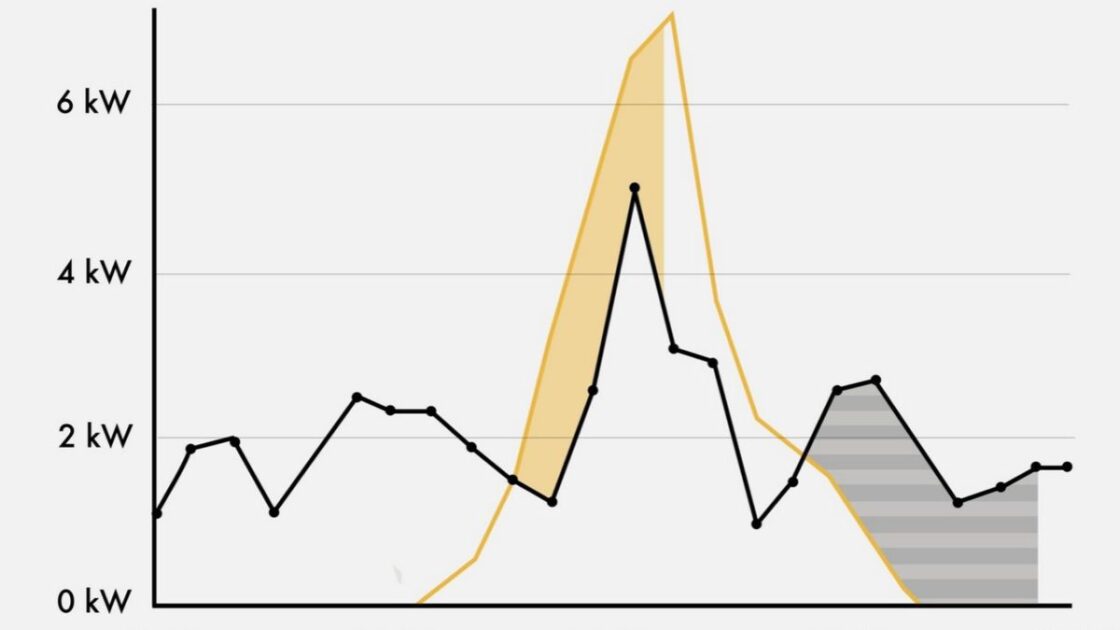
Since a battery has both power and energy capacity, a peak also has both. The height of the peak is its power, so the battery must be powerful enough to handle the entire peak.
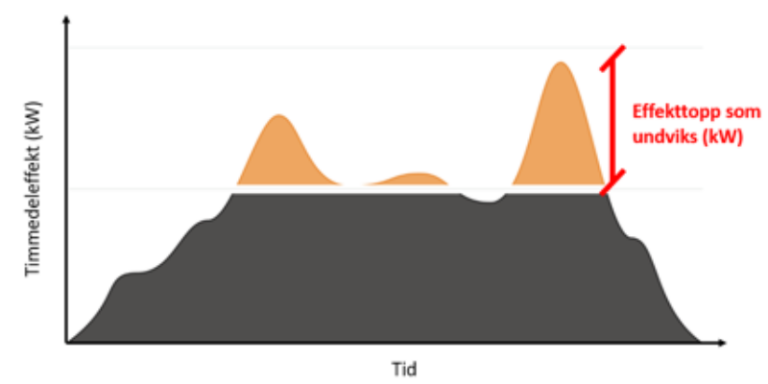
When the peak lasts for a certain period, its power over that time corresponds to a certain amount of energy. This can be seen as the area under the peak. A peak that lasts longer therefore has a larger area and requires more energy (chemically bound energy from the battery), without necessarily requiring a higher power output.
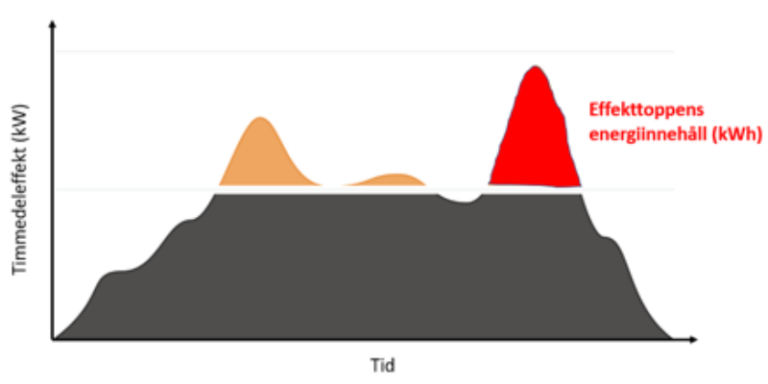
Sizing must account for more than just a single peak. For example, if several peaks occur in succession and the battery does not have time to recharge in between, they may need to be treated as one continuous peak. The battery’s degradation and its actual discharge window must also be taken into account. This is because not all of the battery’s capacity is used, and its capacity is expected to decline each year. A certain safety margin should also always be allowed for, to avoid the risk of the battery running empty during a power peak.
Example 3 Profitability of peak shaving
The profitability of peak shaving depends greatly on the price per kW charged by the grid operator. The trend has clearly been for the price to increase year on year. Costs vary depending on the grid company. For example, the price is SEK 117.50/kW for EON Syd and SEK 36.25/kW for Göteborg Energi.
How much of the peak demand can be shaved depends entirely on the property's electricity usage patterns. However, based on a battery's potential, we can estimate the value. Let us assume a Ferroamp system with an Energy Storage Stack battery (ESS) with a capacity of 10 kWh/6 kW. We will assume that 5 kW can be shaved off the peak (i.e. not the full 6 kW capacity). The monthly saving in reduced grid costs would therefore be SEK 587–181 per month.
Island mode/backup
As you may know, a standard inverter cannot power the house during a power cut. However, if you invest in an inverter that supports backup, it can power all or part of the house even during a power cut.
This is a very common question from people planning to invest in a solar power system. This is often because they think that all inverters can do this. But that is not the case. Only certain inverter models can operate in island mode, and they do so in different ways.
There are a few terms to be familiar with regarding island mode and backup:
Backup – the inverter shuts down for a few seconds up to half a minute before starting up again in island mode.
UPS, Uninterruptible Power Supply – the inverter switches over to island mode in just a few milliseconds. This means electronic equipment does not even have time to switch off.
Single-phase or three-phase backup – even if the inverter is three-phase, it cannot necessarily provide three-phase backup. That is, backup on all three phases, for example to power three-phase loads such as a heat pump or a water pump.

When sizing an off-grid system (note that we assume the system is normally connected to the electricity grid), both power and energy must be taken into account. Design choices must also be made about whether the system should have UPS functionality, whether the inverter should supply one or three phases in off-grid mode, and whether the whole system or only parts of it should be able to operate off-grid.
As a user of an off-grid system, you should clearly specify in advance which loads need to be powered during an outage and how many hours the system must be able to operate off-grid (without any solar power). As with peak shaving, battery degradation and the depth of discharge must be taken into account. You must also consider that if, for example, the battery is being used for something else before the power cut, it may not be fully charged. This adds further uncertainty and means that some of the battery capacity should be reserved for emergency operation during a power cut, for example 30% of its capacity.
If a house uses 20,000 kWh per year, that corresponds to an average consumption of 54 kWh per day. A typical stationary home battery is about 10 kWh. This should set the benchmark for how long the system can operate and what it can power. Technically, anything can be powered, in principle for as long as you like. It is a question of cost and depends on how much you are willing to invest.
The trade-off when sizing an off-grid system is that the more things you want to power during a power cut, the faster the battery will run out. Working out what is essential during off-grid operation and what you can manage without is an important piece of homework. Lighting and a router, for example, are small loads compared with a heat pump. Remember that off-grid systems require an external earth electrode.
Flexibility markets
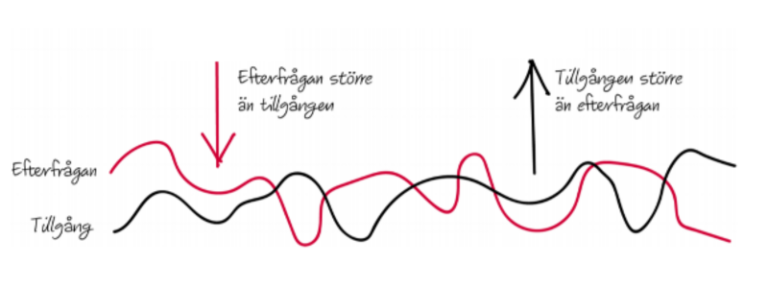
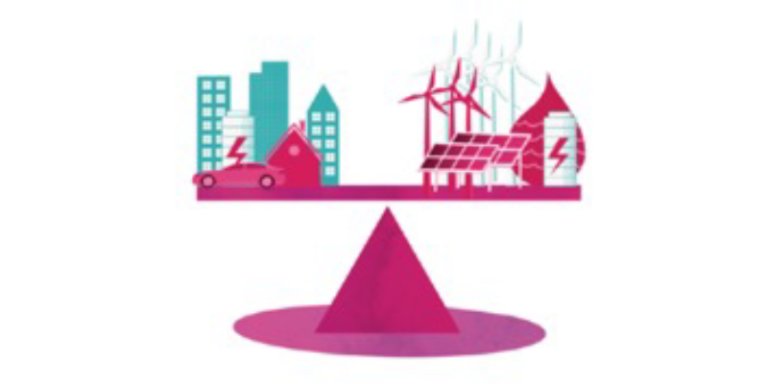
The electricity system must always be balanced. At every moment, the amount of electricity produced must equal the amount consumed. The balance can be maintained by controlling both production and consumption. Svenska Kraftnät is responsible for balancing the electricity grid and, in turn, purchases the ability to control consumption on the electricity market. Previously, only larger electricity consumers could participate in trading frequency services (for example, hydropower plants). Smaller resources were previously excluded, but when an operator brings together several resources, a virtual power plant is formed from aggregated flexible resources, allowing them to participate. These resources could, for example, be batteries, electric vehicle chargers or solar panels that can be used in these flexibility markets. With the help of these services and operators (known as aggregators), both homeowners and tenant-owner associations that own a flexible resource can earn revenue from these markets.
Conclusion
There are several different ways to use a battery. Many of these are mutually exclusive, meaning only one can be performed at a time. This means you have to prioritise which activity you want your energy storage system to carry out. Successful system design starts with a good understanding of the client’s requirements, as well as good product knowledge.
Need help finding the right option?
We know it isn’t always easy to know which product or solution is best for you. Whether you have questions about our range, need guidance or would like help finding a solution that suits your specific needs, we’re here for you. We’ll help you make the right choice with our knowledge and experience.
Related posts
This is how a fire safety engineering design is carried out
Solar energy systems with open architecture – the flexible energy solution of the future