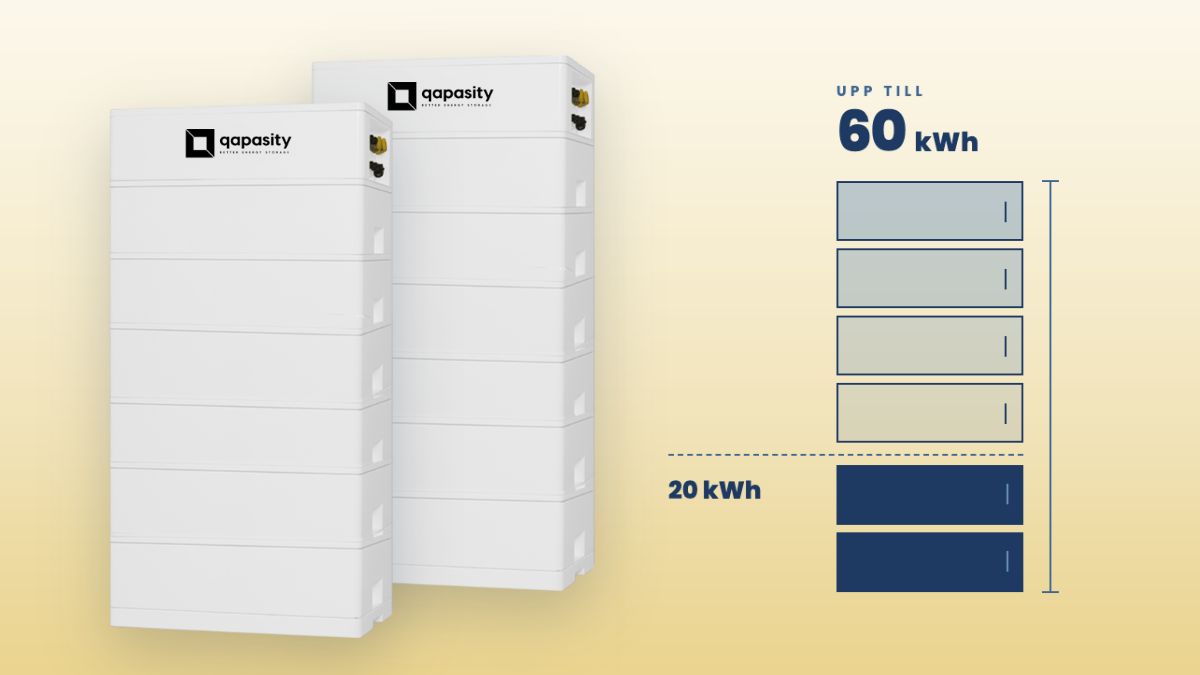




Home batteries – A profitable investment for the future
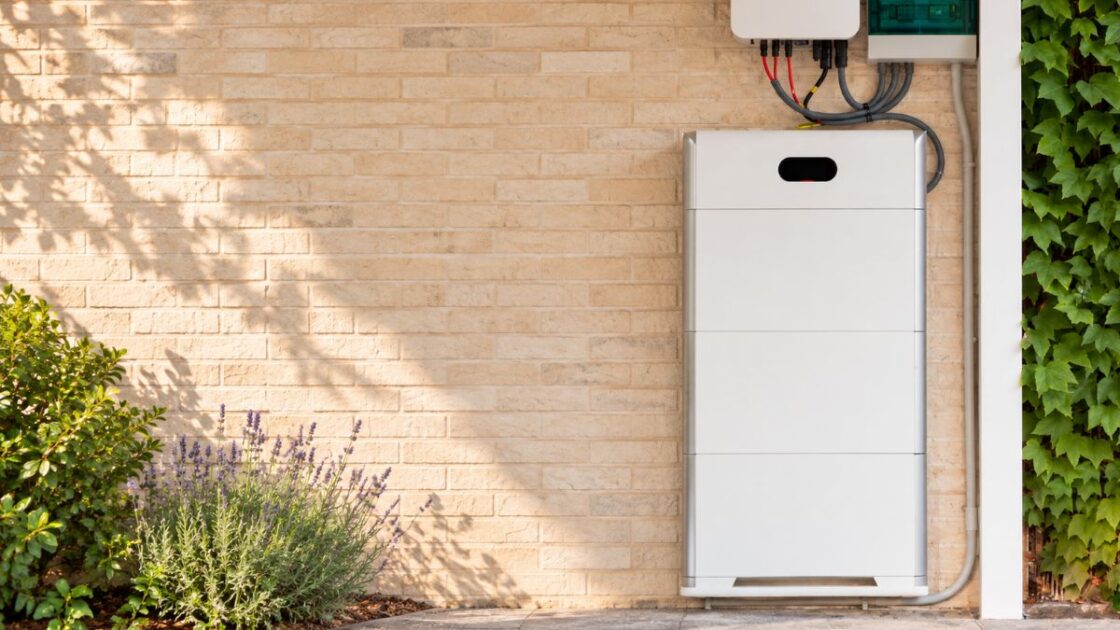
What is Svenska Kraftnät’s frequency market?
There is probably no one in the industry who has failed to notice that Svenska Kraftnät’s (SvK) frequency market exists, especially after the record year of 2023. Compensation for balancing services has now fallen, but ancillary services are still the best way to earn money from your battery. There are currently six markets in which you can offer your energy:
- FCR-N
- FCR-D up
- FCR-D down
- FFR
- aFRR
- mFRR
Which services you can use your battery for depends partly on the battery and the aggregator you have. In the case of home batteries, they are mainly used for FCR-D up and down, but they can also be used for FCR-N. It is important to be clear about the distinction here: FCR-N is a service that is always active and aims to keep the frequency at 50 Hz. As soon as the frequency falls or rises outside the range of ±0.1 Hz, FCR-D up/down is activated instead.
This means that FCR-D is used much less often; a battery active only on FCR-D is cycled around four times over an entire year. It is a service that minimises wear on the battery while still earning good money. By adding FCR-N, you can earn more, but the battery is cycled much more. Historically, compensation for FCR-N has been lower than for FCR-D, but on a few occasions FCR-N has overtaken FCR-D in price.
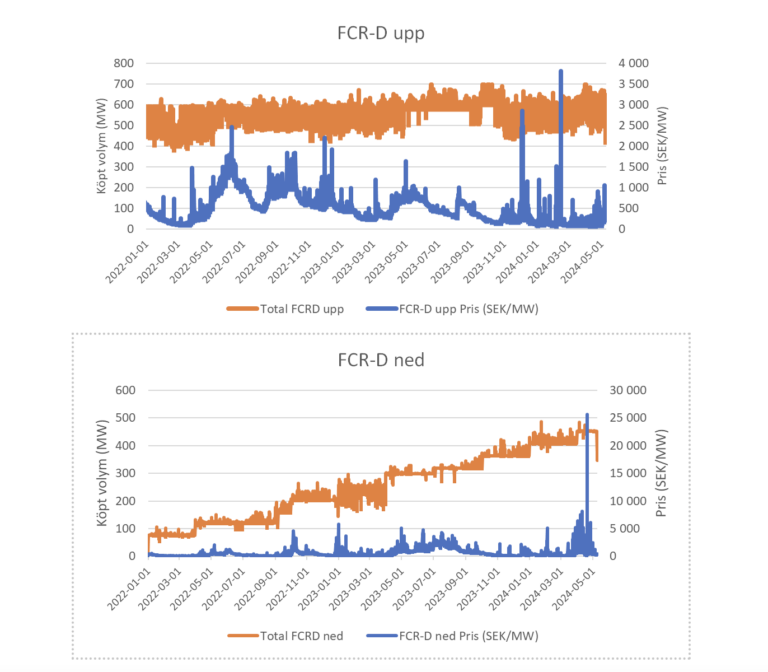
Apart from a few high peaks, compensation so far in 2024 appears to be somewhat lower than in 2023 for the FCR-D markets. However, volume, particularly for FCR-D down, has increased, creating room for more batteries.
The green tax deduction and home batteries
Since 4 July 2024, homeowners have once again been eligible for the green tax deduction for home batteries. The Swedish Tax Agency has reversed its position, going from completely rejecting batteries connected to any ancillary service to saying that they are acceptable in certain cases. The new wording is that “batteries used wholly or partly to store self-generated electricity qualify for a tax reduction, even if the battery is also used partly for ancillary services or electricity price arbitrage”. This means that households must increase their use of self-generated electricity to some extent in order to benefit from the green tax deduction.
This was recently considered by the Council for Advance Tax Rulings, whose advance ruling found that the Swedish Tax Agency’s previous interpretation was not supported by the legislation governing the green tax deduction. Its conclusion was that the conditions for receiving the green technology deduction are met if the battery has been used to cover a production shortfall using energy charged into the battery during a production surplus.
Aggregators and the green tax deduction
The issue surrounding the green technology deduction from the turn of the year until the summer was that the Swedish Tax Agency’s interpretation was that the battery had to be used entirely to cover production shortfalls with energy stored from production surpluses. When you connected an aggregator to your home battery, all these batteries lost the green tax deduction. This has now changed. Having an aggregator connected to your battery no longer automatically means losing the green tax deduction.
However, different aggregators offer different services. Some services have built consumption of self-generated electricity into their algorithms, while others are still focused entirely on frequency markets. Returning to the condition in the interpretation, the battery must cover a production shortfall using energy generated by the household’s generation system during a period of overproduction. In practice, this means that at some point during the year, the battery needs to be charged with self-generated electricity that is then used in the home.
Part of the discussion around this has been that some aggregators can do this while others cannot. We are not familiar with every aggregator, but we know that they work by controlling the battery and can change the settings on the battery they are connected to. This means they can manually set the battery to self-consumption mode for, for example, one day. The battery will then have met the condition in the law and qualify for the green tax deduction under the new interpretation.
Summary
As the green tax deduction has returned, the payments made by aggregators have also increased. For example, we have seen our partner Flower increase its payment, which now stands at SEK 310/kW compared with SEK 240/kW last quarter. That is an increase of 30%, while batteries have become 50% cheaper thanks to the green tax deduction. This means the payback period for batteries has been cut to less than half of what it was just a couple of months ago.
Investing in home batteries offers both financial and environmental benefits, particularly under the new rules and market conditions. By choosing the right aggregator and optimising battery use, households can help make the electricity supply more stable while also benefiting from financial incentives.
Need help finding the right one?
We know that it is not always easy to know which product or solution is best suited to you. Whether you have questions about our range, need guidance or would like help finding a solution that meets your specific needs, we are here for you. With our knowledge and experience, we will help you make the right choice.
Related posts
How much may the electricity network cost, and what may network owners earn?
What will happen to the price of solar panels and batteries in autumn 2026?