



When will we stop penalising solar panel and battery owners?

Introduction
Solar energy has quickly become one of the most popular and fastest-growing energy sources in Sweden. The technology is mature, investment appetite is high, and interest from both individuals and businesses is greater than ever. But despite this positive development, the industry still faces significant obstacles—not least from the structures and regulations that govern our electricity grid. Senergia wants to highlight these issues and show the way forward towards a more sustainable and equitable energy system.
We are on the brink of an energy revolution in which decentralised generation and smart solutions can make Sweden a pioneering nation in renewable energy. But to succeed, we need to dare to question old assumptions and challenge established patterns. Senergia works every day to help customers and partners navigate this change, and we can clearly see a great need for leadership, innovation and collaboration to take the next step. Our ambition is not only to be a technology supplier, but also a driving force for the development of the entire industry.
Resistance from electricity network operators
One of the biggest challenges for the solar energy industry is the high cost of grid-connected solar PV installations. In many cases, electricity network operators have introduced charges and requirements that make it expensive and complicated to connect even smaller installations to the electricity grid. Examples of what is being introduced include:
- Capacity charge on exported solar electricity
- Electricity connection agreement cost for microgeneration
- Metering charges for electricity connection agreements for microgeneration
- Connection costs for connecting microgeneration
- Charges that do not promote renewable generation and/or batteries
This risks slowing the expansion of solar energy and making the transition to a fossil-free energy system more difficult. One example of this is C4 energi, which has introduced a capacity tariff on exported solar electricity.
| Peak power - time | 9 May, 14:00–15:00 | 17 May, 09:00–10:00 | 23 May, 12:00–13:00 |
|---|---|---|---|
| Peak power - kW | 5 kW | 6 kW | 7 kW |
| Average - kW | 6 kW | ||
| Example price, SEK/kW | Example price: SEK 18/kW (example price; the actual price will be announced later) | ||
| Total capacity charge | SEK 108 (6 kW × SEK 18/kW) | ||
The costs of connecting to the electricity network vary greatly between regions and network operators, creating uncertainty and unfair conditions for both installers and end customers.
Many customers report unpredictable and sometimes unreasonably high connection charges, particularly for larger installations or when several installations are taking place in the same area. In some cases, network operators have introduced waiting times or even halted new connections, citing a lack of capacity or the need to reinforce the network.
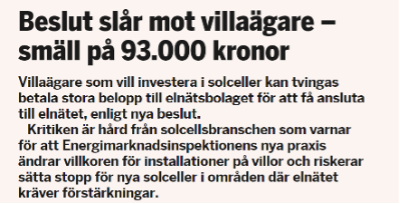
This leads to investments being postponed or abandoned altogether, despite the technology being available and strong demand for it. It is clear that today’s model is not suited to a future in which more and more people want to generate their own electricity and contribute to the energy system. But the fact is that electricity network operators have had to back down on unreasonable connection costs. This is something network operators have subsequently had to back down on after being reprimanded by the Swedish Energy Markets Inspectorate.
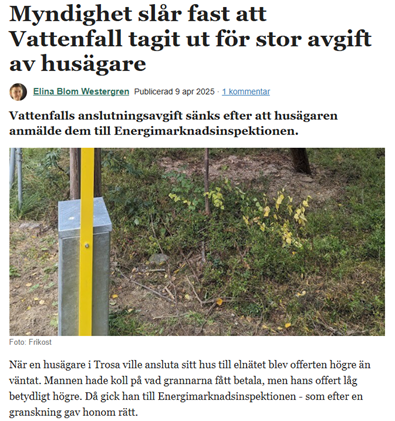
The problem is not that Vattenfall was found to be in the wrong in this case, but that the customer was initially given a completely unreasonable estimate of what it would cost to connect solar panels to the electricity grid. As will be mentioned later in the post, it is possible to drastically reduce the solar installation’s export to the electricity grid and its, according to the network operator, negative impact. The major problem is the deterrent effect that this type of behaviour has on potential solar customers and ordinary homeowners. It is a systemic failure that must be fixed!
The solution? Design solar installations for zero export
One way forward is to design solar installations for zero export, meaning that all the electricity generated is used locally, without being fed into the grid. With smart controls, battery storage and appropriately sized systems, self-consumption can be maximised, thereby avoiding costly grid charges. This is a solution that benefits the customer and eases the burden on the electricity grid, but it requires regulations and incentives to be adapted to support this development.
| Battery capacity | Consumption | Export kWh |
Self-consumption (PV + Batt) kWh |
Self-sufficiency % | Self-consumption % |
|---|---|---|---|---|---|
| 5kWh | 15MWh | 4880 | 4317 | 28,7 | 46,8 |
| 10kWh | 15MWh | 3862 | 5242 | 34,9 | 57,4 |
| 20kWh | 15MWh | 2262 | 6889 | 45,9 | 75,2 |
| 30kWh | 15MWh | 1638 | 7238 | 48,2 | 81,5 |
| 40kWh | 15MWh | 1482 | 7557 | 50,3 | 83,6 |
By combining solar panels with batteries and smart control systems, property owners and businesses can optimise their energy use and reduce their dependence on the electricity grid. This means they can generate, store and use electricity when it is needed most, for example to charge electric vehicles, run heat pumps or meet a household’s basic needs. At the same time, this reduces the load on the electricity grid, which is particularly important in areas where capacity is limited. However, for this solution to become truly attractive, regulations need to be adapted so that they do not penalise those who choose to invest in their own energy generation and storage.
A missed opportunity with distributed resources
By failing to harness the potential of distributed energy resources such as solar panels, batteries and electric vehicles, we are missing a huge opportunity to create a more flexible and robust electricity system. These resources can contribute everything from local power balancing to ancillary services for the entire electricity grid. However, today’s regulations and price signals are not designed to encourage this development.
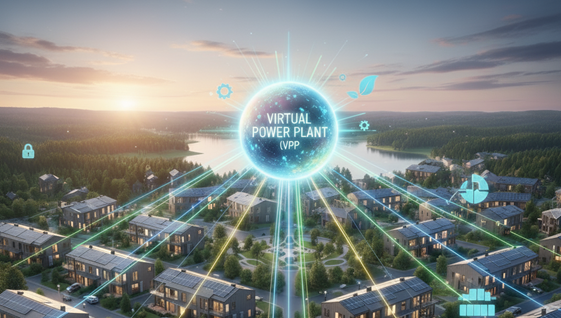
In other countries, we can see how distributed resources are integrated into the energy system and help reduce the need for costly grid investments and centralised generation. In Sweden, the technology and expertise are available, but the incentives are missing. If we want to create a future-proof electricity system, we must give households and businesses the opportunity to participate actively in the energy market—not only as consumers, but also as producers and providers of flexibility. It is a win-win for both the system and its users, but it requires us to dare to think differently and open up the market to more players.
Give with one hand and take with the other
There are several examples of how the system today works against its own objectives. Electric vehicle charging stations are forced to shut down because of high peak power charges, despite being essential to the electrification of the transport sector. At the same time, homeowners with solar panels and batteries cannot participate in ancillary services markets because capacity tariffs make it unprofitable, or even impossible. It is clear that, on the one hand, there is a desire to encourage new technology and sustainable solutions, while on the other hand, charges and regulations are introduced that undermine these initiatives.
This creates a situation in which investment in green technology is penalised instead of rewarded. Many homeowners and businesses that want to contribute to the transition face bureaucratic obstacles and financial disadvantages, even though their efforts could benefit the entire energy system. It is not sustainable to have a regulatory framework that both encourages and discourages the same solutions; what is needed is a holistic approach and a willingness to establish long-term, predictable rules of the game.
An example from France
To clarify, it is currently not possible for participants in virtual power plants (VPPs) to earn revenue that is then wiped out by increased network costs. Today, capacity tariffs hit batteries participating in markets (for example, mFRR or FCR-N, which cause peak power demand) extremely hard. This means that revenue from the ancillary services market is swallowed up by network costs.
France is now taking a major step towards smarter electricity grids by introducing a new network charge, TURPE 7, which provides local price signals for energy storage. Previously, national electricity prices determined when batteries were charged and discharged, but now batteries have financial incentives to be located and controlled where they can actually do the most for the grid. Under the new model, batteries are paid if they help reduce local grid load, for example by charging in the middle of the day when there is a surplus of solar power in a particular network section. This reduces the risk of batteries being installed in the wrong places and helps avoid overinvestment in areas where they are not needed, while also reducing the need to curtail solar and wind generation when the grid is locally overloaded.
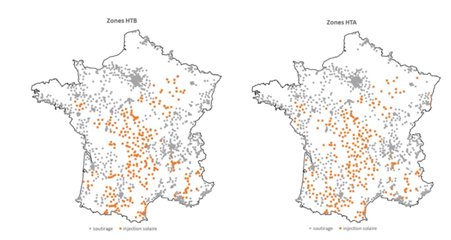
For investors and owners, the change means new requirements to ensure that control systems and metering genuinely comply with the tariff rules, since even small errors in timing or data collection can lead to financial losses. All in all, this is not central planning, but rather a market-based approach to pricing and rewarding the benefits that energy storage can deliver locally – an important step towards a more flexible and efficient electricity system.
The system must be reformed
For Sweden to fully benefit from solar energy and other distributed resources, electricity network charges and electricity tax must be reformed. Tariffs must reflect the benefits delivered to the system – for example, local power balancing, reduced strain on the network and increased security of supply. Electricity tax should be harmonised with supply and demand, so that it encourages generation and consumption when and where they are needed most. Only by creating fair, forward-looking rules can we build an electricity system that is sustainable, robust and beneficial to everyone.
It is time to move from words to action. We need a regulatory framework that rewards innovation, flexibility and sustainability – not one that locks us into old structures. Senergia wants to see open and transparent dialogue between industry, authorities and politicians to create a modern and inclusive energy system. We believe in a future where everyone can take part and contribute, and where the benefits of every investment in renewable energy accrue to both the individual and society as a whole.
Let us summarise this post in a few points about what needs to be done:
- Solar PV installations must no longer be penalised. Capacity charges on exported electricity, connection costs, electricity connection agreement costs, etc. must be removed immediately, and legislation must be introduced to prevent them from being imposed.
- Electricity network operators cannot charge unreasonable connection costs. Future solar PV installations will only export electricity to the grid when it is needed. In that case, people should not have to pay to connect.
- Battery owners cannot help support the electricity system while at the same time being penalised with increased network costs.
- Digitalise the electricity system and incorporate forecasts from microgenerators, while ensuring that installations are optimised to maximise benefits for the electricity network and individuals.
- Capacity tariffs must be reviewed before they are implemented! Listen to Thorsten Handler, On capacity charges, electricity tax and the conditions for combined heat and power – LINK
- The solar industry must start designing and controlling installations in a way that minimises costs to the network. In other words, design for self-consumption.
- Produce public network maps like those in France and enable batteries to be connected quickly in the right place on the network!
Senergia is ready to lead this development together with our partners, customers and industry colleagues. Together, we can create an energy system that truly meets the demands and opportunities of the future.
Need help finding the right option?
We know it isn’t always easy to work out which product or solution is best for you. Whether you have questions about our range, need guidance or would like help finding a solution that suits your specific needs, we’re here for you. With our knowledge and experience, we’ll help you make the right choice.
Related posts

Senergia gains a long-term, financially strong principal owner.

Senergia’s incoming CEO Tim Ljunggren – This is where the energy industry of the future is being shaped