



How will Sweden’s solar panel installers be affected by China’s new direction?
A wave of change is sweeping through the global solar industry
And what is happening in China affects us all, not least Swedish installers and businesses across the solar supply chain. But what exactly is happening, why is it happening now, and what does it mean for us here in Sweden? Here is a clear overview of the situation, what lies behind it, and what we should bear in mind going forward.
Background: China’s solar panel industry in focus
Over the past decade, China has grown to become by far the world’s largest producer of photovoltaic panels and solar panels. The biggest manufacturers – names such as LONGi, JA Solar, Trina, Tongwei and Jinko – have dominated the market and supplied products to the entire world, including Sweden. This has led to low prices, rapid technological development and enormous growth in solar energy globally.
However, this development has also had its downsides. Overcapacity, price dumping and, at times, inadequate quality control have become recurring problems. Over the past year, it has also become clear that many Chinese manufacturers have produced far more than the market can take up, leading to large inventories, squeezed margins and concerns about the industry’s long-term sustainability.
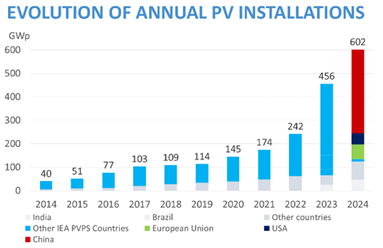
This has benefited the global expansion of solar energy, which would not have been possible at all without China. China has been the international driving force and installed more solar energy than any other country in 2024. It even installed more solar energy than the next 10 countries in the world rankings combined.
What has happened now?
Three important news stories have dominated coverage over the past month:
- China’s solar giants have been forced to lay off staff According to Reuters, several of the largest manufacturers have quietly and rapidly reduced their workforces – up to a third of staff have been laid off over the past year. This is a clear sign that the industry is going through a difficult restructuring, with overcapacity and price pressure forcing cuts and efficiency improvements.
- The polysilicon industry – the heart of solar panel manufacturing – is being reined in Another Reuters article reports that China’s largest polysilicon manufacturers (polysilicon being the most important raw material for solar panels) are now planning to shut down up to a third of the industry’s capacity. This is being done through a joint fund worth the equivalent of US$7 billion, which will be used to decommission older and less competitive factories. The aim is to reduce oversupply and stabilise prices.
- China is introducing measures to tackle overcapacity and stabilise prices The Chinese authorities have called leading manufacturers to a high-level meeting. There, they have clearly signalled that the state now wants better control over production, higher quality standards and to prevent the market from being flooded with cheap, low-quality products. So this is not just about raising prices, but about creating a more sustainable, quality-focused industry.
Why is China doing this?
It is easy to assume that the government is trying to drive up the prices of solar panels. But according to experts and industry analysts, there is more to it than that. China’s solar industry has become a strategic asset for the country – just as important as oil, gas or coal are to other countries. It no longer wants to sell below production cost, dump low-quality products on the global market or risk seeing the entire industry eroded by an unsustainable price war.
Instead, the Chinese government wants to:
- Stabilise prices so manufacturers can survive and continue investing in development.
- Ensure quality and traceability so that Chinese solar panels remain globally competitive.
- Protect the industry’s long-term survival and prevent strategic assets from being lost.
What does this mean for Swedish installers and businesses across the solar supply chain?
Here are the key implications and what to bear in mind:
- Solar panel prices are likely to rise
As overcapacity disappears and production is reined in, there will no longer be the same surplus of cheap panels on the market. The record-low prices we have seen in recent years are probably a thing of the past. This means that installers and distributors in Sweden will need to factor in higher purchase prices going forward. - Product quality will improve
As China now focuses on quality control and traceability, we are likely to see fewer low-cost products of questionable quality. This is positive for Swedish customers and installers, as it reduces the risk of complaints and problems further down the line. - Greater volatility and uncertainty in the short term
As the market shifts from oversupply to more balanced production, we can expect greater price movements and uncertainty during a transition period. It is important to be especially vigilant when making purchases and to ensure flexibility in your contracts. - Need for new purchasing strategies and contract terms
With prices fluctuating, businesses now need to start using price adjustment clauses in their contracts and tracking a PV price index. This provides a transparent and fair mechanism for managing price volatility—and protects both buyers and sellers against unexpected fluctuations. This is especially important for larger projects. Make sure that the quotes you provide as an installer are not valid for too long, and that the time between signing a contract and actual installation is not too long. Price fluctuations (and increases) can happen quickly and wipe out margins and profits. - Focus on long-term relationships and strategic purchasing
As the market becomes more regulated and quality-focused, it is becoming increasingly important to build long-term relationships with suppliers and think strategically about purchasing. It is no longer just about chasing the lowest price, but about securing access to the right products, at the right time and with the right quality.
For Swedish solar panel installers and businesses across the supply chain, this means:
- Be prepared for higher prices – factor this into your quotations and business plans.
- Focus on quality – choose suppliers that can demonstrate traceability and meet high standards.
- Use flexible contracts – include price adjustment clauses and follow a relevant price index.
- Build long-term relationships – work closely with your suppliers and be clear about your requirements.
- Keep a close eye on developments – the market is changing, so stay up to date and be ready to adapt quickly.
Final reflection
What is happening in China right now is not just a temporary crisis or a short-term price adjustment. It marks the beginning of a new phase for the entire global solar industry – and it affects us directly here in Sweden. The days when you could buy ultra-cheap panels without thinking about quality or the long term are over. The future belongs to those who can navigate a more mature, regulated and quality-focused market.
How can you, as an installer, work with us at Senergia?
To navigate the new reality of the solar market, it is more important than ever to work strategically with the right partner over the long term. As an installer, you can benefit greatly from working closely with Senergia and our sales team. By building a partnership with us, you gain access not only to the market’s most relevant products and up-to-date pricing information, but also to expertise in quality requirements, delivery reliability and contract terms that protect your business in times of volatility.
At Senergia, we can help you analyse market developments, plan your purchases and create flexible agreements with price adjustment clauses that provide security for both you and your customers. Together, we can develop long-term strategies for stock management, project planning and technical support – all to help you focus on delivering the greatest possible value to your end customers. By partnering with Senergia, you will be better equipped to face the challenges and opportunities ahead in the solar market.
Are you ready for the next chapter? Now is the time to think differently – and smartly.
Sources:
Reuters: China’s solar giants quietly shed a third of their workforces last year
Reuters: China polysilicon firms plan $7 billion fund to shut a third of industry capacity
PV Magazine: China moves to curb solar overcapacity, stabilise pricing
Yana Hryshko’s LinkedIn post – LINK
Need help finding the right option?
We know it’s not always easy to know which product or solution is best for you. Whether you have questions about our range, need guidance or would like help finding a solution that suits your particular needs, we’re here for you. With our knowledge and experience, we’ll help you make the right choice.
Related posts
Senergia gains a long-term, financially strong principal owner.

Senergia’s incoming CEO Tim Ljunggren – This is where the energy industry of the future is being shaped