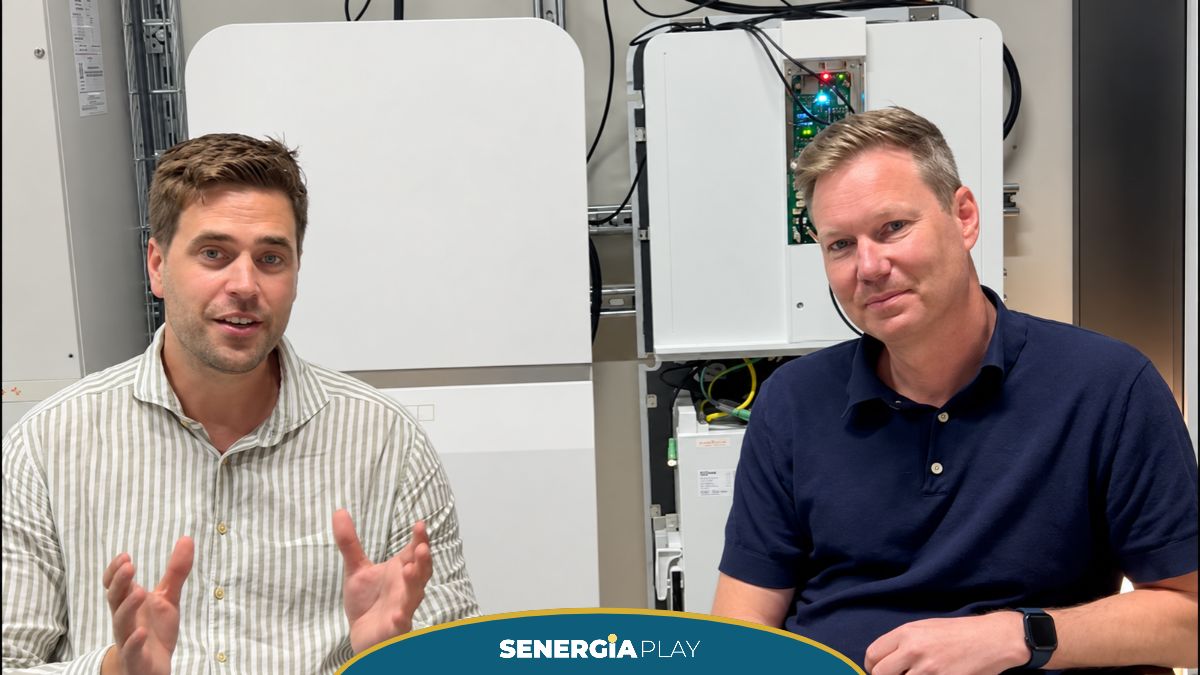




We meet the energy-market aggregator Qurrent.
How can battery storage create value for both its owner and the electricity grid? In this episode of Senergia Play, Tim meets Mats, CEO and founder of Qurrent, for a conversation about smart control, ancillary services and the energy systems of the future. We explore how batteries and solar farms can be coordinated to balance the electricity grid, reduce peak demand and generate revenue across different electricity markets. We also discuss what property owners, farms and industries should consider before investing in energy storage—with a focus on flexibility and long-term profitability.
0:22
22 seconds
In this video, I’m joined by Daniel from Timen. Hi, Daniel.
0:26
26 seconds
Hi. Hi. We’re going to take a bit of a deep dive and perhaps talk more about the broad strokes and what’s
0:34
34 seconds
actually happening in the energy transition. But first of all, who are you?
0:40
40 seconds
Yes, my name’s Daniel. Er, I’m one of the co-founders of Tibber, so I started Tibber, what was it, nine years ago
0:47
47 seconds
now? Quite a long time ago. I’ve got a lot of experience in the energy market, but above all, my heart is in this area, so I, well, I live and breathe
0:56
56 seconds
it. I do most things related to it, with my home, my gadgets, my family and everything. How we build things and learn from the energy transition.
1:06
1 minute, 6 seconds
Er, my impression of Tibber before we got to know each other, now that we’ve been working together for a while, was that you were
1:14
1 minute, 14 seconds
perhaps not the only ones, but at least I felt that you didn’t want to sell kilowatt hours to your customers. Mm.
1:22
1 minute, 22 seconds
You had a completely different approach.
1:23
1 minute, 23 seconds
Can you tell us how you came to that way of looking at things?
1:26
1 minute, 26 seconds
Yes. Well, it’s an interesting thing. Since I’d worked in the energy industry for quite a long time, I’d worked for the big energy companies. I’d worked on
1:35
1 minute, 35 seconds
and delivered systems to them, and built lots of technology and solutions. But what
1:44
1 minute, 44 seconds
struck me in the last few years working with those types of companies was that the relationship between customers and energy companies is based on the wrong premises. An energy company wants to sell as much electricity as possible at the highest possible energy cost
1:54
1 minute, 54 seconds
to consumers, while customers want to use as little energy as possible at the lowest possible cost. So there’s a contrast here that doesn’t
2:09
2 minutes, 9 seconds
really work. The business model and customers’ needs don’t align well.
2:15
2 minutes, 15 seconds
They’re almost at odds with each other. One wants to sell at the highest possible price, and the other wants to buy as cheaply as possible.
2:21
2 minutes, 21 seconds
Exactly. And you want to sell as much of your product as possible, while the customer wants as little of it as possible, and that creates a real contrast.
2:28
2 minutes, 28 seconds
But the really negative thing about doing it this way was that energy companies, because of this situation, took the view that
2:36
2 minutes, 36 seconds
they wanted passive customers, because passive customers use more electricity and care less about when they use it and whether the price is reasonable.
2:47
2 minutes, 47 seconds
So you end up in a situation where you want to prioritise passive customers. When people become active, start asking questions and want to get involved,
2:55
2 minutes, 55 seconds
the energy company starts grumbling and asking how it can get out of the situation. Mm.
3:02
3 minutes, 2 seconds
That’s where my frustration started to grow. This just doesn’t work. Because if you look at the bigger picture, people have to
3:10
3 minutes, 10 seconds
become more engaged with energy if we’re going to manage the transition to renewable energy in the energy system.
3:19
3 minutes, 19 seconds
So it became obvious to me that all these companies working in this area today have a big problem.
3:25
3 minutes, 25 seconds
They have to transform their entire business model. And I saw very few opportunities for these big companies to do that. Mm.
3:31
3 minutes, 31 seconds
So there’s an opportunity. If instead we come up with a new business model, where we sell less energy and want to help people use energy more intelligently, then
3:39
3 minutes, 39 seconds
we’ll be on the same side as our customers, and we’ll have the same motivation. I thought we could create a bit of magic. And that was the basis for Tibber.
3:47
3 minutes, 47 seconds
And somewhere in all this, we have electrification underway. We have a major rollout of renewables,
3:54
3 minutes, 54 seconds
while batteries, solar panels and all the things we’ll talk more about later are coming along at the same time. What did you see in this, well, this mix, if we can call it that?
4:05
4 minutes, 5 seconds
Well, there was a bigger gap between those supplying electricity and those using it. The technology in between also became a significant challenge for the energy companies. If I buy solar panels and do these things, I can almost become independent of my energy company.
4:23
4 minutes, 23 seconds
And that’s where a whole new era of technology and consumer engagement was born. It was
4:31
4 minutes, 31 seconds
almost hard to believe how big an impact it would have, and how engaged people could actually become in energy issues when they had the right tools
4:40
4 minutes, 40 seconds
in place. Information, the ability to have an impact and to decide how they want the way forward
4:48
4 minutes, 48 seconds
to look. And usually it’s generating electricity, solar panels and batteries that are the most common things that
4:56
4 minutes, 56 seconds
create the real momentum to do something completely different with your home energy.
5:01
5 minutes, 1 second
And in the home, there are so many devices that need to be connected. It’s really an entire ecosystem.
5:08
5 minutes, 8 seconds
How should homeowners think about this when they have an electric car, a charger for it, solar panels,
5:16
5 minutes, 16 seconds
a battery, perhaps a heat pump? Where do you see Tibber, as an electricity retailer, fitting into that context?
5:24
5 minutes, 24 seconds
Well, we’re moving away from the traditional electricity retailer’s role towards what’s really at the heart of Tibber today: controlling and optimising things in the home.
5:36
5 minutes, 36 seconds
Because, just as you describe, if I put solar panels on my roof, I want to use as much of that energy as possible. I might want to charge my electric car when it’s sunny.
5:46
5 minutes, 46 seconds
I want my battery to charge at the right time, but there’s also an electricity price that fluctuates throughout the day. You might want to plan so that it all works together
5:54
5 minutes, 54 seconds
as a whole. We see that we can be very useful here because, as Tibber, we can connect these devices and then help control
6:02
6 minutes, 2 seconds
and plan things. It’s interesting to look at who works at Tibber today. Most of our employees are engineers, building systems and technology and analysing how we can make homes smarter. They’re software developers.
6:19
6 minutes, 19 seconds
Absolutely. And it’s been that way almost from the beginning: the biggest part of Tibber has been software development, so we could build things that didn’t exist. How do you get
6:27
6 minutes, 27 seconds
an electric car and a charging point to respond to an electricity price? How do you get a battery to plan intelligently? How do you get
6:35
6 minutes, 35 seconds
solar panels to communicate with, for example, my heat pump? These are questions someone has to bring together, and that’s what we’ve chosen to do.
6:43
6 minutes, 43 seconds
What benefits would you say you get from, on the one hand, buying and selling electricity on behalf of your customers, you might say, and
6:52
6 minutes, 52 seconds
on the other, optimising their resources, being able to switch batteries on and off and control EV charging? What
6:59
6 minutes, 59 seconds
synergies do you get from being able to do both and do what’s best for your entire customer base?
7:05
7 minutes, 5 seconds
For one thing, we can achieve lower electricity prices for our customers. That’s a fundamental part of it. We can make electricity cheaper to use
7:14
7 minutes, 14 seconds
at home. But the other part, and this is the development we started last year, is that we realised
7:22
7 minutes, 22 seconds
when you connect all these devices, you can control them according to the electricity price, when it’s cheapest. But there’s much more to the energy system
7:31
7 minutes, 31 seconds
that needs support, such as the electricity grid and Sweden’s national grid operator, Svenska kraftnät, which needs ancillary services to keep
7:39
7 minutes, 39 seconds
the energy system in balance. We saw a huge opportunity: if we can connect all these devices and build what’s now called
7:48
7 minutes, 48 seconds
a virtual power plant, we can use it to balance the energy system.
7:53
7 minutes, 53 seconds
We started doing that, and it also largely led to the idea of batteries and what we wanted to do in that area. We realised that
8:02
8 minutes, 2 seconds
most of the batteries on the market at the time were very dumb and not very well prepared for what was coming. So we also
8:11
8 minutes, 11 seconds
decided that we wanted to look at whether we could build a completely new battery solution that didn’t exist at the time.
8:16
8 minutes, 16 seconds
And it feels like, looking back a number of years, most batteries were pretty unintelligent, if you can put it that way.
8:25
8 minutes, 25 seconds
They really lacked smart control, and the smart control that existed was behind the meter. Yes.
8:31
8 minutes, 31 seconds
It almost didn’t matter if the grid outside collapsed. You controlled your own little system as if you were alone in the world.
8:38
8 minutes, 38 seconds
Exactly. You’re bringing a system-wide perspective. How would you say you can enable this, perhaps by controlling EV chargers, switching batteries on and off, and managing charging and discharging? You have a huge opportunity to influence the system.
8:55
8 minutes, 55 seconds
Absolutely. That’s why we also see this as the moment when consumers get all this power they’ve been hoping for: all the things in the home start working together, and suddenly it becomes very valuable to the energy system for these things to be
9:10
9 minutes, 10 seconds
available. The money paid out for that then makes it cheaper and more efficient to use these devices at home.
9:17
9 minutes, 17 seconds
So you’re compensated for the benefits you contribute. Exactly. We called it Grid Rewards. That was our way of packaging it.
9:25
9 minutes, 25 seconds
Essentially, when you connect all these devices and join the system, you get paid by those who need help with this flexibility.
9:34
9 minutes, 34 seconds
And I know, Daniel, you’ve talked a lot before about how complicated it is to connect these devices and how they haven’t been very advanced or as plug-and-play as you might have hoped. Where are we now, and what do you see
9:50
9 minutes, 50 seconds
happening as we move towards getting smart control to work alongside all the different devices that need to be connected?
9:58
9 minutes, 58 seconds
It’s no secret that there are a lot of different players in the industry: manufacturers of inverters,
10:06
10 minutes, 6 seconds
batteries, EV chargers, cars, and so on. Getting all these things to communicate easily
10:16
10 minutes, 16 seconds
is a challenge, and it’s not just a challenge in this market. It’s a challenge in almost every industry where things need to communicate
10:23
10 minutes, 23 seconds
with one another. It will take time to bring all this together. I’d say we’ve come through the first stage, when it was very complicated
10:32
10 minutes, 32 seconds
to get things working. Mm.
10:34
10 minutes, 34 seconds
Now we’ve reached a point where things are starting to become a bit more stable. They’re starting to work together better, and we’re moving into the next
10:43
10 minutes, 43 seconds
stage, perhaps the most exciting one, where things really start working together. Standards are starting to be established.
10:52
10 minutes, 52 seconds
Hardware manufacturers are becoming much more aware that these things need to be considered. That means most of the products coming out now
11:00
11 minutes
are starting to be well prepared for smart control. This opens up a whole new world where we can create simple solutions. And why this matters is that if you’re really into technology, you can get most things to work. But most people
11:16
11 minutes, 16 seconds
who live in houses have plenty of other things in their daily lives they want to spend their time and energy on. Energy is just one thing that needs to
11:25
11 minutes, 25 seconds
work. So if we’re going to move from a world where there are just a couple of sockets in the wall to one with solar panels, batteries and EV chargers, all
11:32
11 minutes, 32 seconds
of this has to work together very easily. Just as you’d expect from mature products, like your phone when you take it out of the box,
11:40
11 minutes, 40 seconds
or streaming audio through Spotify and Sonos: things should just work simply. And that’s where we’re heading. Mm.
11:48
11 minutes, 48 seconds
It’s not that far off, and it means we can transform almost all of society in this way. We often talk about the tech enthusiasts. They’ve
11:56
11 minutes, 56 seconds
had their solar installations and batteries for several years now. This is now really becoming a mass market for almost anyone,
12:05
12 minutes, 5 seconds
especially people who didn’t think they were that interested and really just want their system on autopilot, doing the best possible job. They don’t want to think about it too much.
12:15
12 minutes, 15 seconds
Exactly. And the other thing we shouldn’t forget is that an installer has to come out and install these devices. If
12:23
12 minutes, 23 seconds
it’s all this complicated, it’s difficult to guarantee that it’ll work. When you leave, you’re left wondering whether you’ve got it right
12:32
12 minutes, 32 seconds
and waiting to see if the customer calls again in two weeks. You don’t want that. You want the feeling that you configure everything, it just works, you
12:40
12 minutes, 40 seconds
leave the site and have full control of the situation. I think we’re heading into that stage now, and it feels very exciting. And looking at what’s
12:49
12 minutes, 49 seconds
happening now, if we zoom out to a European perspective, we can already see that, especially in
12:56
12 minutes, 56 seconds
Germany and the Netherlands, there’s almost a flood of solar energy, particularly during the summer in northern Europe.
13:05
13 minutes, 5 seconds
How can we make use of all this energy? It’s almost seen as a negative thing today that energy is so cheap, while, if you look at it another way, it’s a
13:14
13 minutes, 14 seconds
fantastic opportunity to have so much energy that we hardly know what to do with it. But it becomes a problem. A new phenomenon has emerged,
13:21
13 minutes, 21 seconds
which means negative prices. It can be hard to get your head around, but what it actually means is that there’s a surplus of energy being produced, and no one can use it.
13:30
13 minutes, 30 seconds
So the person producing it has to ask someone to
13:37
13 minutes, 37 seconds
take the electricity, and pay them to do so. We sometimes see this in Sweden, but on
13:44
13 minutes, 44 seconds
the continent it happens all the time. This means there’s a mismatch between when we have plenty of energy available
13:52
13 minutes, 52 seconds
and when we use energy. That’s the balance we have to change, and batteries are a fundamental part of that. One part is changing our behaviour so we use energy when it’s available.
14:02
14 minutes, 2 seconds
But not everything can be shifted, so that’s where batteries come in.
14:06
14 minutes, 6 seconds
Exactly. And what you’re saying about behaviour is interesting, because I think we’re almost programmed to run the washing machine in the evening. It’s something we’ve
14:13
14 minutes, 13 seconds
heard since we were children, and it’s always been taken as a given. Now we have to suddenly change that and run it during the day, when we have cheap solar electricity in the summer.
14:21
14 minutes, 21 seconds
In the summer, yes. And as you say, it depends on the circumstances, and then we need a battery in the mix too. Do you feel it’s become a bit
14:29
14 minutes, 29 seconds
more complicated to be an end consumer in today’s energy market?
14:34
14 minutes, 34 seconds
Yes, of course. But after working on this for so many years, I’ve realised we’re right on the verge of making this so simple that people won’t need to think about it; it’ll happen automatically. When we started sketching out how to increase
14:51
14 minutes, 51 seconds
customer engagement, we looked at two different models. One was to send information and push notifications and engage
15:00
15 minutes
with customers at the right time, or should we build the technology and automate it? We quickly realised that we’d only get so far
15:07
15 minutes, 7 seconds
with the behaviour side of things, because people don’t have the energy to keep changing their behaviour.
15:20
15 minutes, 20 seconds
So it has to be automated. That’s why technology is important here. It’s what makes it possible to do this at scale.
15:28
15 minutes, 28 seconds
How would you say technology makes that possible? I can imagine that we’ve moved on from a situation where it was very
15:37
15 minutes, 37 seconds
important for the solar panels and inverters and everything to come from a particular brand, and then be
15:44
15 minutes, 44 seconds
installed in people’s homes. It feels like we’re moving towards a more open solution, where you could end up in a bit of a pickle in this ecosystem if you make the wrong choices.
15:54
15 minutes, 54 seconds
What tips and tricks would you give people? There are so many who think this is a jungle.
16:03
16 minutes, 3 seconds
What should I choose? How do I bring it all together? Where do I start?
16:09
16 minutes, 9 seconds
As I see it, there are two solutions. One is to buy everything from one supplier. This has become more mature, with manufacturers now offering charging points, inverters, solar panels and batteries. Perhaps
16:24
16 minutes, 24 seconds
not the solar panels themselves, but usually this package comes from the same supplier.
16:28
16 minutes, 28 seconds
And by that, we don’t mean the installer; we literally mean one manufacturer.
16:31
16 minutes, 31 seconds
Exactly. The manufacturer of the physical hardware. The challenge with that—and it’s worth being clear about this—is that, from a global perspective,
16:41
16 minutes, 41 seconds
it might be a big manufacturer, but they haven’t designed their solutions specifically for Sweden. They’ve made sure they work technically here, but they haven’t necessarily considered network tariffs for using the grid, our electricity prices, or how support schemes are
16:56
16 minutes, 56 seconds
handled here. Often they don’t put in that extra effort, because it’s too small a market.
17:01
17 minutes, 1 second
Europe may be too small a market, and Sweden will definitely be too small. Mm.
17:05
17 minutes, 5 seconds
The other option is to find someone who can bring these solutions together and look at who can make
17:14
17 minutes, 14 seconds
all these connections. Which system can do that? Tibber is one such system. We work on connecting all kinds of things so we can make it easy and get everything working.
17:26
17 minutes, 26 seconds
The advantage of a solution like ours is that we also focus on the local market. We want to support your grid tariff, your electricity price, a small main fuse, and the types of
17:34
17 minutes, 34 seconds
charging point manufacturers available in your area.
17:46
17 minutes, 46 seconds
The good news today is that most of these brands can be connected, but you need to find solutions that are also a bit forward-looking, so they can be connected properly. The technology is mature enough for me.
18:03
18 minutes, 3 seconds
When you think about the energy market in northern Europe, what do you think it will look like in five years,
18:12
18 minutes, 12 seconds
as we continue rolling out large amounts of renewable energy, solar power and batteries?
18:20
18 minutes, 20 seconds
I think we’ve had a taste of how much electricity prices can fluctuate. There’ll be more negative prices during the day and higher peaks
18:29
18 minutes, 29 seconds
in the afternoon and evening. But we won’t stop installing solar panels, batteries,
18:37
18 minutes, 37 seconds
charging points and electric cars. It’ll just happen faster and faster. I can picture houses eventually having
18:48
18 minutes, 48 seconds
solar panels, a battery, EV charging and a heat pump all communicating with one another. The heat pump and electric car will be controllable.
18:59
18 minutes, 59 seconds
If you have cheap electricity at night, you can buy it and use it to heat your home. Otherwise, you can use your battery. But the battery will supply the rest of the household—your
19:07
19 minutes, 7 seconds
cooking, lights and everything else. I think that’ll be a big change for everyone, as this becomes everyday technology that people use. It
19:16
19 minutes, 16 seconds
also feels as if, alongside this ecosystem of things working together, we’re seeing technological development. Batteries are getting
19:24
19 minutes, 24 seconds
better, inverters are getting lighter and more efficient, and each new generation of products
19:32
19 minutes, 32 seconds
will keep getting better, while prices continue to fall. Absolutely.
19:38
19 minutes, 38 seconds
How do you think people should look at that? Will it be better to invest later, or what should people do? Should they do something now, so to speak?
19:50
19 minutes, 50 seconds
That’s a very difficult question: how quickly will the technology develop, and how much better will all the devices get?
19:58
19 minutes, 58 seconds
Mm. Looking back, technological development has been pretty rapid.
20:02
20 minutes, 2 seconds
Looking ahead, it’ll probably continue at a pretty rapid pace. I’d say we’ve now reached a point where things are good enough that they won’t become many times better. They’ve become
20:16
20 minutes, 16 seconds
smart. But batteries will surely get bigger, more powerful and smarter. We’ll see faster EV charging. We’ll see electric cars that can charge and discharge in both directions. So, of course, technology will continue to develop,
20:33
20 minutes, 33 seconds
but over a number of years it might change the energy market as a whole. I think now is a good time to invest in this technology, and it’ll continue to be so. You also mentioned a very interesting technology: vehicle-to-grid and bidirectional charging. How do you think that will
20:50
20 minutes, 50 seconds
affect the electricity system and an ordinary Swedish homeowner?
20:55
20 minutes, 55 seconds
Well, I think it could be the single biggest development ahead, and could significantly change how
21:03
21 minutes, 3 seconds
the energy market works. When you buy a battery like the one behind us here,
21:10
21 minutes, 10 seconds
you get a certain number of kilowatt hours that you can use to balance your household energy costs. But if you look at electric cars today, they have
21:17
21 minutes, 17 seconds
almost 100 kilowatt hours sitting in the car on the drive.
21:22
21 minutes, 22 seconds
You won’t be able to use all of that to power the home, but I think a fairly large share of it could be used.
21:28
21 minutes, 28 seconds
And with that kind of development, the car parked on the drive will provide backup power for
21:36
21 minutes, 36 seconds
your home. It can take in electricity at night and discharge during the day, and we can use it in many different ways. It’ll be very important
21:45
21 minutes, 45 seconds
to know when the car is at home and make sure it’s plugged in whenever it’s needed. But once it’s there, it’ll be a fantastic resource that will
21:54
21 minutes, 54 seconds
help bridge the gap between too much electricity during the day and too little at night. That’s a big part of the solution too. I heard a figure
22:02
22 minutes, 2 seconds
that if we connected the electric cars we have today, at full power and plugged in, they’d provide the equivalent output of 14 nuclear power stations.
22:11
22 minutes, 11 seconds
Just to put that into perspective in the energy debate and the discussion about different energy sources, I think we have to dare to think a bit differently too. All these batteries in people’s homes will become a resource for society.
22:28
22 minutes, 28 seconds
Absolutely. And I mean, if we’re going to build electricity grids costing, what is it, a trillion Swedish kronor by 2050, we don’t need to become
22:35
22 minutes, 35 seconds
much more efficient to make huge gains for the economy as a whole.
22:40
22 minutes, 40 seconds
Exactly. And as a country, this feels like the essence of Swedish engineering: solving these kinds of
22:49
22 minutes, 49 seconds
challenges. We have a lot going for us and a strong energy system.
22:53
22 minutes, 53 seconds
We have a lot of renewable energy that we can use, so there’s a great opportunity to manage it well. I’m really looking forward to this development, and
23:00
23 minutes
I think it’ll be hard to predict its impact over the long term. But it’ll probably reshape
23:09
23 minutes, 9 seconds
a great deal of the energy system. I think that’s a fantastic way to wrap up. Thanks so much for your time, Daniel, and for
23:15
23 minutes, 15 seconds
your insights in this video. Please follow us, as there’ll be more videos from Tibber and Homebot in due course. Thanks.
23:27
23 minutes, 27 seconds
Thanks very much. Mm.
Need help finding the right option?
We know it isn’t always easy to know which product or solution is the best fit. Whether you have questions about our range, need guidance or would like help finding a solution that suits your specific needs, we’re here for you. With our knowledge and experience, we’ll help you make the right choice.
Related posts

We meet ATMOCE
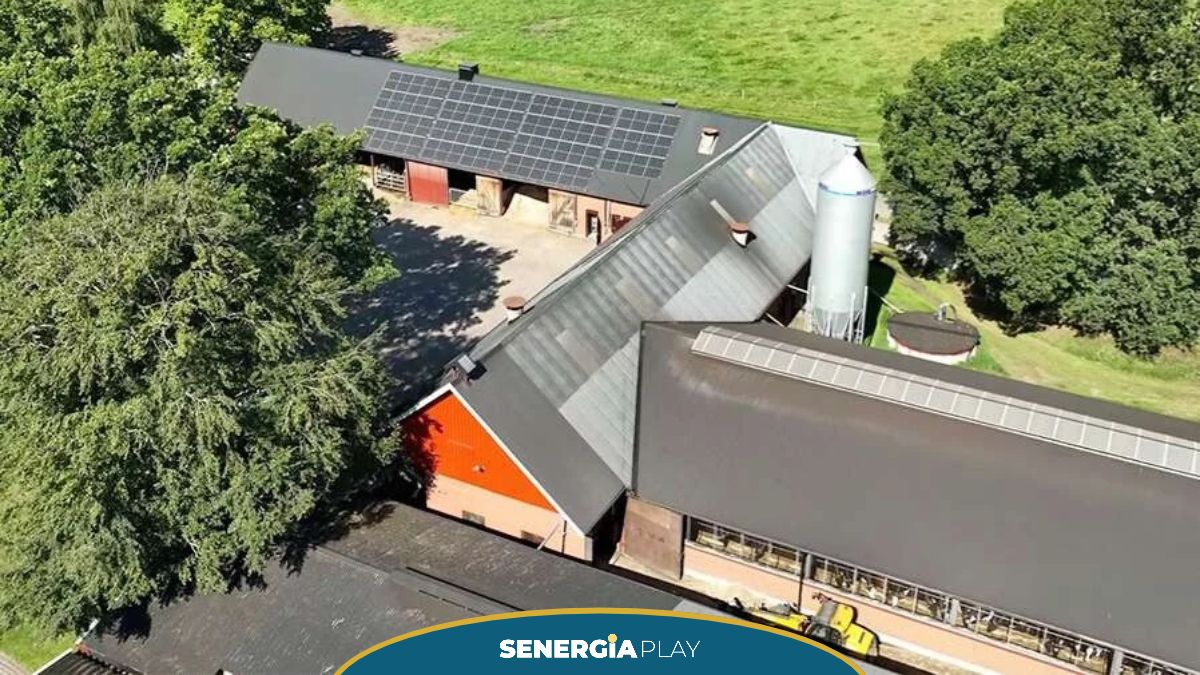
Solis and Dyness on a farm in Halland