



We meet ATMOCE
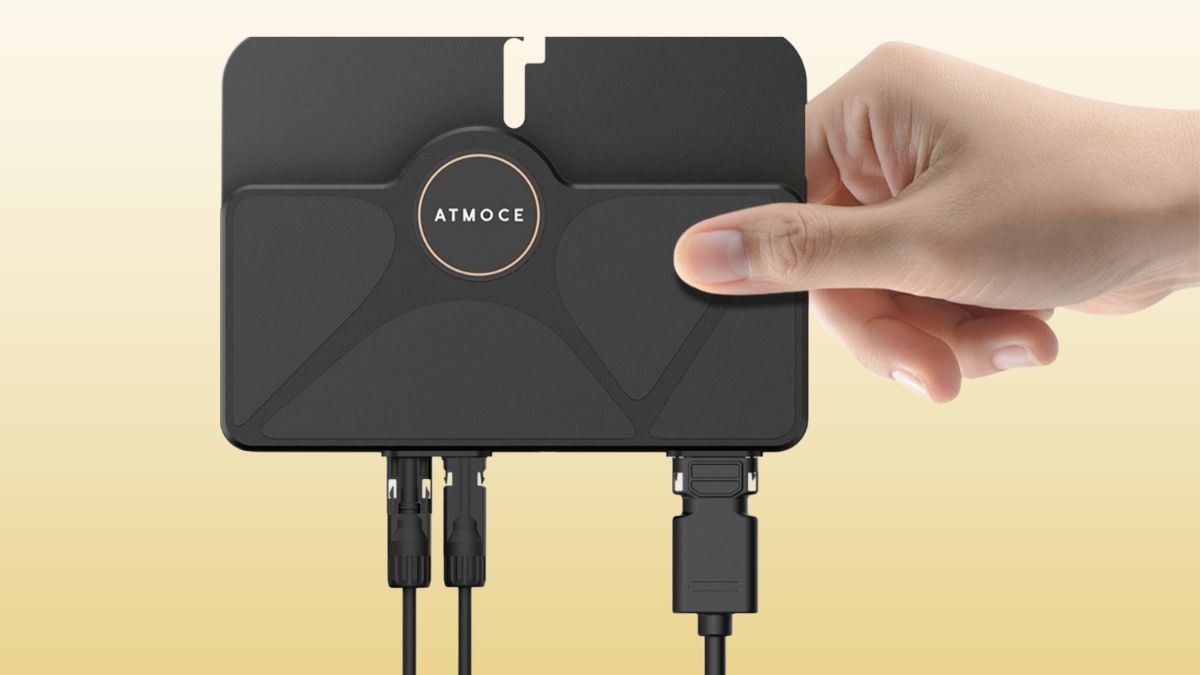
In this episode of Senergia Play, Tim meets ATMOCE’s Nordic head Robin for a conversation about microinverters, battery storage and flexible solar energy systems. We look at how the technology works and the opportunities it offers for safety, panel-level monitoring and easy installation. Discover how the solutions can be used in everything from holiday homes and villas to commercial properties – and how existing solar installations can be complemented with a battery and expanded over time.
0:08
8 seconds
Hello everyone. A very warm welcome to a new episode of Senerga Play. We’ve settled into the studio here in Stockholm again and are ready for a new season with fresh new
0:17
17 seconds
episodes and interesting guests. And today I have with me someone who may be a familiar face to some.
0:27
27 seconds
Robin, welcome.
0:28
28 seconds
Thank you so much, Tim. Great to be here.
0:31
31 seconds
Yes, some people will recognise you from your previous job, but now it’s a new context. Tell us how.
0:38
38 seconds
Exactly. I came from the EV charging industry, so, yes, I passed this theatre in Stockholm this weekend, where the duck is riding a new saddle
0:48
48 seconds
but it’s the same old donkey. So, for some people I’ll be a familiar face, but hopefully new to many too. So
0:55
55 seconds
I’m now the Nordic head at ATMOCE. And of course, we’ll tell you more about what we do later. But the story of how we came to start working together on these things was quite fun.
1:03
1 minute, 3 seconds
Yes, we bumped into each other. Tell us how you experienced that situation from your perspective. Well, it’s always a little scary to change jobs and perhaps even
1:11
1 minute, 11 seconds
careers, even if it was a little sideways, since it’s still in the green technology sector. But I thought, if there’s someone I’d like to run into to
1:19
1 minute, 19 seconds
validate whether this is the right way to go, it’s probably you, Tim. So I asked you what you thought about these things. And you’d already come across ATMOCE in other contexts, but this time you felt
1:27
1 minute, 27 seconds
that it seemed exciting, so perhaps you can explain a little why you felt that. Yes, that’s right. The ATMOCE team in Europe
1:36
1 minute, 36 seconds
had been talking with Senergia for quite some time, and perhaps the timing hadn’t been quite right. But when you and I met, we felt
1:44
1 minute, 44 seconds
that the investment was right, and that the timing was right for the market too. I’d say that in our industry right now there’s
1:51
1 minute, 51 seconds
a lot of talk about complete systems, a lot of focus on the installer and the benefits of delivering good solutions.
2:01
2 minutes, 1 second
But above all, I’d say the market today is made up of fairly small installations. We’re becoming
2:08
2 minutes, 8 seconds
more and more alike across Europe. If you look at the solar energy industry in, say, 2018, 2019 and 2020, perhaps 30 or 40 panels were installed on a roof.
2:17
2 minutes, 17 seconds
They were packed full. Yes.
2:24
2 minutes, 24 seconds
That was largely to export electricity, whereas installations today might have 10, 12 or 15 panels: much smaller and much more
2:35
2 minutes, 35 seconds
focused on self-consumption. And that’s when the business case for ATMOCE suddenly opened up. Mm. Mm.
2:37
2 minutes, 37 seconds
That was partly the engineer in me, but it was also great to see you there in town, and I thought this could be an initiative we should really go for. And now we’re here.
2:51
2 minutes, 51 seconds
Great. Yes. Perfect. And a little background on ATMOCE: the people who founded the company are very well known
3:01
3 minutes, 1 second
in this industry, so to speak. They’re people with over 20 years’ experience in power electronics, and who then moved into solar.
3:10
3 minutes, 10 seconds
Those in the know know where we come from. They wanted to develop a type
3:21
3 minutes, 21 seconds
of product that we’ll talk about today, with a strong focus on safety and creating a safe environment for installers and end users.
3:29
3 minutes, 29 seconds
It’s not exactly a new company, of course—relatively speaking, it is—but ATMOCE was founded a few years ago. They chose not to
3:38
3 minutes, 38 seconds
launch the product straight away, but spent a couple of years on R&D first to make sure they developed really good
3:46
3 minutes, 46 seconds
products. It feels a bit like a seasoned group of people starting something in China, who couldn’t put all their creativity to use, so they founded ATMOCE and are now able to live out their engineering dream and design the system the way they wanted.
4:08
4 minutes, 8 seconds
It took two years before they brought the products to market. Could you tell us a little about
4:18
4 minutes, 18 seconds
what ATMOCE delivers, both in terms of products and in terms of what you want to be?
4:25
4 minutes, 25 seconds
The aim is to offer safe, flexible
4:35
4 minutes, 35 seconds
products on the market that suit all systems, while taking installers and end users into account. As I’ve said, we also want to find a good product that doesn’t just sell a project here and now, but whose products can also be expanded for
4:41
4 minutes, 41 seconds
future projects, so that we can keep developing and moving towards a better world through green energy.
4:57
4 minutes, 57 seconds
And with a long-term outlook. We’ll come back to that when we talk about warranties, troubleshooting and all that. But let’s stay with the ATMOCE
5:04
5 minutes, 4 seconds
system itself for a moment. A solar energy system can be built in lots of different ways. We have traditional string inverters, where you connect
5:13
5 minutes, 13 seconds
strings in series, build up a high DC voltage and feed it into an inverter, which converts direct current into alternating current.
5:21
5 minutes, 21 seconds
That’s fairly traditional and has been done for around 30 years. They’re very efficient and very popular.
5:30
5 minutes, 30 seconds
Mm. Then we’ve seen some companies take the route of equipping panels with so-called
5:37
5 minutes, 37 seconds
optimisers, which convert direct current to direct current on the roof. There’s still a high DC voltage on the roof, but each panel is controlled.
5:44
5 minutes, 44 seconds
Mm.
5:52
5 minutes, 52 seconds
Then the direct current is sent to the inverter and converted into alternating current. Mm.
6:00
6 minutes
ATMOCE is introducing an entirely new topology for installers.
6:05
6 minutes, 5 seconds
Mm. You run direct current from the panel into the microinverter, which converts it from direct current to alternating current on the roof.
6:10
6 minutes, 10 seconds
Yes. What are the implications?
6:20
6 minutes, 20 seconds
Well, I started my solar career by taking the courses at Senergia, so I can recommend them to anyone who hasn’t done them. The first section is all about
6:23
6 minutes, 23 seconds
safety and the risks involved in working in an environment on a roof with direct current. I’m not going to explain it to you, Tim, as you’re something of a guru in this area. But it certainly creates a much safer working environment
6:31
6 minutes, 31 seconds
for an electrician. You know more about the risks than I do, but there must be risks of arcing and fire, and
6:41
6 minutes, 41 seconds
even if the risk is small, this is a technology that eliminates it. That’s quite powerful to be able to say.
6:49
6 minutes, 49 seconds
Yes. If you look at the fires that have actually occurred in Sweden, a few components are massively overrepresented. One is MC4 connectors—the connectors between panels, particularly on the roof—where
6:57
6 minutes, 57 seconds
different brands may have been used or they haven’t been connected properly, resulting in a loose connection. Because the voltage is often very high, you get an electrical discharge, which then becomes an arc and, in the worst case, a fire.
7:04
7 minutes, 4 seconds
It can reach thousands of degrees and weld through most things.
7:12
7 minutes, 12 seconds
Mm. The other thing we’ve unfortunately seen as a very clear trend is that many commercial tenders and systems require some form of panel-level shutdown. This can be done with a so-called fire safety switch, which breaks the direct-current connection on the roof so that the voltage is cut off all the way down through the house.
7:21
7 minutes, 21 seconds
Mm. ATMOCE offers something quite revolutionary here: you can switch off the panel right on the roof, so there’s no voltage running down through the house. That means you can work with a completely different type of system configuration. And I think many people need to recalibrate how they think about this system versus the other one, and their respective pros and cons and design considerations.
7:50
7 minutes, 50 seconds
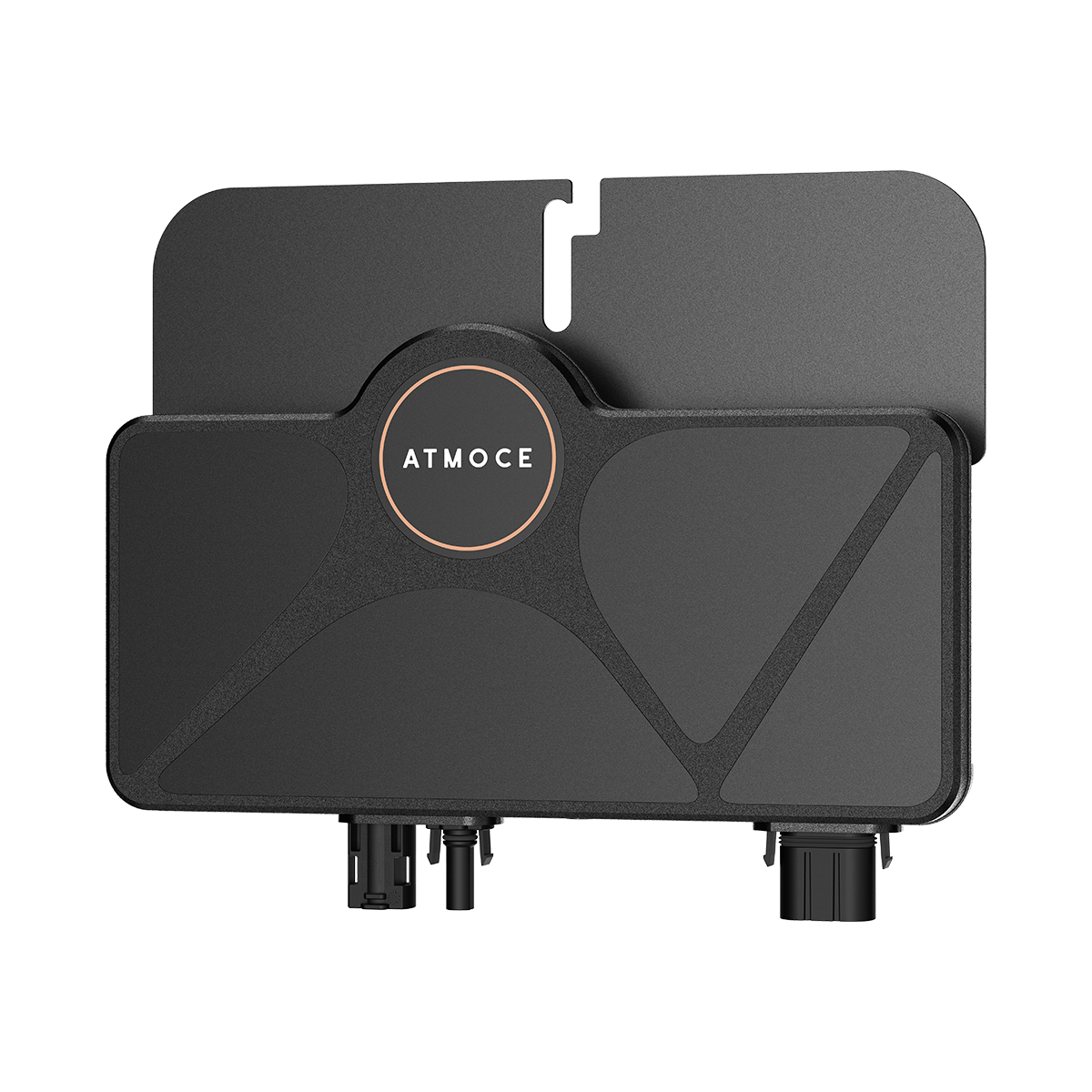
Perhaps that’s what we should explore in more depth. But let’s get to the core of the ATMOCE system: the microinverter. Tell us a little about the product you sell.
8:05
8 minutes, 5 seconds
Mm. As you said, our microinverters convert power at each panel. That means we have optimisation at each panel, so we can build much more
8:14
8 minutes, 14 seconds
flexible systems on roofs that aren’t perfectly even. Compared with a traditional string inverter, you don’t need to put them on the same string, with the same values and so on.
8:20
8 minutes, 20 seconds
No, exactly. And if there’s a tower casting shade for part of the day, or leaves land on some of the panels, that doesn’t affect the panels individually. That makes the system more efficient, quite simply.
8:29
8 minutes, 29 seconds
I don’t know if there’s anything you’d like to add. Yes, I’d say many people will also appreciate all the data you get from the system. We talk a lot about data today in terms of system control, but also about monitoring. If you invest in
8:38
8 minutes, 38 seconds
a solar energy system today, you’ll have it for at least 25 or 30 years, perhaps longer depending on the quality of the roof and so on. Mm.
9:04
9 minutes, 4 seconds
You can actually see how the panels are producing, and as an installer you can check that the system is producing as it should. I think many of us have been through a solar energy boom in recent years, and
9:54
9 minutes, 54 seconds
the market has become a little saturated. We’re moving from a focus on speed and quick deals to a more mature market, where service, maintenance and perhaps responsibility for the installation will be much more important than they have been.
10:02
10 minutes, 2 seconds
Having access to the data means you can see how a customer’s installation is performing, from the installer’s perspective.
10:09
10 minutes, 9 seconds
Mm.
10:18
10 minutes, 18 seconds
And we can see, panel by panel, exactly which ones aren’t producing.
10:27
10 minutes, 27 seconds
I think that will give both me as the buyer, the end customer, and the installer a lot of reassurance. Mm. Mm.
10:40
10 minutes, 40 seconds
Because when customers call—and this never fails to happen around November in Sweden—they ask, ‘Why aren’t my panels producing anything?’ You look in the app and see that only one panel in the ATMOCE system is producing. That’s probably the panel that’s free of snow.
10:48
10 minutes, 48 seconds
That’s the kind of conclusion you can draw when you have access to the data. Otherwise, you have to measure the whole string.
11:03
11 minutes, 3 seconds
You’ve touched on something interesting there.
11:11
11 minutes, 11 seconds
I come from the commercial side of the industry, and we met someone from Vilhelmina at Elmia. There’s a lot of snow there, of course. There may be good solutions for snow melting in the future, but if you look at what microinverters can do, just think of the mountain cabins this year, or whatever. You can actually put the panels on a wall, on a small holiday home, so you don’t have to worry about snow. That’s got to make a difference.
11:21
11 minutes, 21 seconds
Yes. A few weeks into your new job at ATMOCE, what use cases have you seen for your system?
11:44
11 minutes, 44 seconds
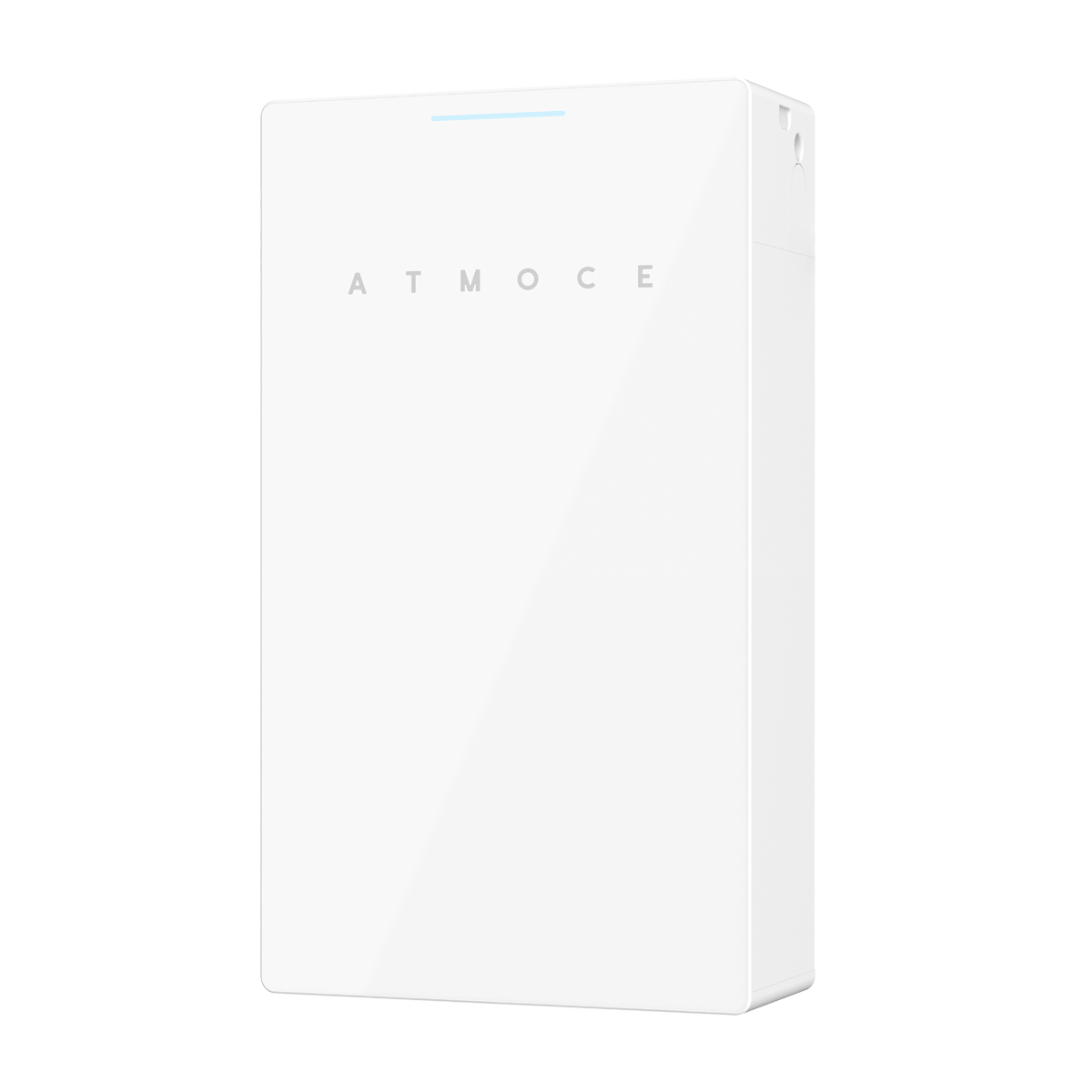
Mm. As you’ve probably had a chance to see, we also have what we call our combiner box. That’s where the protection devices are, along with the gateway that lets us communicate with the panels and our battery, which is a low-voltage battery that we’ll talk more about later.
11:52
11 minutes, 52 seconds
One of the use cases for the complete system is, of course, retrofit: you already have panels and an inverter, but want to add a battery.
12:14
12 minutes, 14 seconds
How do you add a battery to an existing inverter?
12:27
12 minutes, 27 seconds
You can do that with either our combiner box, or even more simply with a gateway and CT clamps to measure the different values. And with the backup box, which provides power during a blackout, we can also control third-party providers and their solutions.
12:31
12 minutes, 31 seconds
So batteries are obviously where we see much of the market today. But looking ahead, especially at your complete system with both solar and batteries, how do you want it to be used, and in what applications?
12:52
12 minutes, 52 seconds
Well, of course, there’s the classic villa segment, where you think, ‘Here we have an all-in-one solution that lets me build the perfect system on my turn-of-the-century villa, which has lots of different gables, towers and roof angles.’ And everyone can feel confident that they have a system they can easily expand over time.
13:01
13 minutes, 1 second
That’s one of them. The other is, as we mentioned, summer houses and holiday homes.
13:31
13 minutes, 31 seconds
Yes, that’s a particularly interesting case because a string inverter usually requires six, seven or eight panels for the string to start. With microinverters, we control each panel individually.
13:40
13 minutes, 40 seconds
So I’ll leave the industry with a challenge: will we start installing solar panels on our summer cottages and holiday homes? It’ll be exciting to see now that we’re giving you the tools.
13:52
13 minutes, 52 seconds
Exactly. There’s also the subsidy aspect. To get the subsidy for a battery, you need solar generation, and with the all-in-one solution you could start with four panels—or perhaps just two.
14:05
14 minutes, 5 seconds
Yes, a smaller solar installation, simply to qualify for the subsidy. But another interesting takeaway comes from the Finnish market. We discussed the idea of putting our batteries on a balcony, right in the middle of a city, with four panels. When I first mentioned it to you, you said that was something people do in Germany.
14:22
14 minutes, 22 seconds
Yes, or that it would be hard to make the numbers work. But that wasn’t really the point for the Finns; they wanted to be prepared in case a crisis came. They’ve always had a slight head start on us there.
14:43
14 minutes, 43 seconds
They have several hundred miles of border with Russia, so perhaps they think a little differently from us in Sweden.
14:56
14 minutes, 56 seconds
Yes, exactly. So I think that’s another use case: what people call prepping, or simply being prepared. We have small systems for summer cottages, starting with just one panel; we have villas and retrofit systems. Shall we say something about the commercial solutions too?
15:10
15 minutes, 10 seconds
Yes. I was in a meeting with a company that had department stores all over the world, with different procurement departments in different countries, so they had different systems around the world too. It’s very useful to have a system that can be expanded with our batteries, including the upcoming C&I batteries. It’s also important to be able to expand it with inverters. The other aspect is insurance. I know ATMOCE’s sales teams have been successful in some European countries in talking to insurance companies and reducing premiums, because they use a different solution that eliminates the risk by using alternating current instead.
15:22
15 minutes, 22 seconds
Yes. From an industry perspective, this is interesting too. Abroad, they may have more of a range of different solutions, and regulations vary. It’s understandable that insurance companies want to reduce their risk, and they sometimes favour certain types of solutions. That’s certainly happened with ATMOCE in France, among other places. I’m not saying that’s exactly where we’ll end up in Sweden, but I think it’s interesting that technical solutions can be reflected in regulations, where using your system in different ways can have advantages.
16:10
16 minutes, 10 seconds
Mm. Whether it’s microinverters to reduce the voltage, or other measures to improve safety, how can we design solar energy systems that can’t catch fire, that are safe and built to last? That’s really where we need to get to. And I think we have a lot of work to do together as an industry on installation quality, with the insurance industry, installers and wholesalers all needing to agree on the same requirements so we can build sustainable systems, plain and simple.
16:52
16 minutes, 52 seconds
Mm. And it’s worth saying that—perhaps ‘many a little makes a mickle’ is the wrong expression—but I heard about a lot of projects at Elmia where people said, ‘That’s exactly what I need.’ It’s like putting together a jigsaw with our solutions. If your existing system can’t be expanded, then you can say, ‘No, that won’t work—go to ATMOCE.’ We’ll talk more about that.
17:29
17 minutes, 29 seconds
Yes. I also think we should talk a little about the IT side, Robin. There’s a lot of talk about different smart solutions and apps. Tell us briefly how ATMOCE views its app and integrates with other ecosystems.
18:02
18 minutes, 2 seconds
Mm. Yes. Let’s start with our app, called ATMOCE. You can download it today. You can also log into a demo site to see exactly which products are in your ecosystem, how much the panels are producing, how much the battery is charging and discharging, and so on. You can see how everything is behaving at panel level. The same app is used by installers to commission a system, and by the end user too, which is often appreciated.
18:25
18 minutes, 25 seconds
Mm.
19:07
19 minutes, 7 seconds
What’s good, though, is that installers can also see the installations they’ve installed, so they can provide support to their customers. Of course, ATMOCE should provide the world’s best support itself, but I know many people appreciate being able to offer that kind of support to their own customers.
19:16
19 minutes, 16 seconds
I was also given a little challenge by some of your colleagues. They said that commissioning a system is easy and takes less than five minutes. So I’ll leave that as a challenge to installers: really put us to the test. We’ve been testing and getting to know ATMOCE at Senergia, and one thing we really believe in is that everyone talks about plug and play and things working together.
19:28
19 minutes, 28 seconds
But with ATMOCE, they really practise what they preach. You can tell they’ve put as much time into the software as they have into the hardware. The two years the engineers spent working on the solution really show: they took their time, and from an installation perspective it’s a very simple solution.
19:47
19 minutes, 47 seconds
We’ll talk about the battery in a moment, but you can commission it in just a few minutes. It’s click-in, so it’s really simple for the installer. It’s hard to get that across from a datasheet, so trying it is probably the easiest way to experience ATMOCE for real.
20:12
20 minutes, 12 seconds
There aren’t many products, and there’s a clear approach to how they work. We haven’t discussed how the microinverter cabling is arranged: how you build it phase by phase and then easily connect everything through this cable branch. We can take a quick look at the ATMOCE system.
20:29
20 minutes, 29 seconds
Mm. We have the microinverters, the battery and the combiner or backup box. They can be either one box for connecting the whole system, or a box with a built-in ATS for backup and system connection. So you can have one box for everything, which is incredibly convenient.
20:53
20 minutes, 53 seconds
The microinverters are on the roof, with either one per panel or one microinverter for every two panels. I think we’ll see more of the latter, as it reduces the number of microinverters needed.
21:16
21 minutes, 16 seconds
Mm. What I also learnt in our technical training is that when there are two panels per microinverter, they’re connected in parallel. That keeps the voltage low, while the current is parallel, which means they can be used on slightly different strings. It’s like a polystring, for those of you who know about that.
21:32
21 minutes, 32 seconds
And as we mentioned, the ATMOCE system can be integrated with almost any type of system and can function as a third-party solution.
21:53
22 minutes, 4 seconds
Yes, tell us a little about the battery, because this isn’t a battery like other batteries.
22:04
22 minutes, 9 seconds
No. It’s classed as a low-voltage battery.
22:09
22 minutes, 12 seconds
The battery cells operate at 30 volts DC, and a conversion stage changes that to AC. So the battery is installed on the AC side too. That’s why installation is quick.
22:21
22 minutes, 21 seconds
So the inverter is somehow integrated, or the conversion from direct current to alternating current is integrated?
22:29
22 minutes, 29 seconds
Exactly. So connecting the five-core cable, including communications, is extremely easy.
22:35
22 minutes, 35 seconds
And if you want several batteries, you just continue the cable, which makes it extremely easy. I think the modules, which come in 7 kWh units, are simply lifted into place.
22:42
22 minutes, 42 seconds
I think we’ll see configurations of 14 and 21 kWh, with two or three modules side by side. You can also expand the system later on.
23:03
23 minutes, 3 seconds
Mm. The new commercial battery coming soon is a larger unit of just over 15 kWh. It’s heavier, but also gives us a considerable increase in capacity, so we have something very interesting coming.
23:11
23 minutes, 11 seconds
Exactly. And I don’t know how many of the others can do this, and that’s not what we’re here to discuss, but this battery can also be wall-mounted. We’ve even seen it looking smart on a wall in a laundry room, bathroom or wherever. I think space will always be a challenge for batteries, so we’ll probably see plenty of impressive installation photos in time.
23:18
23 minutes, 18 seconds
Mm. There’s also phase balancing in batteries.
23:42
23 minutes, 42 seconds
Yes. That means that if you have an unbalanced load, such as an EV charger, the battery can send a little extra current to the individual phase that needs it.
23:49
23 minutes, 49 seconds
Mm. That lets you make even better use of your main fuse.
24:01
24 minutes, 1 second
And I’d say that’s always the advice. I sometimes see people on internet forums talking about getting an electric car and a solar installation, and then needing to upgrade their fuse.
24:06
24 minutes, 6 seconds
Mm. I’d think the other way round: now is the time to reduce the fuse rating.
24:16
24 minutes, 16 seconds
We want to send less electricity into the grid. We want to charge more using our stationary batteries, and use more locally generated electricity to charge our EVs. I think we need to change our mindset a little and respond to the grid connections, because as a society we’ll benefit greatly from that.
24:20
24 minutes, 20 seconds
Mm. As I said, safety runs through the battery as well. That’s why I keep repeating the word safety. We’re creating a safe environment with our products. The products themselves are safe. We offer long warranties, which shows that we’re confident our products will last. But given the way the market looks today, with various players going through ups and downs, the fact that we can retrofit all existing systems also gives you long-term confidence: our products will work with whatever solution you have today. I think that can reassure end customers and give them the confidence to keep investing in this technology.
24:37
24 minutes, 37 seconds
What would you say, Robin, to the many installers who want to try their first system? Where should they start, and how do they begin their journey with us and with ATMOCE?
25:21
25 minutes, 21 seconds
At the moment, the first step is to register your interest in learning more about ATMOCE. We have plenty of upcoming workshops and webinars that we’ll run together with Senergia, so I’d say start by visiting Senergia. Of course, you can also contact Senergia or ATMOCE if you want to know more. And if you have a use case you’d like to test with the products, get in touch.
25:38
25 minutes, 38 seconds
I think that was a brilliant way to wrap up, Robin. Thank you very much for a great conversation. It’ll be fantastic to launch ATMOCE here in Sweden together. And we look forward to meeting the installers who’ve been watching us today. Do take a look at our previous episodes if you’d like to learn more about Senergia’s products and range. I’d also like to mention our technology blog, which always covers the latest and most relevant topics in the industry. Robin, thank you very much.
26:06
26 minutes, 6 seconds
Thank you very much, Tim.
26:37
26 minutes, 37 seconds
Need help finding the right solution?
We know it isn’t always easy to know which product or solution is best for you. Whether you have questions about our range, need guidance or would like help finding a solution that suits your specific needs, we’re here for you. With our knowledge and experience, we’ll help you make the right choice.
Related posts