




The battery showdown: Lithium-ion vs nickel-metal hydride

What will the battery be used for?
Before we begin comparing battery technologies, it is important to get an idea of what the battery will be used for. A comparison would be that if you were to judge which animal is the best and hold a contest in which the animals had to climb, the monkey would appear superior to the elephant.
Nickel-metal hydride is a battery chemistry in the mid-range segment, a sort of all-rounder in the battery world, where the technology can be used both in stationary applications such as grid support, or compete with lead-acid batteries at the lower end of the capacity range.
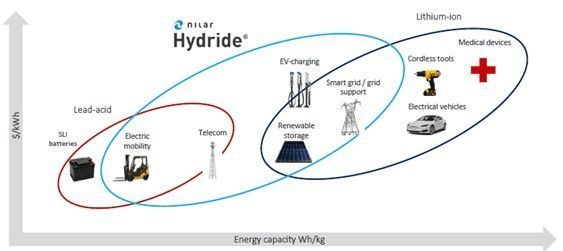
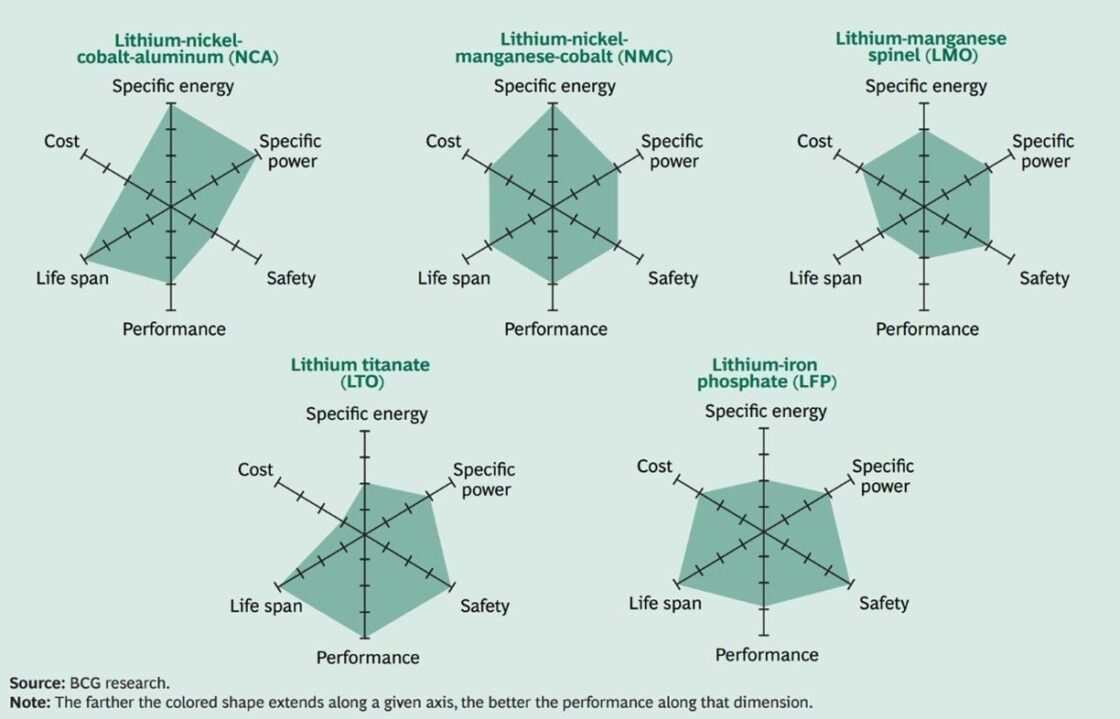
Lithium-ion batteries have an energy density that makes them well suited to applications where the battery needs high capacity at low weight, such as electric cars or cordless tools. The most common type in stationary applications is lithium iron phosphate (LiFePO), also known as LFP. These batteries cost more and have a lower energy content than cobalt-containing lithium batteries, but their cell technology has greater inherent safety.
Nickel-metal hydride
This presentation of nickel-metal hydride batteries will be based solely on batteries made by the Swedish manufacturer Nilar.
Nickel-metal hydride, or NiMH, is a battery technology that has been around for many years. The first hybrid car to achieve major international success, the Toyota Prius, had a NiMH battery in its first generation (and still does).
Nilar's batteries contain a water-based electrolyte that is neither flammable nor toxic. The batteries are manufactured in Gävle using 100% renewable energy. They are fully recyclable and contain no lead or other heavy metals.
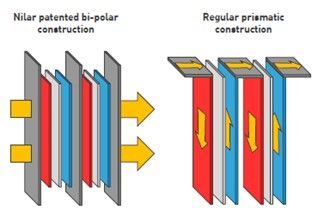
Nilar's battery chemistry is not unique, but its design is. Nilar's battery is a bipolar type with a unique design. Nilar's design allows a greater flow of electrons due to the larger area of conductive material. This results in lower internal resistance in the battery, which leads to lower losses
The electrodes are made from a powder and compression-moulded. They are then assembled between separators to form battery modules.
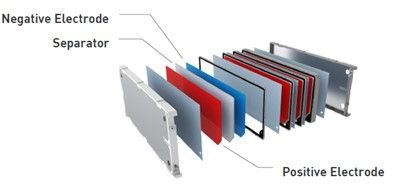
The battery modules are assembled in a bipolar design together with a monitoring unit for the battery pack.
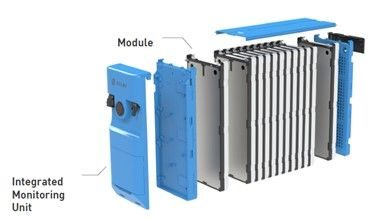
Several battery packs can be connected in series to increase capacity.
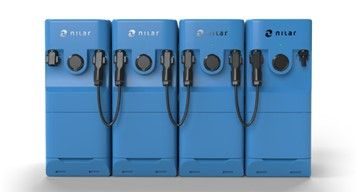
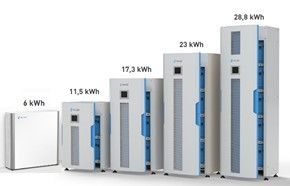
Nilar’s batteries are scalable from kWh to MWh. They use the same battery chemistry and system architecture. This scalability makes it easy to design a system with sufficient capacity.
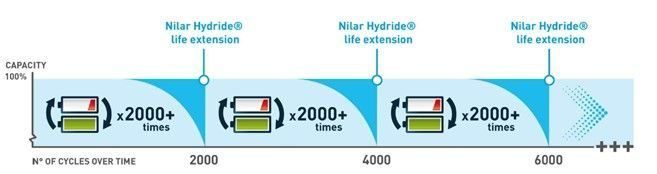
The next generation of Nilar batteries will feature a technology called Re-O2. In short, it makes it possible to “top up capacity” and improve the performance of ageing batteries. In NiMH batteries, the battery dries out over time as the water-based electrolyte is consumed by the metal hydride. What Nilar, together with researchers at Stockholm University, has managed to do is introduce new oxygen into the battery, where it reacts with the hydrogen. This forms water, restoring the balance inside the battery. In laboratory conditions, the process has been carried out around ten times, and the battery performed better after Re-O2 than a new battery! The technology certainly sounds exciting!
Technical performance
Self-discharge
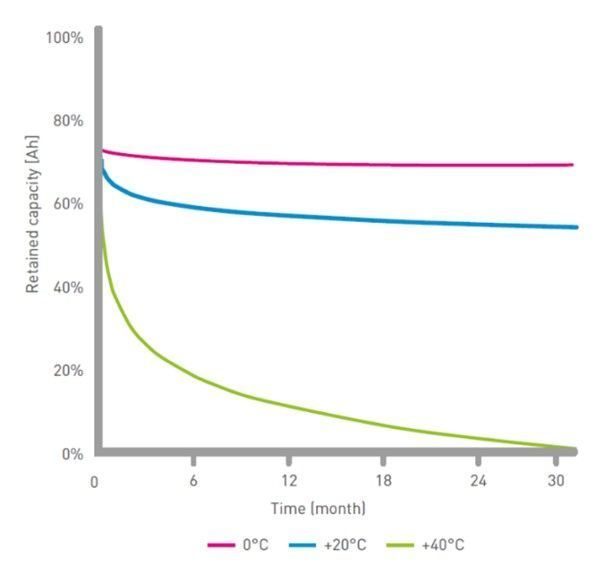
NiMH batteries have a high self-discharge rate at high temperatures, so installers should always consider where the battery is placed.
Cycle life
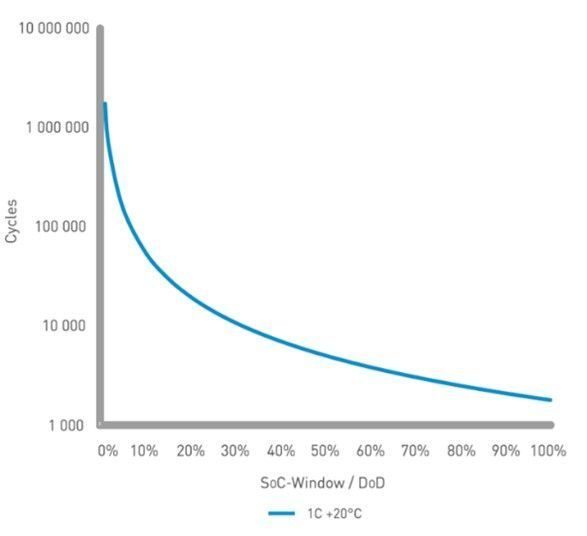
The smaller the proportion of the battery that is used, the more cycles the battery can withstand. The number of cycles the battery can withstand depends on the temperature, discharge rate and how deeply the battery is discharged.
Cell balancing
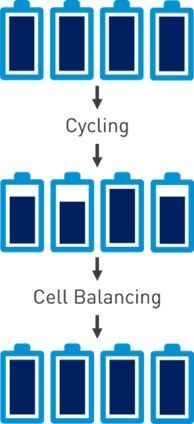
To ensure the batteries remain at the same level throughout their service life, their cells must be balanced at regular intervals. All the batteries in a set are matched so that the entire string of batteries connected in series is as uniform as possible once the balancing process is complete.
Nickel-Metal Hydride Summary
Advantages
- Safe battery chemistry
- Recyclable
- Stable and long-lasting operation
- Coming soon: Re-O2 “refurbish”
- Can operate between -20°C and +50°C (at battery level, not system level).
Disadvantages
- Lower volumetric efficiency than lithium-ion.
- More expensive per kWh
- Heavier per kWh than lithium-ion
Lithium-ion
Lithium-ion batteries are the talk of the battery world, thanks to the enormous development taking place as we find ourselves in the midst of an electric car revolution. The development of lithium-ion technology is being driven by car manufacturers such as Tesla, which have built their own factories to achieve efficiency gains and bring down battery prices. Lithium-ion batteries are very powerful and store a great deal of energy per unit of volume. Lithium-ion batteries also need cell balancing. This is done when the battery begins to approach 100% SoC. A lithium-ion battery has lower self-discharge than NiMH batteries.
In terms of safety, many lithium-ion batteries contain a flammable electrolyte that must be continuously monitored by the battery management system (BMS). However, lithium-ion batteries have very good cycling properties and, depending on the manufacturer, can withstand 4,000 to 6,000 cycles.
Summary of Lithium-ion
Advantages
- High thermal and chemical stability
- Fast-charging
- Good cycling performance
Disadvantages
- Low energy density compared with LiCoO2 (lithium cobalt oxide)
- High voltage per cell, higher than NiMH. Lower than other lithium chemistries (except LTO)
- Lower safety than NiMH
- Narrower operating temperature range
Conclusions
To sum up which battery is “best”, you need to consider what the battery storage system will be used for. As a designer, you should be familiar with these specific characteristics and use the battery best suited to each application. Once these factors have been taken into account, you can make an informed choice as a designer
Temperature
If the battery is to be kept in a cold place over winter, you should choose NiMH exclusively because of its temperature tolerance. On the other hand, if the operating temperature is high, you should avoid NiMH because of its higher self-discharge rate. However, the safety of lithium batteries is negatively affected by a higher operating temperature, so NiMH should be chosen for increased safety. Additional ventilation should then be considered, as no batteries perform particularly well at high temperatures!
Safety
Both LiFePO and NiMH are classified as safe batteries, but given Nilar's unique design with a water-based electrolyte and more stable battery chemistry, it is unmatched for battery systems in homes.
Energy density and space efficiency
LiFePO batteries have a higher energy density than NiMH, making them more volume-efficient. This means you can store more kWh per cubic metre, and they are also easier to accommodate because they have a smaller footprint in terms of area.
Price
If you look only at the cost per kWh, the LiFePO battery will be cheaper. If you factor in aspects such as efficiency and losses over the entire product cycle, it is harder to name a clear winner. It simply depends on your application, how hard the battery is pushed, the operating temperature and many other parameters. Whether you choose LiFePO or NiMH, you will get the quality you pay for!
Need help finding the right one?
We know it’s not always easy to decide which product or solution is best for you. Whether you have questions about our range, need guidance or would like help finding a solution tailored to your needs, we’re here for you. With our knowledge and experience, we’ll help you make the right choice.
Related posts
This is how a fire safety engineering design is carried out

The Salmon Project