




Brand 3 – Firefighter switch, a solution or a problem?
Introduction
One of the most debated components in a solar PV system is the firefighter switch. It goes by many names. The problem, as we will soon come to, is that if this technical device is used incorrectly, it can increase the risks in a solar PV system and not make the system any safer at all. Knowledge of firefighter switches must improve among clients, designers/consultants and installers alike.
What is a firefighter switch?
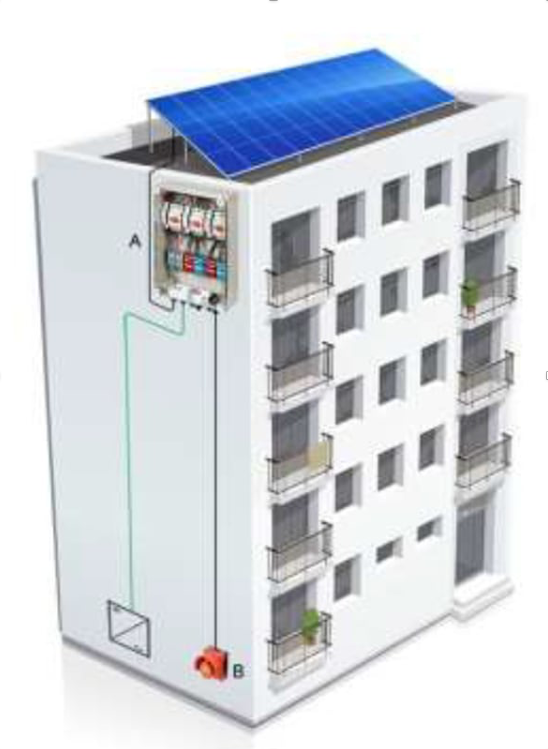
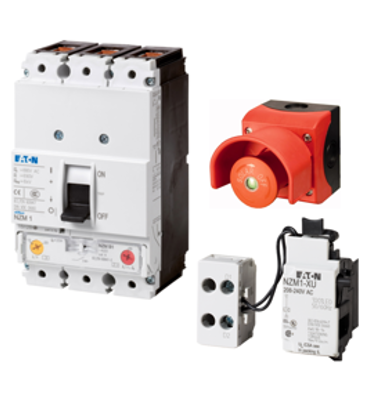
A firefighter switch is a remotely operated DC switch capable of disconnecting one or more strings at maximum output. The firefighter switch consists of two units: A, a switch, and B, a remote operator (a button). When the button is pressed, a signal is sent to the switch(es) to open. This cuts off the current, leaving all DC cabling from the switch down to the inverter de-energised.
A common misconception is that the entire system is de-energised, but only the cabling downstream of the switch is de-energised. The panels will therefore always remain energised when exposed to sunlight.
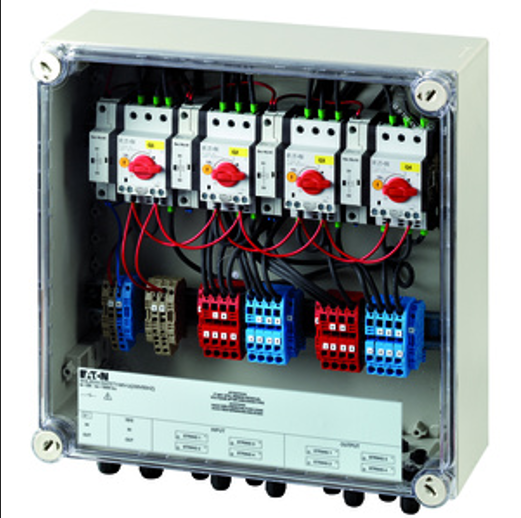
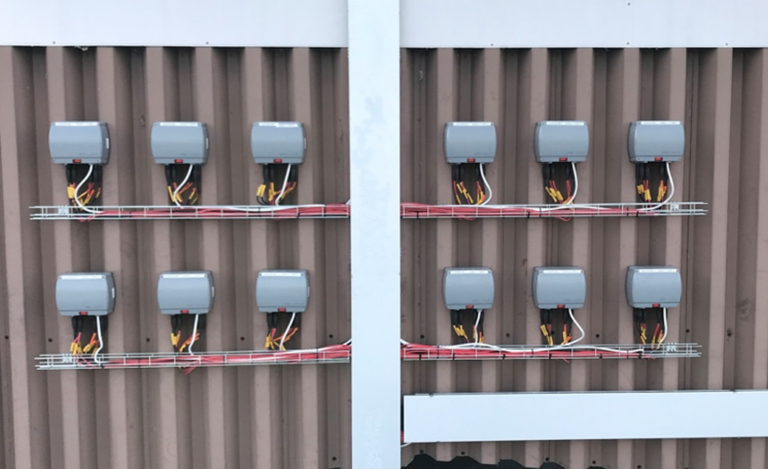
Firefighter switches come in several models. They have one or more switches, all of which receive their switching signal externally. In general, there are two models of firefighter switches: one with terminal connections, where the DC cables are screwed into terminals, and one with pre-assembled MC4 connectors, to which the installer can connect the strings directly.
When should firefighter switches be used?
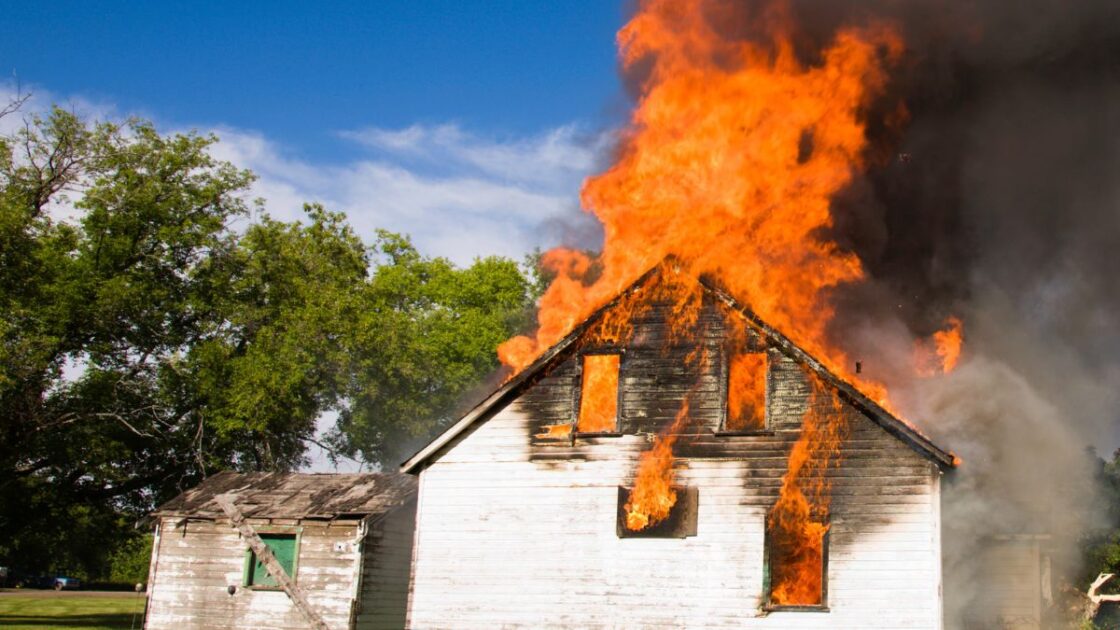
A firefighter switch can be very effective in increasing the fire service’s operational capabilities in the event of a fire in a solar PV system. However, if installed incorrectly, it can create a false sense of security and increase the risk of fire in a solar PV system.
A firefighter switch is suitable if there is a benefit to being able to de-energise the cabling running from the solar panels to the inverter. This is particularly relevant for commercial installations, government/municipal buildings or housing associations. The following scenarios make installing firefighter switches beneficial:
- Long DC-side cable runs
- Indoor cable runs (e.g. in stairwells or similar)
- Commercial buildings or multi-occupancy housing/housing associations
If incorrectly installed, a firefighter switch can reduce safety in a solar PV system and provide a false sense of security
A firefighter switch should not be installed if it does not itself reduce the risk of fire, and system designers should pay close attention to the following scenarios in which the benefit of a firefighter switch is low or non-existent:
- If the DC cabling in the installation is routed only on the outside of the building and the inverter is installed outdoors.
- If the cable distance on the DC side between the inverter and the firefighter switch is short
- If it is not possible to clearly indicate which part of the solar PV system will be de-energised when the remote switch is operated. For example, in a spread-out installation with several roof areas/buildings/stairwells.
- If no responsibility can be taken for the service and maintenance of the firefighter switch and associated equipment. This primarily includes exercising the DC switches, which should normally be done every six months.
A firefighter switch can give the fire brigade a false sense of security if they do not know how the switch works. In addition, which part or parts are disconnected and de-energised depends on how the system is designed. The term “firefighter switch” can also be misinterpreted. If you do not know exactly what it means, you might think that pressing the button will de-energise the system, or that once the switch has tripped, the system enters a safe, de-energised state. Both of these assumptions are incorrect, and if firefighters make such an interpretation, it could be very dangerous, as a solar PV system must always be assumed to be live during operational activities!
Several ways to achieve disconnection
There are several ways to achieve firefighter switching. It is often not entirely clear what type of switching/disconnection is required.
Remote-operated DC disconnection
What is usually meant by firefighter switching is installing a remote-operated DC switch that can disconnect all the strings when it receives an external signal. This disconnection makes the circuit de-energised from the switch downstream (towards the inverter). The panels will remain live.
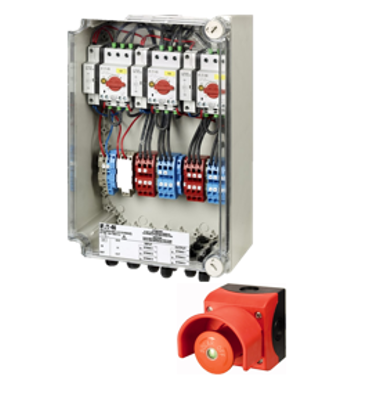
Remote shutdown of inverter (without optimisers)
Several modern inverter models can receive external shutdown signals. This makes it possible to send a shutdown signal to the inverter from a remote-operated button. The inverter then shuts down solar power production in software and opens its internal relays. The panels and DC cabling will remain live, but the AC side will be de-energised (provided that the supply to the building has been disconnected).
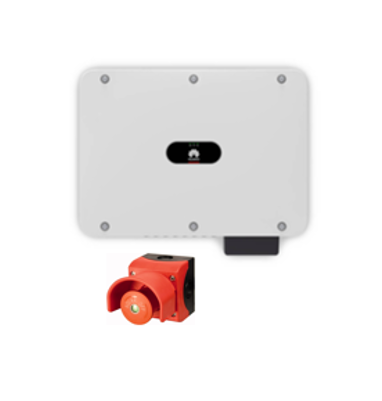
Remote shutdown of inverter (with optimisers)
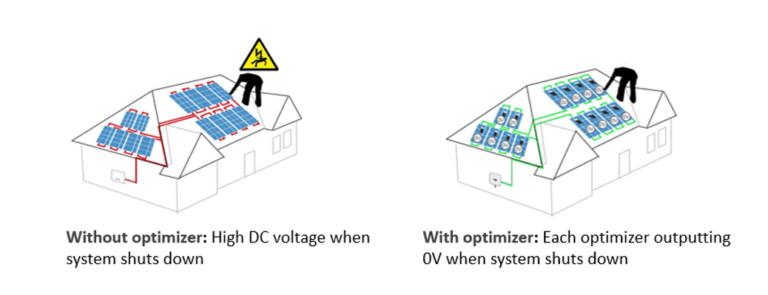
If a fully optimised system (from SolarEdge or Huawei) is installed, the inverter will stop sending the “keep-alive” signal to the optimisers. When the optimisers stop receiving the signal, they enter safe mode. This means 0V in Huawei’s case and 1V per optimiser in SolarEdge’s case.
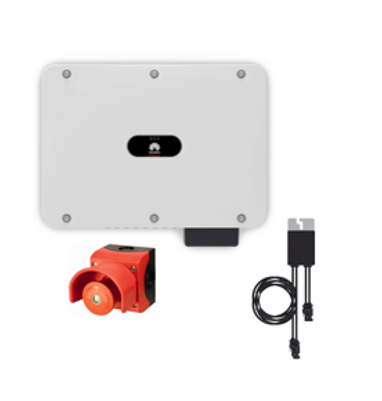
In the case of optimised systems, an additional physical switch is not required, as the optimisers themselves reduce the voltage to safe levels. The system can enter safe mode in various ways. Either the AC supply to the inverter is disconnected, in which case the optimisers shut down. Alternatively, a shutdown can be triggered via a communication cable (either manually using an emergency stop button or automatically via a signal from a fire alarm).
Remote-operated AC circuit breaker
To ensure mechanical isolation, a circuit breaker can be installed on the AC side of the inverter. In other words, a breaker that can interrupt the circuit under maximum production/load. The circuit breaker is fitted with an undervoltage release and is then connected to an external contact. When the button is pressed, the circuit is de-energised and the undervoltage release trips, causing the circuit breaker to shut off all power to the inverter. This is a very cost-effective way of achieving shutdown. This approach is particularly advantageous on large industrial roofs, where the inverters are installed on the roof close to the panels. There is then no need to disconnect the DC, and this solution still ensures that no live cables are brought into the building.
A failed Australian experiment with firefighter switches
Australia has an exceptionally large number of solar installations, which is hardly surprising given the country’s very high solar irradiation. Australia is currently experiencing fires in solar PV installations, with up to 20% of fires starting in the mandatory DC switch that must be installed on the roof.
https://www.fire.nsw.gov.au/news.php?news=2420
https://www.solarquotes.com.au/blog/solar-power-fire-mb1661/
Why is this information important to us in the Nordic countries? Because our market is heading in the same direction as Australia. Prices are falling, more installers are entering the market, regulations are not yet fully established, and quality problems are beginning to emerge. This leads to tighter regulations and requirements. But what the Australian example shows is that simply adding a component does not mean safety will improve. In fact, the opposite has happened. Australia still has not removed the requirement to install an external DC switch on the roof!
Conclusions
There are other, less tangible factors that we in the solar industry need to be aware of. Although how a solar PV system is constructed and works in detail may be obvious to someone who works in the solar industry, it is not obvious to a firefighter. Firefighters do not have the detailed knowledge of products and functions that people in the solar industry have. This means that the solar industry tends to overestimate the extent to which firefighters will always act as we would. We must understand that the firefighters’ primary task is to save lives and property. You can consider a fictional scenario taking place in the back seat of a fire engine between two firefighters preparing to enter a smoke-filled building while responding to an emergency at a building with a solar PV system. Do we in the solar industry really think the conversation goes something like this: “Do you think we’ll be going to a Fronius or Huawei system today?” Of course not. But with a properly designed system, clear documentation and supporting information, the fire service can quickly familiarise themselves with the installation and plan their response. Those of us in the solar industry must make their work and working environment easier, but above all, do everything in our power to reduce the risk of a fire starting and, if one does, ensure that it can be tackled in the best and safest way!
Conclusions regarding firefighter switches
Firstly, there are several ways to “activate a firefighter switch”. Clients and consultants need to be much clearer about what they are actually looking for. Different solutions have different advantages and disadvantages. Feel free to discuss this with us at Senergia if you would like guidance (or further training).
There are few ways to make a solar PV system completely de-energised; this requires solutions with optimisers. Other solutions involve some form of switch (AC or DC) and some form of remote operation.
When used correctly and properly maintained, a firefighter switch can increase safety in a solar PV installation where the cabling runs through the building internally and the intention is to remove that voltage in the event of a fire.
If used incorrectly and/or not maintained, a firefighter switch can increase the risk of fire in a solar PV installation and also contribute to a false sense of security.
Need help finding the right option?
We know it’s not always easy to know which product or solution is best for you. Whether you have questions about our range, need guidance or would like help finding a solution that suits your specific needs, we’re here for you. With our knowledge and experience, we’ll help you make the right choice.
Related posts
Fire 1 – How common are fires involving solar PV systems?
Fire 2 – How can fires be prevented and safety improved in solar PV installations?