



Battery basics
Introduction
In this post, we will cover the basics of battery systems. We will go through some common battery terms and technical terminology, as well as look at the differences between the two main topologies: AC-coupled batteries and DC-coupled batteries.
List of technical terms
Capacity
A battery’s capacity is usually measured in ampere-hours (Ah). For example, a battery with a capacity of 15 Ah can charge at 15 A for one hour. To convert ampere-hours to watt-hours, you need to know the system voltage. For example, at 15 Ah and 12 V, multiply 15 by 12 to get 180 Wh, which is equal to 0.18 kWh.
C-rate
The C-rate (or C-rating) measures how quickly a battery can be charged and discharged. A C-rate of 1 means that the battery can be charged or discharged to its full capacity in one hour. For example, a 5 kWh battery that discharges in one hour has a C-rate of 1, while a 10 kWh battery that discharges over two hours has a C-rate of 0.5. As the blog also mentioned in Post 10 (LINK), the C-rate plays a key role in managing peak power demand!
State of Health (SoH)
Due to chemical processes in the battery, it loses capacity as it is used. The battery's state of health indicates how much of its original nominal capacity has degraded. For example, a battery with a capacity of 10 kWh at 100% SoH will have only 8 kWh of capacity remaining after x number of years, when its SoH has reached 80%.
State of Charge (SoC)
The battery’s state of charge indicates how much charge the battery contains. 100% indicates a fully charged battery and 0% an empty battery.
Depth of Discharge (DoD)
Depth of discharge refers to how much of the battery is used. To make the battery last for more cycles, it is not charged fully or discharged completely. The shallower the depth of discharge, the less wear on the battery, but the smaller the proportion of the battery that is used.
Efficiency
The battery’s efficiency indicates how much energy is charged into the battery compared with how much energy is obtained from it. Different battery chemistries have different efficiencies. Efficiency is something many people overlook when designing a system, because there are always losses in the system. These need to be taken into account to ensure the system behaves as intended.
Cycle life (& energy throughput)
There are many aspects that affect how many discharge cycles you get from a battery system. This depends on many external factors, such as how hard the battery is charged and discharged, the operating temperature and so on. A cycle is defined as one charge and one discharge, or more precisely, as going through a state of charge (SoC) and back again. For example, a battery that operates between 20% SoC and 80% SoC completes one cycle if it is charged from 20% to 80% and then discharged back to 20%. A simpler way to measure a battery’s lifetime capacity is to measure how much energy has passed through it; this is measured as energy throughput.
Different types of battery systems
DC-coupled A DC-coupled battery is charged directly by solar power using direct current. This means no further conversions are needed, as the battery requires direct current and the solar panels already produce direct current. The advantage of a DC-coupled battery is that it usually uses the same inverter to convert solar power and to charge the battery. In other words, the same inverter performs two functions: battery charging and inversion.
Examples of DC-coupled systems available on the market are:
| Fronius | Ferroamp | SMA | Huawei | SolarEdge |
|---|---|---|---|---|
| Symo Hybrid | EnergyHub | Sunny Island | M0 & M1 series | StorEdge |
| Gen24 | EnergyHub XL | Sunny Tripower Storage 60 |
AC-coupled
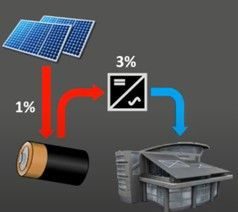
An AC-coupled battery system has two inverters: one to convert the solar panels’ DC output into AC, and one to charge and discharge the battery. In principle, this system can also be used without solar panels, in which case the battery is charged from the electricity grid. The additional conversions between DC and AC result in losses. The inverters may also be made by different manufacturers, which means using different apps and portals—something that can be irritating for the end user. The advantage of having the inverter functions separated is that an AC-coupled energy storage system is a good solution if you have not bought a battery-ready inverter. This means that batteries can be added to any system. It may not be the most efficient system, but it is a perfectly good solution given the available conditions!
Hybrid systems
A hybrid system can operate while connected to the grid under normal conditions, but can also keep a property running off-grid (island mode) during a power cut. Relatively few inverters on the market have this capability, mainly because it places greater demands on the inverter (and the rest of the electrical installation). The two most important functions for hybrid systems are whether the inverter should only have islanding functionality or whether it should also have a UPS function. UPS stands for uninterruptible power supply and is commonly used in critical applications that must never be switched off (not even for a second) during a power cut, for example in server rooms or hospitals. Have a look at post 9 on the Technology Blog, where we cover the basics of how solar PV systems capable of operating in island mode work.
Off-grid
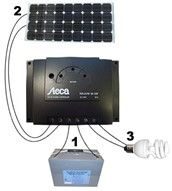
An off-grid system is a system designed to never be connected to the electricity grid. Historically, these systems have been smaller systems in holiday cottages, caravans, etc. Usually so-called 12, 24 or 48 V systems.
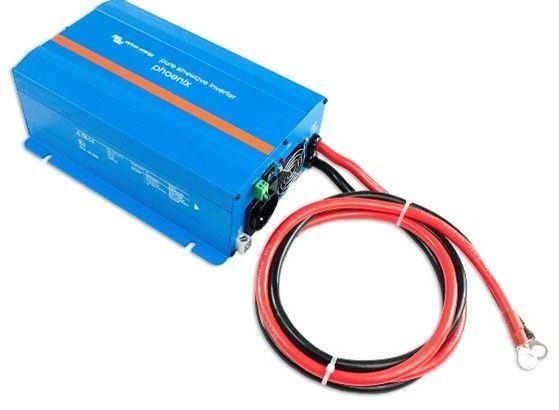
If you need alternating current in an off-grid application, you can either use a combined charge controller and inverter, or connect a dedicated inverter (with a pure sine wave) to your batteries. For higher power requirements, several inverters can be connected in parallel, sometimes in combination with wind power or a diesel generator. This is called a microgrid and is a topic for another blog post.
How can a battery be used?
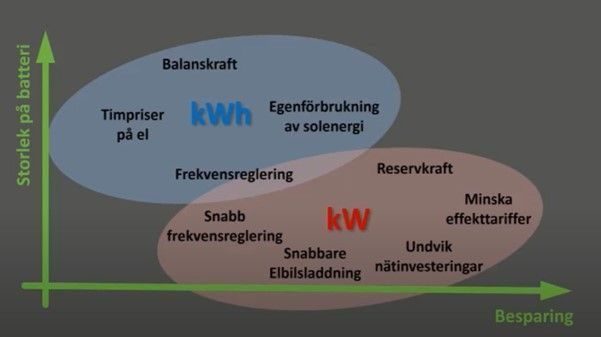
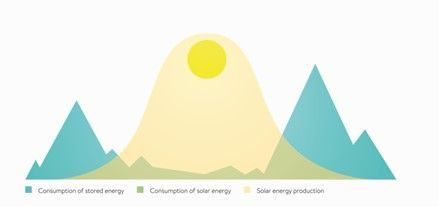
Depending on the application, you can choose the right battery type and control system for your battery system. Different batteries can charge and discharge at different rates; some have greater capacity, while others have specific cycling characteristics. In general, however, battery applications can be considered in terms of their power and energy requirements. Sometimes a lot of power and little energy are needed; sometimes a lot of both. A suitable system is assembled for each application to meet its intended use.
Shift solar energy through time
The most “traditional” use of a battery is to charge it when there is a surplus of solar electricity around midday, then use the stored solar electricity from sunset onwards—for example, to cook dinner. This generally places no huge demands on the battery system, as it typically operates at around 0.3–0.5 C, i.e. charging and discharging relatively slowly in relation to the battery’s capacity. In order to make use of all the solar electricity generated on a roof at Swedish latitudes, a large battery capacity is required. This is due both to the large solar installations being built and to the fact that a property’s generation and consumption curves do not correlate over the course of a day or across the seasons.
Reduce peak power demand
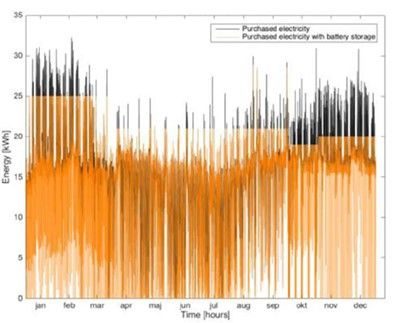
As the blog described in post 10, a battery can be used to keep the power drawn from the grid down. This means that the battery remains in standby mode until a threshold is reached, at which point it starts supplying power above what the grid provides. This can help you keep the size of your main fuse and/or your power consumption down (if you have a power-based tariff). This application requires higher charging and discharging power, as well as a battery that responds quickly enough. This is to prevent the fuse from tripping before the battery has time to supply power. One way to understand how this works is to imagine driving a car while wearing VR goggles with a camera pointing forwards. If your VR goggles show the road with too much delay, you will not react in time when you reach a sharp bend and will drive off the road. The same applies to a battery that is too slow: the power supplied by the battery does not meet demand, forcing too high a current to be drawn from the grid and causing the main fuse to trip!
Avoiding grid upgrades
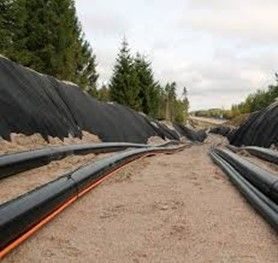
At present, Swedish electricity grid operators are not permitted to install their own batteries (as these are considered generation capacity). However, batteries can be used to postpone or avoid grid upgrades. Instead of expanding the grid by laying a new cable when an electricity cable is overloaded, a battery can supply the additional power required. This could avoid the need for millions of kronor’s worth of new copper cables, with batteries installed instead. It could help address capacity shortages more quickly and, in some cases, provide a much more cost-effective solution, particularly when taking into account the planning costs and groundworks required to build a new electricity grid!
Backup
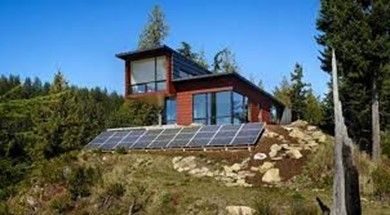
For decades, one of the most common applications for batteries has been in emergency situations or for backup. If the electricity grid fails (as the blog discussed in post 9), a battery system can power loads despite a power cut. In some cases, this is essential, such as at a hospital or for mobile network applications. But it can also be justified in other situations: for example, a grocery shop would face extreme costs if the power were out for more than 2–3 hours, as food would spoil. Factories not only lose productivity but also incur enormous costs through lost revenue. For the average person, a small hybrid system could keep the comforts of home running even during a full-scale storm right outside the door.
Grid support
Large battery installations are being built around the world to stabilise electricity grids. They are built both as stand-alone installations and close to solar or wind farms. As well as functioning as controllable units that can charge and discharge, battery systems also provide services to the grid, such as voltage regulation, frequency control and other services. This is a new type of system in the electricity grid, as it harnesses the battery’s remarkable responsiveness and reaction speed, enabling it to influence the grid within a timescale of milliseconds.
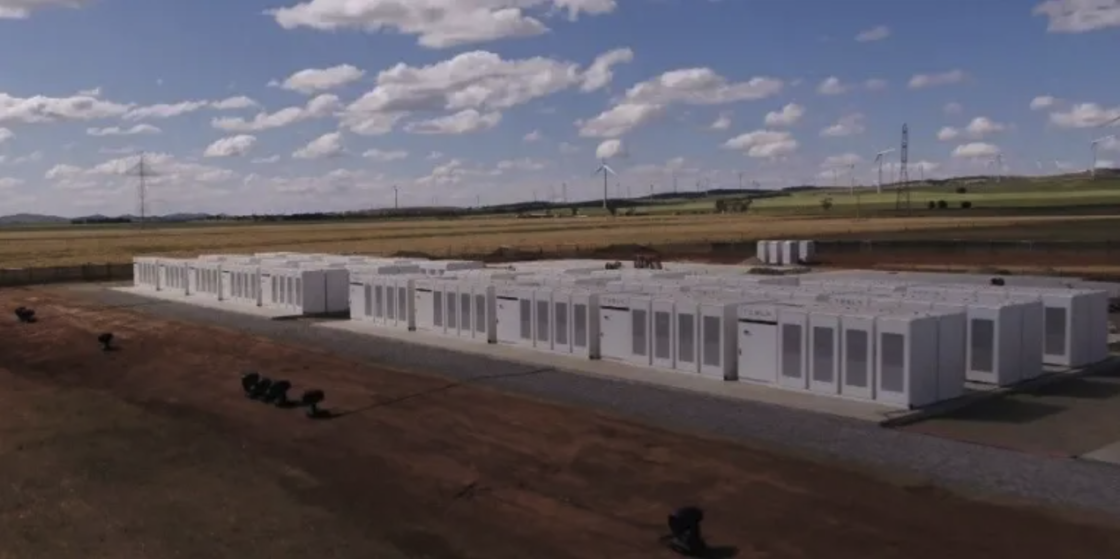
The world’s large battery parks act as shock absorbers in the electricity grid. Battery systems balance supply and demand in the electricity market. We have not yet seen these large battery systems in Sweden, mainly because of the large share of hydropower in our Nordic electricity grid. In other countries, however, solar and wind farms combined with battery storage systems have displaced fossil-fuel power such as coal- and oil-fired power stations.
Conclusions
Batteries have many uses! Combined with smart control and connected technology such as artificial intelligence, together with future communications such as 5G networks, new applications and benefits can be achieved.
When batteries are used as a substitute for traditional infrastructure investments, they deliver different benefits than when the battery system simply optimises within the boundaries of a property. The battery systems of the future will be connected, both for monitoring and to provide services to the electricity grid.
In the future, we will see more local energy sharing between properties and smart control of batteries. The battery of the future can provide several services within the same system. This will contribute to different revenue streams for its owner and an even more cost-effective electricity system for all stakeholders at a societal level!
Need help finding the right solution?
We know it’s not always easy to know which product or solution is best for you. Whether you have questions about our range, need guidance or would like help finding a solution that suits your needs, we’re here for you. With our knowledge and experience, we’ll help you make the right choice.
Related posts
This is how a fire safety engineering design is carried out

The Salmon Project